Natural-Looking Face & Neck Lift Surgery and Personalized Anti-Aging Care in Apgujeong, Gangnam, Seoul
4.1 ★ Google · Board-Certified Plastic Surgeon
en-US

Skin & Laser Treatments · Consultation Required
Andy YAG
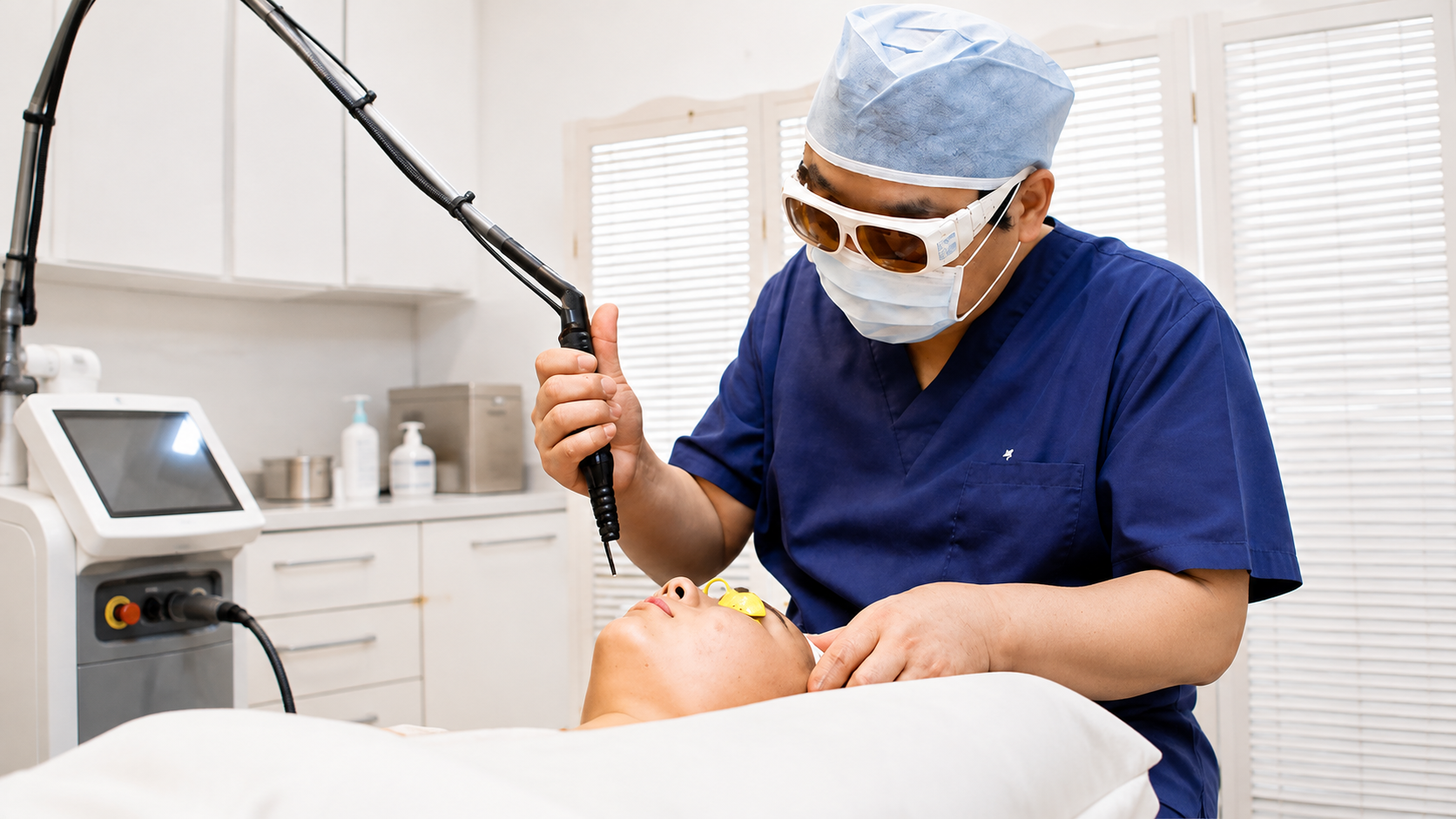
Andy YAG uses a Q-switched Nd:YAG laser platform that fires extremely short, high-energy pulses to selectively target melanin pigment while minimizing damage to the surrounding tissue.
Schedule a Consultation
Andy YAG Laser Treatment

Reviewer Details
Medically reviewed by Dr. Choi deokho, Representative Director & Plastic Surgeon, Good-Line Plastic Surgery Clinic.
Registered as the clinic's legal representative in the Korean National Tax Service registry, Full Member of the Korean Society of Plastic and Reconstructive Surgeons · Last reviewed 2026-08-18 · Good-Line Plastic Surgery Clinic, Gangnam-gu, Seoul.
Andy YAG is Good-Line Plastic Surgery Clinic's Q-switched ND-YAG laser treatment, delivering high-energy pulses within nanoseconds at two distinct wavelengths to selectively break down excess melanin pigment in the skin. At Good-Line Plastic Surgery Clinic, it is used to treat freckles, age spots, lentigines, tattoos, nevus of Ota, and other pigment disorders, with the wavelength chosen according to how deep the pigment sits in the skin.
What Is Andy YAG?
Andy YAG uses a Q-switched Nd:YAG laser platform that fires extremely short, high-energy pulses to selectively target melanin pigment while minimizing damage to the surrounding tissue.
Delivers energy at two wavelengths — 532 nanometers for superficial pigmentation such as freckles, lentigines, and age spots, and 1064 nanometers for deeper pigmentation, including tattoos and nevus of Ota.
Uses Q-switched technology to release each pulse within nanoseconds, fracturing pigment particles into fragments small enough for the body to clear naturally over time.
The clinic states the treatment destroys melanin pigment with high-energy pulses while providing a gentle, low-intensity peeling effect on the treated skin.
Also used for hemangioma treatment, in addition to its primary pigmentation indications.
Typically performed as an in-office session lasting approximately 15 to 30 minutes, with multiple sessions commonly recommended depending on the depth and darkness of the pigment being treated.
Who Performs Andy YAG at Good-Line Plastic Surgery Clinic
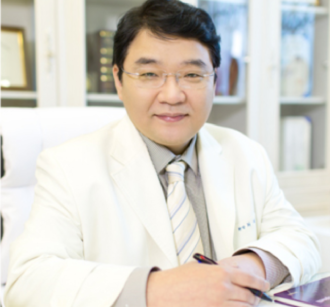
Dr. Choi deokho
Representative Director and plastic surgeon
Dr. Choi deokho is the Representative Director and plastic surgeon at Good-Line Plastic Surgery Clinic, with approximately 25 years associated with the clinic since its establishment on 2001-05-25. His stated core specializations include facial plastic surgery and facial rejuvenation, alongside rhinoplasty and facial contouring, and he holds full membership in the Korean Society of Plastic and Reconstructive Surgeons, the Korean Society for Microsurgery, the Korean Cleft Palate-Craniofacial Association, the Japan Society of Aesthetic Plastic Surgery, the American Society of Aesthetic Plastic Surgery, and the International Society of Aesthetic Plastic Surgery. Before recommending Andy YAG, he reviews each patient's skin assessment, the depth and color of the pigment involved, and medical history, since these factors determine which wavelength — or combination of wavelengths across a treatment course — is appropriate for a given lesion.
Because ND-YAG laser is only one of several energy-based devices the clinic offers, part of Dr. Choi's role during consultation is confirming that Andy YAG specifically addresses the concern a patient describes, rather than assuming every skin concern responds to the same technology. A patient requesting Andy YAG to address jawline sagging or overall skin firmness, for example, is redirected toward 3D Ulthera Lift or Thermage instead, since a pigment-targeting laser has no meaningful effect on tissue laxity; conversely, a patient asking for a lifting treatment to fade visible sun spots is guided back toward Andy YAG, since neither ultrasound nor radiofrequency devices meaningfully reduce surface pigment. This matching process — confirming the technology fits the concern rather than the name a patient arrives with — is treated as a core part of the consultation, not a formality before booking whichever treatment was requested first.
Andy YAG Options Available
532 nm Wavelength | 1064 nm Wavelength |
|---|---|
Targets superficial pigmentation | Targets deeper pigmentation |
Best for freckles, lentigines, and age spots | Best for nevus of Ota, tattoos, and denser or deeper pigment |
Shallower penetration with a gentle peeling effect | Deeper penetration to reach ink or pigment sitting further below the surface |
Often needs fewer sessions for lighter, surface-level pigment | Often needs a longer treatment course depending on ink color and depth |
The clinic selectively applies 532 nanometers to superficial pigmentation and 1064 nanometers to deeper pigment lesions and tattoos, with the appropriate wavelength — or a combination of both across separate sessions — determined by the physician during consultation rather than fixed to a single default setting. Patients frequently ask whether one wavelength is simply "stronger" than the other; in practice, the two wavelengths are matched to pigment depth rather than ranked by intensity, since applying the wrong wavelength to a given lesion produces a weaker result rather than a faster one. A patient with both surface freckling and a deeper tattoo, for instance, may reasonably be treated with 532 nanometers for the freckling and 1064 nanometers for the tattoo within the same overall treatment plan, sequenced according to how each area responds between sessions. Repeated treatments can be performed as needed according to the pigment's depth and darkness, since a single session rarely clears denser or older pigment completely.
Who Is a Good Candidate for Andy YAG?
Patients with freckles, lentigines, or age spots seeking a reduction in visible surface pigmentation.
Patients with tattoos, nevus of Ota, or other deeper pigment disorders considering fading or removal.
Patients with hemangiomas being evaluated for laser-based treatment as part of a broader care plan.
Generally healthy individuals without active skin infection or open wounds in the treatment area.
Patients without certain photosensitive conditions that would make laser treatment inadvisable.
Patients who are not pregnant, unless treatment has been specifically reviewed and approved by a physician.
Patients with realistic expectations about outcome — some deeper or older pigment, particularly certain tattoo inks, may only partially fade even after a complete treatment course.
What to Expect: Procedure, Recovery, and Results Timeline
Stage | What typically happens |
|---|---|
Day 0 | Skin consultation and evaluation, cleansing of the treatment area, protective eyewear provided, appropriate wavelength selected, laser treatment performed, cooling and aftercare instructions given |
Day 1-3 | Mild redness, warmth, or a light snapping sensation from treatment may still be settling; some patients notice very early lightening of superficial pigment |
Day 5-10 | Any mild crusting on treated pigment typically flakes away; redness generally continues to fade |
Week 4-8 | Visible fading of superficial pigment becomes more apparent; deeper pigment or tattoo ink may show only partial change, with an additional session considered |
Month 12+ | A full multi-session course for deeper or denser pigment may still be ongoing; maintenance sessions are considered individually for any new sun-related pigmentation that develops over time |
The procedure itself follows a consistent sequence: a skin consultation and evaluation, cleansing of the treatment area, provision of protective eyewear, selection of the appropriate ND-YAG wavelength for the specific lesion, delivery of the laser treatment itself, and cooling with post-treatment skincare instructions before the patient leaves. Topical anesthetic cream may be applied beforehand for comfort, depending on the treatment area and physician preference, though most patients tolerate the procedure with only mild snapping or warming sensations during each pulse. A typical session takes approximately 15 to 30 minutes, depending on the size of the treatment area and the number of lesions being addressed.
Recovery is generally described by the clinic as allowing patients to resume daily life easily, since the treatment is delivered with comparatively low intensity and produces a gentle peeling effect rather than an aggressive resurfacing wound. Mild redness is common in the hours and days immediately following treatment, and temporary crusting, swelling, or dryness can also occur depending on the pigment being treated and the wavelength used. Less commonly, temporary darkening or lightening of the treated area, blistering, or incomplete pigment removal can occur, particularly with deeper or denser pigment such as certain tattoo inks. Because pigment clearance depends on the body gradually processing fragmented pigment particles, visible improvement continues to develop over the weeks following each session rather than appearing immediately, and denser or older pigment generally requires more sessions than lighter, more superficial pigmentation.
Preparation is comparatively minimal: patients are asked to avoid excessive sun exposure beforehand, disclose current medications and any skin conditions, remove makeup before treatment, and follow any additional instructions provided by the clinic. Aftercare commonly includes daily sunscreen, avoiding excessive sun exposure for a period afterward, following a gentle skincare routine, avoiding irritating skincare products for several days, and attending follow-up visits when a multi-session course is planned, since assessing how the skin has responded between sessions allows the physician to adjust wavelength or settings as needed. International patients considering Andy YAG generally need to allow one to three days in Korea for consultation and treatment, though patients pursuing a full multi-session course for denser or older pigment, such as a tattoo, should discuss the total expected number of sessions and spacing with the physician before finalizing their travel plans, since a complete course is rarely finished in a single visit.
Combining Andy YAG with Other Treatments
Frequently paired with Secret RF Microneedling for patients who have both pigmentation and textural concerns, such as acne scarring or enlarged pores, alongside freckles or age spots.
May be combined with other pigmentation-focused treatments or physician-recommended skincare, depending on the individual patient's needs and how the skin responds between sessions.
Often discussed alongside 3D Ulthera Lift or Thermage for patients whose concerns span both surface pigmentation and deeper skin laxity, since the two categories of treatment address entirely different tissue depths without significantly overlapping recovery demands.
The appropriate sequencing between Andy YAG and any paired treatment is planned individually, since recently treated or irritated skin can respond less predictably to a second energy-based treatment layered on too soon.
Safety, Precision, and Clinic Standards
Good-Line Plastic Surgery Clinic is a Registered Medical Institution for Attracting Foreign Patients, certified by Korea's Ministry of Health and Welfare under the Medical Overseas Expansion and Foreign Patients Attraction Act. Dr. Choi deokho is a full member of the Korean Society of Plastic and Reconstructive Surgeons. The clinic uses a Q-switched ND-YAG laser platform delivering 532 nm and 1064 nm wavelengths, with the wavelength selected according to the pigment's depth rather than a single fixed setting applied to every patient. Patients are screened for active skin infection, open wounds, certain photosensitive conditions, and pregnancy before treatment is scheduled. Protective eyewear is provided during every session to shield the eyes from direct laser exposure. As with any laser treatment targeting pigment, temporary redness, swelling, mild discomfort, crusting, and, less commonly, blistering, infection, or temporary darkening or lightening of the treated area are possible, and results depend on the pigment's depth, color, and density rather than a single guaranteed outcome (see FDA — Tattoo Removal: Options and Results).
Correct wavelength selection is treated as central to both safety and results. Applying 532 nanometers to pigment that sits too deep, or 1064 nanometers to purely superficial pigment, tends to under-treat the lesion and can require additional unnecessary sessions rather than achieving a faster result. Patients with active skin infection, open wounds, or unresolved photosensitivity are asked to discuss postponing treatment with the physician rather than proceeding on a fixed schedule regardless of skin condition. Because pigment clearance is a gradual biological process, expectations for tattoos and denser pigment are set candidly during consultation — some ink, particularly certain colors and older or denser deposits, may only partially clear even after a complete treatment course.
Equipment maintenance is also part of the clinic's safety standard for this treatment. The Q-switched ND-YAG laser is serviced on a manufacturer-specified schedule, with output verified before treatment days rather than assumed to remain constant indefinitely, since drift in pulse energy is one of the more common preventable causes of both under-treatment and unnecessary skin irritation with laser devices generally. Follow-up between sessions is treated as part of the treatment plan for any multi-session course, since assessing the skin's response allows the physician to adjust wavelength, spacing, or settings rather than repeating an identical protocol regardless of how the previous session performed.
The Bottom Line
Andy YAG is Good-Line Plastic Surgery Clinic's Q-switched ND-YAG laser, using 532 nm and 1064 nm wavelengths to selectively target pigment at different depths.
It treats freckles, lentigines, age spots, tattoos, nevus of Ota, other pigment disorders, and is also used for hemangioma treatment.
Recovery generally allows patients to resume daily life quickly, though multiple sessions are commonly needed depending on pigment depth and darkness.
Reviewed and performed under Dr. Choi deokho, an experienced plastic surgeon with roughly 25 years at Good-Line Plastic Surgery Clinic.
Realistic expectations matter, particularly for tattoos and denser pigment, since complete clearance cannot always be guaranteed.
Frequently Asked Questions
What is Andy YAG and how does it work? Andy YAG is Good-Line Plastic Surgery Clinic's Q-switched ND-YAG laser treatment, which delivers high-energy pulses within nanoseconds at 532 nm and 1064 nm wavelengths to selectively target and break down melanin pigment while minimizing damage to surrounding skin.
Is Andy YAG painful? Most patients describe the sensation as a mild snapping or warming feeling with each pulse rather than significant pain. Topical anesthetic cream may be applied beforehand for comfort, depending on the treatment area and physician preference.
Can Andy YAG remove tattoos completely? Not always. Deeper or older tattoos, and certain ink colors, may only partially fade even after a full treatment course. The physician evaluates pigment depth and type before setting realistic expectations for the specific tattoo or pigment concern being treated.
How many sessions of Andy YAG will I need? This depends on the depth, color, and density of the pigment. Superficial pigmentation such as freckles or age spots often responds within fewer sessions, while deeper pigment such as tattoos or nevus of Ota commonly requires a longer, multi-session course.
What is the difference between the 532 nm and 1064 nm wavelengths? The 532 nm wavelength targets superficial pigmentation such as freckles, lentigines, and age spots, while the 1064 nm wavelength penetrates deeper to reach pigment such as tattoos and nevus of Ota. The physician selects the wavelength — or a combination across sessions — based on the depth of the specific lesion.
How much downtime does Andy YAG require? The clinic describes the treatment as allowing patients to resume daily life easily, since it is performed with comparatively low intensity and produces a gentle peeling effect. Mild redness, and occasionally crusting or dryness, can occur for a short period afterward.
Can Andy YAG be used for hemangiomas? Yes — in addition to its primary use for pigment disorders such as freckles, age spots, and tattoos, the clinic also uses Andy YAG for hemangioma treatment, with suitability assessed individually during consultation.
How many days should I plan to stay in Korea for Andy YAG? International patients considering Andy YAG generally need to allow one to three days for consultation and treatment. Patients pursuing a full multi-session course for denser or older pigment should discuss the total number of sessions and spacing with the physician before finalizing travel plans.
Book a Consultation at Good-Line Plastic Surgery Clinic
To discuss whether Andy YAG fits your specific pigmentation concern, contact Good-Line Plastic Surgery Clinic in Gangnam-gu, Seoul at +82 2 543 1830 or through the clinic's online contact form. A consultation with Dr. Choi deokho is the most reliable way to determine which wavelength, or combination of wavelengths, best matches the depth and type of pigment you want addressed.
Disclaimer
This page is for general informational purposes and does not constitute individualized medical advice. Candidacy, technique, and expected outcomes can only be determined through a consultation with a qualified physician.
Sources & Further Reading
Other Services
Explore additional treatments offered by our specialists.

Under-Eye Fat Repositioning
Under-eye fat repositioning is a transconjunctival lower-eyelid procedure that redistributes — rather than discards — the fat compartments beneath the eye, moving them around the orbital bone to correct hollowing and bulging caused by aging skeletal and.
Learn More

TRIPLE CELL
TRIPLE CELL is a non-invasive, radiofrequency-based skin treatment designed to deliver energy into different layers of the skin to support hydration, elasticity, and collagen-related skin recovery.
Learn More

Thermage Skin Tightening
Thermage Skin Tightening is a non-surgical radiofrequency treatment that heats targeted tissue beneath the skin to stimulate collagen remodeling, improving the appearance of mild-to-moderate skin laxity.
Learn More