Natural-Looking Face & Neck Lift Surgery and Personalized Anti-Aging Care in Apgujeong, Gangnam, Seoul
4.1 ★ Google · Board-Certified Plastic Surgeon
en-US

Eye Surgery · Consultation Required
Under-Eye Fat Repositioning
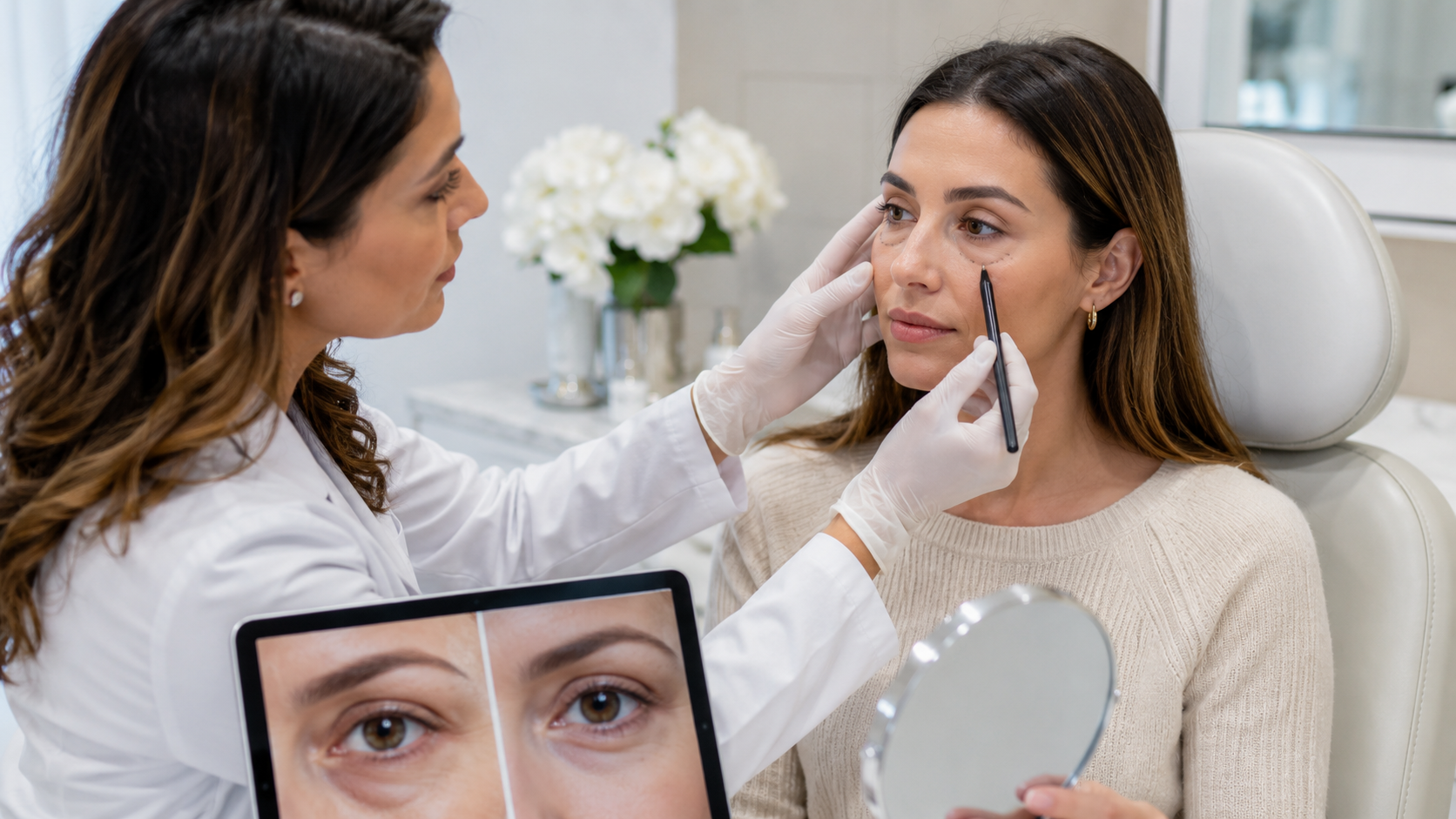
Under-eye fat repositioning is a transconjunctival lower-eyelid procedure that redistributes — rather than discards — the fat compartments beneath the eye, moving them around the orbital bone to correct hollowing and bulging caused by aging skeletal and.
Schedule a Consultation
Under-Eye Fat Repositioning

Reviewer Details
Medically reviewed by Dr. Choi deokho, Representative Director & Plastic Surgeon, Good-Line Plastic Surgery Clinic.
Registered as the clinic's legal representative in the Korean National Tax Service registry, Full Member of the Korean Society of Plastic and Reconstructive Surgeons · Last reviewed 2026-08-18 · Good-Line Plastic Surgery Clinic, Gangnam-gu, Seoul.
Under-eye fat repositioning is a transconjunctival surgical procedure that redistributes the fat naturally present beneath the lower eyelid rather than removing it, addressing under-eye bags, hollowing, and dark circles linked to an aging orbital skeleton. Performed through a scarless incision on the inner surface of the eyelid, the technique moves bulging fat around the orbital rim to smooth the transition between the lower eyelid and cheek. At Good-Line Plastic Surgery Clinic in Seoul, the procedure is evaluated and performed by Dr. Choi deokho using a technique the clinic describes as passive septum banding.
What Is Under-Eye Fat Repositioning?
Under-eye fat repositioning is a transconjunctival lower-eyelid procedure that redistributes — rather than discards — the fat compartments beneath the eye, moving them around the orbital bone to correct hollowing and bulging caused by aging skeletal and soft-tissue changes.
Performed through a transconjunctival (inner-eyelid) incision, leaving no visible external scar.
Uses a technique the clinic calls "passive septum banding" to redistribute fat around the orbital rim rather than excising it.
Addresses fat organized into three distinct under-eye fat compartments, each assessed individually before surgery.
Differs fundamentally from simple fat removal, which can leave a hollowed, overly flat contour in patients whose primary concern is aging-related volume loss rather than pure excess fat.
Typically performed under local anesthesia with light IV sedation, sometimes general anesthesia if combined with other procedures in the same session.
Who Performs Under-Eye Fat Repositioning at Good-Line Plastic Surgery Clinic

Dr. Choi deokho
Representative Director and plastic surgeon
Dr. Choi deokho is the Representative Director and plastic surgeon at Good-Line Plastic Surgery Clinic, with approximately 25 years associated with the clinic since its establishment in 2001. His stated core specializations include facial plastic surgery with a specific focus on eye surgery and eye revision, and under-eye fat repositioning is evaluated within that broader eye-surgery expertise rather than treated as an isolated add-on procedure. He holds full membership in the Korean Society of Plastic and Reconstructive Surgeons, the Korean Society for Microsurgery, the Korean Cleft Palate-Craniofacial Association, the Japan Society of Aesthetic Plastic Surgery, the American Society of Aesthetic Plastic Surgery, and the International Society of Aesthetic Plastic Surgery. Before recommending a transconjunctival-only approach, Dr. Choi examines all three under-eye fat compartments, checks orbital bone structure and tear-trough depth, and performs a skin-pinch test to confirm the skin has enough elasticity to settle smoothly once fat has been redistributed rather than removed. Because the technique leaves no external stitches, his evaluation also weighs whether a patient's visible concern is genuinely fat-related bulging and hollowing, or whether excess skin is the dominant issue, since that distinction changes whether a transconjunctival-only plan is sufficient or whether an additional technique should be combined into the same session.
Under-Eye Fat Repositioning Options Available
Transconjunctival-Only Repositioning | Combined with Skin Excision | Combined with Laser Resurfacing |
|---|---|---|
Fat repositioned through an internal incision only; no external cut is made | Fat repositioning plus removal of excess lower-eyelid skin through an external approach | Fat repositioning plus laser treatment of surface wrinkles and texture around the lower lid |
Best for patients with reasonably elastic skin and no significant excess skin | Best for patients whose skin-pinch test shows looser or excess lower-eyelid skin | Best for patients whose main additional concern is fine surface wrinkling rather than skin laxity |
No external scar; generally less postoperative edema and a faster return to routine | An external incision is required to remove skin, so a small, concealed scar is possible | Adds a separate surface-level recovery step on top of the internal fat repositioning |
The decision between these approaches is made through direct examination rather than patient preference alone. Consultation typically includes a visual and photographic assessment of under-eye fat bulging and hollowing, evaluation of how much fat in each of the three compartments needs repositioning versus removal, an assessment of orbital bone structure and tear-trough depth, and a skin-pinch test to check elasticity and identify excess skin. Patients with good skin elasticity and primarily fat-related bulging are generally well suited to the transconjunctival-only approach, since there is minimal loose tissue to address separately. Patients whose skin-pinch test reveals meaningful excess or sagging lower-eyelid skin are typically counseled toward adding skin excision, because a transconjunctival-only plan applied to genuinely lax skin would leave that laxity uncorrected. Patients whose skin shows fine surface wrinkling rather than true laxity may instead have laser resurfacing added to refine skin texture once the underlying fat has been repositioned.
This distinction matters because applying the wrong technique to a given anatomy tends to produce a disappointing result rather than simply a suboptimal one. Redistributing fat in a patient with genuinely excess, sagging skin will not correct the skin laxity itself, leaving the patient dissatisfied even though the fat-related bulging has technically been addressed; conversely, adding an external skin-excision incision to a patient who did not need it introduces an unnecessary scar and a longer recovery for no additional benefit. This is why the clinic treats the compartment-by-compartment fat assessment, the orbital and tear-trough evaluation, and the skin-pinch test as sequential steps that must all be completed before a technique is finalized, rather than allowing a patient's initial procedure request alone to determine the surgical plan.
Who Is a Good Candidate for Under-Eye Fat Repositioning?
Patients with under-eye fat bulging or an aging orbital skeleton, whose skin still has reasonable elasticity and no significant excess.
People bothered by dark circles, hollow or sunken under-eyes, or a persistently tired appearance, who want to avoid a visible external scar.
Patients who have had prior eye surgery, since the transconjunctival approach can generally still be performed safely on previously operated eyelids.
Generally healthy adults without active eye or skin infection, uncontrolled medical conditions, or severe dry eye.
Patients with significant loose or excess lower-eyelid skin, or very thin, inelastic skin, are generally not ideal candidates for a transconjunctival-only approach without adding skin excision.
Patients whose primary goal is stopping the natural aging process entirely, rather than achieving a realistic, natural-looking improvement, should discuss expectations candidly with the surgeon before proceeding.
What to Expect: Procedure, Recovery, and Results Timeline
Stage | What Typically Happens |
|---|---|
Day 0 (Day of Surgery) | Transconjunctival incision made under local anesthesia with light IV sedation (occasionally general anesthesia if combined with other procedures); fat from the three under-eye compartments is accessed and redistributed using passive septum banding; incision closed with no external stitches |
Day 1-3 | Swelling, bruising, and mild soreness are most noticeable; cold compresses are used during the first 24-48 hours, and prescribed lubricating drops are used if dryness or irritation occurs |
Day 5-10 | Visible bruising and swelling substantially subside; many international patients plan for roughly five to seven days in Korea for surgery and an initial postoperative check before flying home, subject to the surgeon's clearance |
Week 4-8 | Most patients have resumed routine activity; residual swelling continues to resolve and the under-eye contour becomes progressively easier to assess |
Month 12+ | Tissue has fully settled and the repositioned fat has integrated around the orbital rim; because fat is redistributed rather than discarded, results are generally considered long-lasting, though natural aging of the surrounding face continues |
Before surgery, patients are typically asked to stop blood-thinning medications and supplements — such as aspirin, fish oil, and vitamin E — for one to two weeks beforehand, only on the surgeon's advice, and to avoid smoking and alcohol given their effect on healing and bleeding risk. Fasting may be required if IV sedation or general anesthesia is planned, and patients should arrange for someone to accompany or drive them home afterward. Patients are also asked to disclose any prior eye conditions, including dry eye, glaucoma, or previous eyelid surgery, since these factors can affect the surgical plan. Aftercare commonly includes cold compresses for the first 24-48 hours, keeping the head elevated while sleeping, avoiding rubbing the eyes, prescribed lubricating eye drops if dryness or irritation occurs, and avoiding strenuous exercise, swimming, and direct sun exposure for one to two weeks. Sunglasses are generally recommended when outdoors during early recovery. Because the transconjunctival approach leaves no external stitches to remove, scheduled follow-up visits are the primary way healing is monitored, rather than a suture-removal appointment, which makes attending every recommended check particularly important for this specific technique.
Combining Under-Eye Fat Repositioning with Other Treatments
Under-eye fat repositioning is offered as its own standalone procedure at Good-Line Plastic Surgery Clinic, separate from upper-eyelid correction, for patients whose primary concern is the lower lid specifically.
For patients with concerns beyond fat bulging alone, additional skin excision or laser resurfacing can be added to the same session when the skin-elasticity assessment indicates it is needed.
Patients whose skin-pinch test shows more significant lower-eyelid laxity than fat bulging alone may be better served by, or may choose to combine this procedure with, Lower Blepharoplasty, which addresses excess lower-eyelid skin directly.
Patients considering a fuller eye-rejuvenation plan may also discuss upper-eyelid options in the same consultation, since upper and lower eyelid aging are often assessed together even when only one area is treated surgically in a given session.
Safety, Precision, and Clinic Standards
Good-Line Plastic Surgery Clinic is a Registered Medical Institution for Attracting Foreign Patients, certified by Korea's Ministry of Health and Welfare under the Medical Overseas Expansion and Foreign Patients Attraction Act. Dr. Choi deokho is a full member of the Korean Society of Plastic and Reconstructive Surgeons. Patient assessment before under-eye fat repositioning includes examination of all three under-eye fat compartments, orbital bone structure, and tear-trough depth, along with a skin-pinch test for elasticity and a full medical history and medication review. As with any eyelid procedure, temporary bruising, swelling, numbness, and mild asymmetry are possible, and less common risks include infection, hematoma, over- or under-correction of fat, visible contour irregularity, dry or irritated eyes, and — rarely — changes to eyelid position; a consultation with the surgeon is required to review individual risk (see ASPS Eyelid Surgery Safety). Because the incision is internal, the risk of visible scarring is comparatively low relative to external lower-eyelid approaches, though this does not eliminate the general risks associated with any eyelid surgery. Sterile surgical technique and correct compartment-by-compartment fat assessment are treated as baseline requirements rather than differentiators. Scheduled follow-up visits are treated as an essential part of monitoring recovery, since there are no external stitches to remove, and early identification of an unusual symptom generally allows for simpler management than addressing the same issue later. Patients are encouraged to raise any concerning symptom — unusual pain, vision changes, or asymmetric swelling — with the clinic promptly rather than waiting for the next scheduled appointment.
The Bottom Line
Under-eye fat repositioning redistributes existing under-eye fat around the orbital bone rather than removing it, using a technique Good-Line calls passive septum banding.
The transconjunctival (inner-eyelid) incision leaves no visible external scar.
Technique selection also considers whether skin excision or laser resurfacing should be added, based on examination of the three fat compartments, orbital structure, and skin elasticity.
Reviewed and performed under Dr. Choi deokho, a board-registered plastic surgeon with roughly 25 years at the clinic.
Because fat is preserved and repositioned rather than discarded, results are considered less likely to leave a hollowed appearance than simple fat removal, though natural aging of the surrounding face continues afterward.
Frequently Asked Questions
What makes under-eye fat repositioning different from traditional under-eye fat removal? Under-eye fat repositioning redistributes the fat naturally present in the lower eyelid around the orbital bone instead of excising it, using a technique the clinic calls passive septum banding. Traditional fat removal simply excises the bulging fat, which can leave a hollowed or overly flat under-eye area in patients whose concern is aging-related volume loss rather than pure excess.
Will under-eye fat repositioning leave a visible scar? No visible external scar is expected, because the procedure is performed entirely through a transconjunctival incision on the inside of the lower eyelid rather than an external cut.
How long does the procedure take? Under-eye fat repositioning commonly takes about one to two hours, depending on the technique used and whether it is combined with skin excision, laser resurfacing, or other eyelid procedures in the same session.
What is passive septum banding? Passive septum banding is the clinic's term for repositioning bulging under-eye fat — organized into three distinct compartments — around the orbital rim rather than removing it, aiming to correct the aged appearance of the eye socket rather than leave a hollow contour.
Am I still a candidate if I've had eye surgery before? Often, yes — the transconjunctival approach is generally considered suitable for patients who have had prior eye surgery, though the surgeon will still assess your specific anatomy, any existing scar tissue, and skin elasticity during consultation before confirming candidacy.
How many days should I plan to stay in Korea for this procedure? International patients commonly plan for approximately five to seven days in Korea to allow time for the procedure, initial recovery, and a postoperative check before the surgeon clears them to travel; the appropriate length of stay should be confirmed individually with the clinic.
When will I see the final result? Improvement in the under-eye contour becomes noticeable as initial swelling subsides over the first few weeks, but tissue continues to settle for several months before the final result can be fully assessed.
What anesthesia is used for under-eye fat repositioning? Local anesthesia with light IV sedation is commonly used, sometimes combined with general anesthesia if the procedure is performed alongside other treatments in the same session; the exact plan is confirmed with the surgeon based on your individual treatment plan.
Book a Consultation at Good-Line Plastic Surgery Clinic
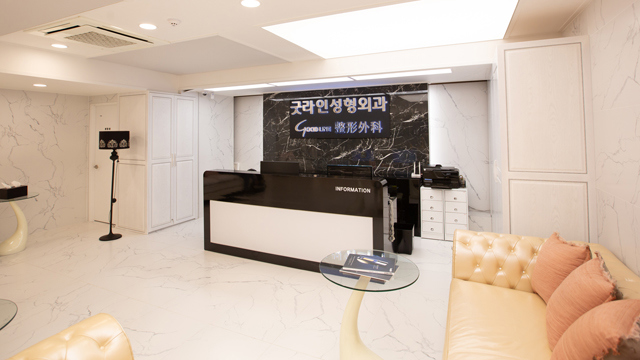
To discuss whether under-eye fat repositioning — alone or combined with skin excision or laser resurfacing — is the right approach for your under-eye concerns, contact Good-Line Plastic Surgery Clinic in Gangnam-gu, Seoul at +82 2 543 1830 or through the clinic's online contact form. A consultation with Dr. Choi deokho is the only reliable way to determine which specific approach fits your under-eye fat compartments, orbital structure, and skin elasticity.
Disclaimer
This page is for general informational purposes and does not constitute individualized medical advice. Candidacy, technique, and expected outcomes can only be determined through a consultation with a qualified physician.
Sources & Further Reading
Other Services
Explore additional treatments offered by our specialists.
Under-Eye Fat Repositioning
Under-eye fat repositioning is a transconjunctival lower-eyelid procedure that redistributes — rather than discards — the fat compartments beneath the eye, moving them around the orbital bone to correct hollowing and bulging caused by aging skeletal and.
Learn More

TRIPLE CELL
TRIPLE CELL is a non-invasive, radiofrequency-based skin treatment designed to deliver energy into different layers of the skin to support hydration, elasticity, and collagen-related skin recovery.
Learn More

Thermage Skin Tightening
Thermage Skin Tightening is a non-surgical radiofrequency treatment that heats targeted tissue beneath the skin to stimulate collagen remodeling, improving the appearance of mild-to-moderate skin laxity.
Learn More