Natural-Looking Face & Neck Lift Surgery and Personalized Anti-Aging Care in Apgujeong, Gangnam, Seoul
4.1 ★ Google · Board-Certified Plastic Surgeon
en-US

Anti-Aging & Lifting Surgery · Consultation Required
Good-line Thread Lifting
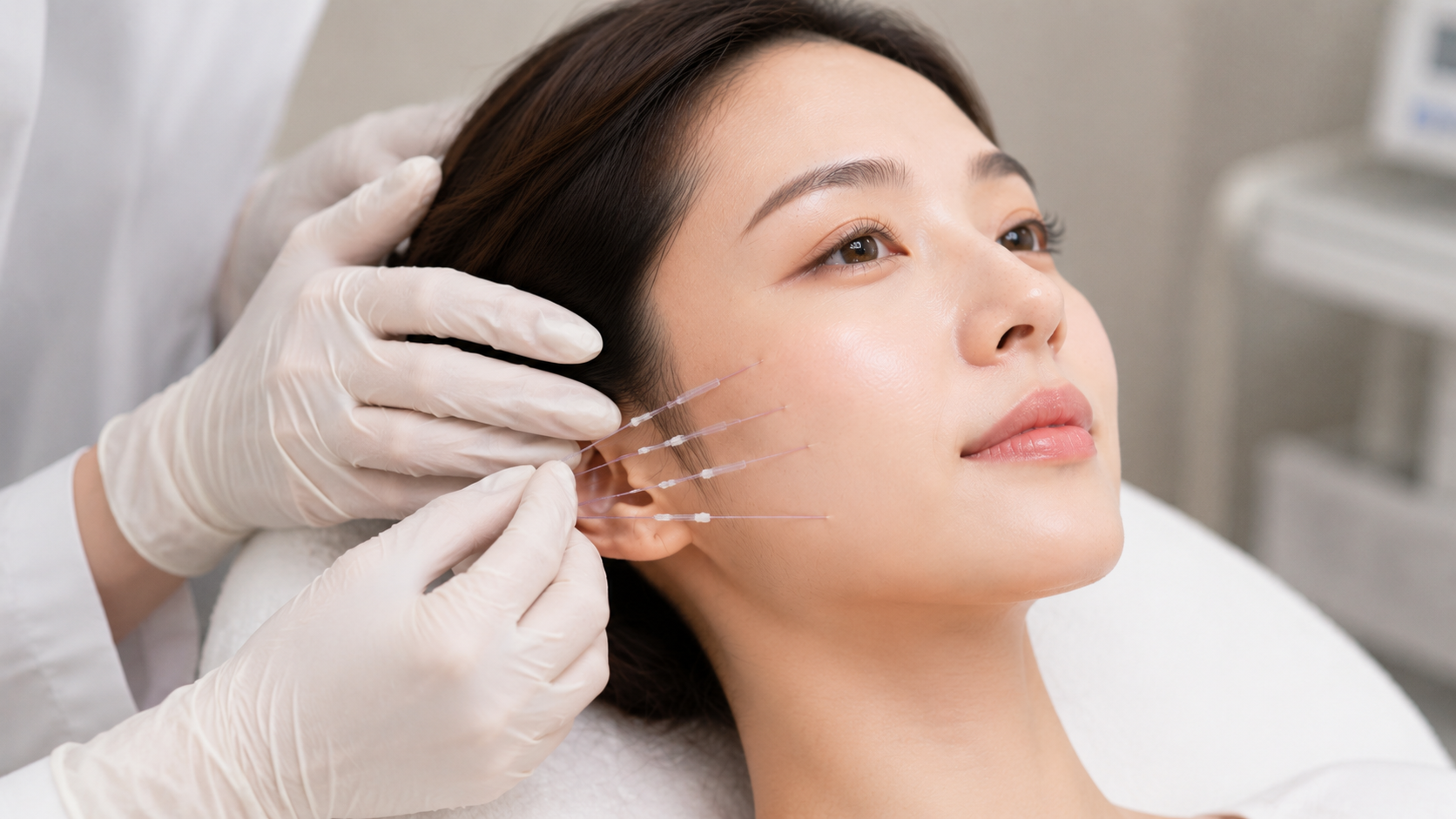
Good-Line Thread Lifting places absorbable polydioxanone (PDO) threads beneath the skin through small entry points to mechanically reposition loosened tissue while stimulating the skin's own collagen response as the thread material gradually absorbs.
Schedule a Consultation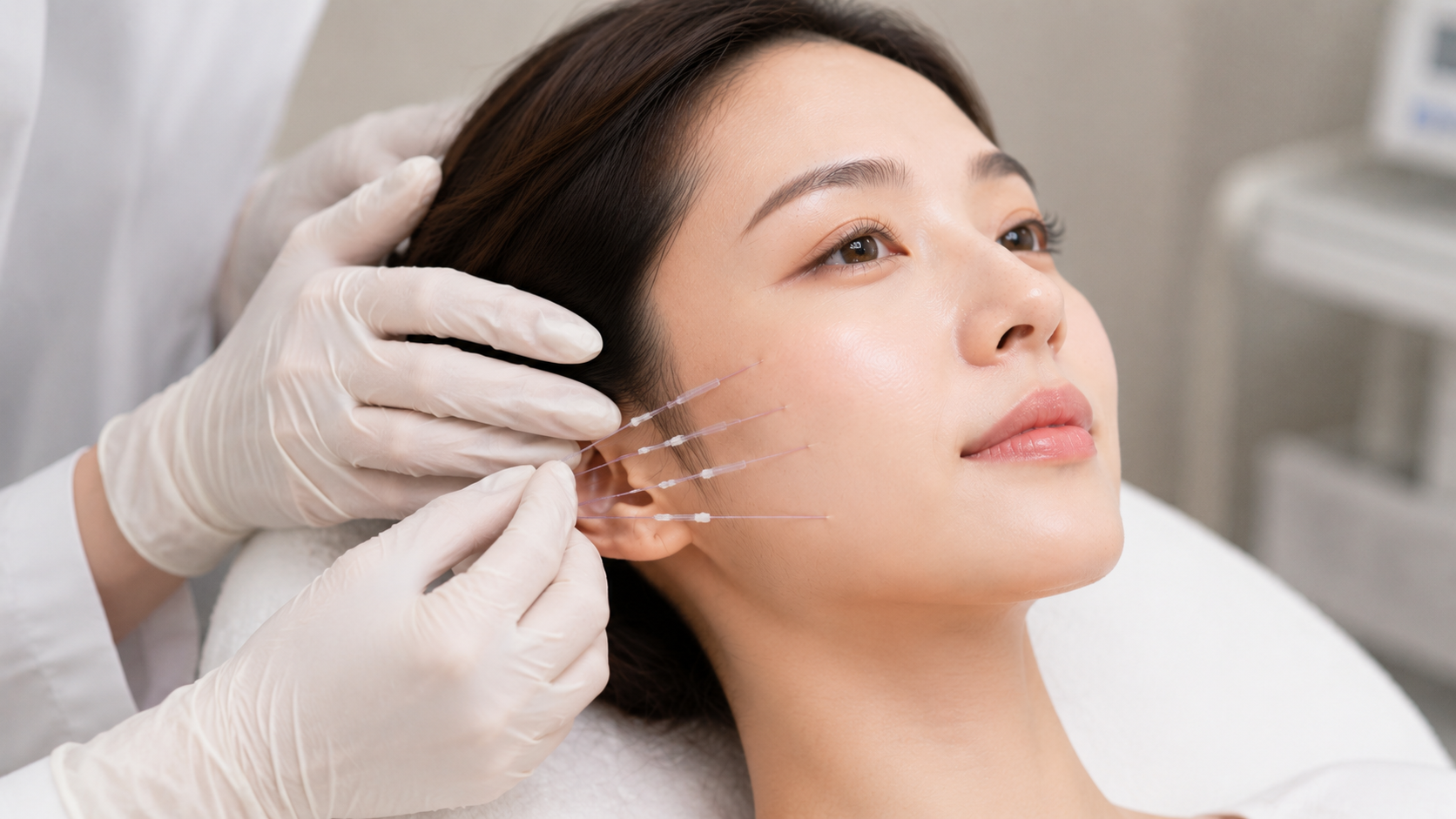
Good-Line Thread Lifting
Reviewer Details
Medically reviewed by Dr. Choi deokho, Representative Director & Plastic Surgeon, Good-Line Plastic Surgery Clinic.
Registered as the clinic's legal representative in the Korean National Tax Service registry, Full Member of the Korean Society of Plastic and Reconstructive Surgeons · Last reviewed 2026-08-18 · Good-Line Plastic Surgery Clinic, Gangnam-gu, Seoul.
Good-Line Thread Lifting is Good-Line Plastic Surgery Clinic's own minimally invasive PDO thread-lift protocol, in which fine absorbable lifting threads are placed beneath the skin to mechanically support and lift areas of mild-to-moderate facial sagging without the larger incision used in a surgical facelift. It is one of several anti-aging and lifting options offered at the clinic, selected specifically for patients whose degree of laxity does not yet require surgical correction.
What Is Good-Line Thread Lifting?
Good-Line Thread Lifting places absorbable polydioxanone (PDO) threads beneath the skin through small entry points to mechanically reposition loosened tissue while stimulating the skin's own collagen response as the thread material gradually absorbs.
Uses polydioxanone (PDO) thread material — an absorbable surgical material rather than a permanent implant.
Threads are inserted beneath the skin through fine needles or cannulas at planned entry points, without a large surgical incision.
Once placed, the threads provide immediate mechanical support that lifts and repositions tissue along the thread's path.
As the PDO material is gradually absorbed by the body, it stimulates a localized collagen response that can support skin structure beyond the initial mechanical lift.
Performed under local anesthesia, with treatment time generally around 30 to 60 minutes depending on thread type and area treated.
Who Performs Good-Line Thread Lifting at Good-Line Plastic Surgery Clinic

Dr. Choi deokho
Representative Director and plastic surgeon
Dr. Choi deokho, Representative Director and plastic surgeon at Good-Line Plastic Surgery Clinic, personally evaluates and performs Good-Line Thread Lifting, drawing on approximately 25 years associated with the clinic since its establishment in 2001. His stated core specializations include facial plastic surgery and anti-aging and lifting procedures alongside rhinoplasty and facial contouring, and he holds full membership in the Korean Society of Plastic and Reconstructive Surgeons, the Korean Society for Microsurgery, the Japan Society of Aesthetic Plastic Surgery, the American Society of Aesthetic Plastic Surgery, and the International Society of Aesthetic Plastic Surgery. Because thread lifting is only one of several anti-aging and lifting options offered at the clinic — alongside the SMAS facelift, neck wrinkle removal, and mouth corner lifting — Dr. Choi deokho places particular emphasis on confirming that a patient's degree of sagging genuinely fits what threads can address before recommending the treatment.
A patient whose jowling or jawline laxity exceeds what a thread lift can meaningfully correct is generally counseled toward a surgical consultation instead, since placing threads in a case that truly needs surgical correction tends to produce only a brief, disappointing improvement. Conversely, a younger patient with only early, mild loosening of the facial structures is generally well matched to thread lifting rather than a more invasive surgical option. This evaluation-first approach is treated as a core part of the consultation rather than a formality before booking a standard treatment package, since the appropriate thread type, number of threads, and treated areas depend on the surgeon's direct assessment of facial structure, skin laxity, and tissue thickness rather than on the patient's initial request alone.
Good-Line Thread Lifting Options Available
Blue Rose Lifting Thread | Tess & Ribbon Lifting | PCL Lifting |
|---|---|---|
Barbed PDO threads placed to mechanically anchor and lift tissue while supporting collagen generation as the material gradually absorbs | A combination thread-lifting approach the clinic describes as helping maintain a lifted appearance for a comparatively longer period | Good-Line's own proprietary thread-lifting system, used within the broader Good-Line Thread Lifting protocol |
Best for patients seeking a collagen-supporting lift with a mechanical anchoring effect | Best for patients prioritizing longer-lasting maintenance of the lifted result | Best for patients whose plan is tailored by the clinic across thread types and treatment areas |
Effect develops as the thread transitions from mechanical support to a longer-term collagen response | Combines aspects of more than one thread design within a single planned protocol | Individual thread selection, placement, and combination are finalized during consultation with Dr. Choi deokho |
Beyond thread selection, the specific number of threads, insertion pattern, and treated areas (such as the mid-face, jawline, or neck) are planned individually rather than applied as a single standard package. Patients are evaluated for facial structure, skin laxity, and tissue thickness before the surgeon confirms which thread type, or combination of thread types, is likely to achieve the intended lifting effect. Because thread lifting is positioned within a broader spectrum of anti-aging and lifting options at the clinic, patients whose examination reveals more significant sagging than mild-to-moderate are generally advised to consider the SMAS facelift instead of, or as a later staged option following, thread lifting.
Who Is a Good Candidate for Good-Line Thread Lifting?
Adults with mild-to-moderate facial sagging, reduced skin elasticity, early jowling, or a less-defined facial contour who want a minimally invasive lifting option.
Patients seeking a subtle lift with meaningfully less downtime than a surgical facelift or neck lift.
Patients who are generally healthy, with realistic expectations about the modest, temporary-leaning nature of a thread-lift result compared with surgery.
Patients able to disclose a complete medical history, including medications and supplements that affect bleeding, before treatment is planned.
Not generally suitable: people with active skin infection or inflammation in the treatment area, certain bleeding or clotting problems, uncontrolled medical conditions, or those who are pregnant or breastfeeding.
Not generally suitable: patients whose sagging or jawline laxity is more advanced than mild-to-moderate, who are usually better served by a surgical facelift.
Suitability in every case is confirmed through an individual consultation with Dr. Choi deokho rather than assumed from a general description of candidacy.
What to Expect: Procedure, Recovery, and Results Timeline
Stage | What Typically Happens |
|---|---|
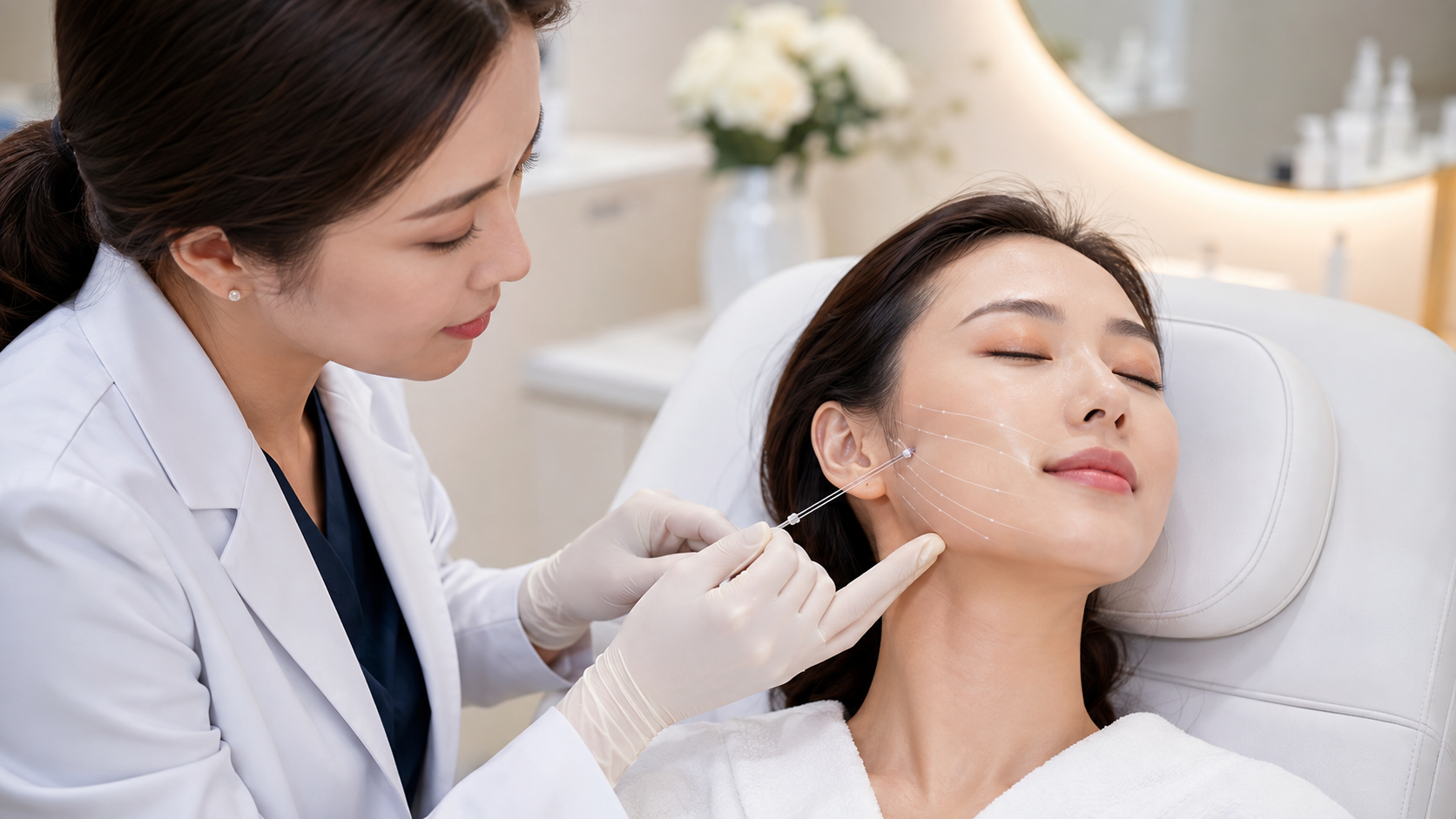
Day 0 (Treatment Day) | Local or topical anesthesia is applied; threads are placed beneath the skin through fine needles or cannulas; the procedure itself typically takes about 30 to 60 minutes depending on thread type, number of threads, and area treated |
Day 1-3 | Mild swelling, bruising, tightness, or tenderness around insertion points is common; some patients notice a sensation of pulling or tightness as the threads settle |
Day 5-10 | Most patients return to light daily activities; visible swelling and tenderness generally continue to improve over this period |
Week 4-8 | The initial lifting effect becomes clearer as swelling fully resolves; collagen-related changes continue developing gradually in the weeks that follow |
Month 12+ | Results generally begin fading gradually as the PDO threads are fully absorbed by the body; longevity varies by thread type, treatment area, age, and skin quality, and maintenance treatment is often needed over time, since a thread lift is typically less durable than a surgical SMAS facelift, whose results can last considerably longer |
Before treatment, patients are asked to provide a complete medical history, including medications, supplements, allergies, and any prior treatments in the same area, and are generally advised to avoid medications that increase bleeding risk — such as aspirin or anticoagulants — unless a physician has specifically instructed otherwise. Excessive alcohol consumption and activities that could increase bruising are also generally discouraged in the days before treatment. On the day of treatment, the physician marks the planned thread pattern, administers local or topical anesthesia, and inserts the threads through fine needles or cannulas at the planned entry points; no large surgical incision is used.
Aftercare generally includes following the clinic's wound-care instructions, avoiding unnecessary pressure or manipulation of the treated areas, and temporarily limiting strenuous activity as specifically advised by the physician. Patients are asked to attend scheduled follow-up visits so the treating physician can confirm that the treated tissue is settling as expected, and to contact the clinic promptly if unusual swelling, severe pain, fever, or other concerning symptoms occur, rather than waiting for the next scheduled appointment. Because thread-lift results generally develop gradually as swelling resolves and the thread material is absorbed, the final appearance is typically assessed only once initial swelling and tissue changes have settled, which may take several weeks, while any additional collagen-related change can continue over the following months.
International patients evaluating Good-Line Thread Lifting commonly weigh the accreditation of Korean clinics, the availability of language support during consultation and aftercare, and how recovery and follow-up will be managed once they have returned home. Good-Line Plastic Surgery Clinic offers English-language consultation and an online contact channel for international patients considering the procedure. Because thread lifting generally involves a shorter recovery than a surgical facelift or neck lift, patients traveling from abroad often have more flexibility in planning their length of stay than patients undergoing a surgical procedure, though the appropriate number of days to remain in Korea for early follow-up should still be confirmed individually with the surgeon rather than assumed from a general guideline. Patients are encouraged to raise their available travel time openly during consultation, since the treatment plan — including thread type, number of threads, and treated areas — can be adjusted to fit realistically within the time a patient has available before departure.
Combining Good-Line Thread Lifting with Other Treatments
Patients whose examination reveals sagging beyond what threads can meaningfully address are often counseled toward the SMAS Facelift instead of, or as a later staged option following, thread lifting.
V-OLET fat-dissolving injection may be discussed alongside thread lifting for patients whose concerns include submental fullness in addition to facial laxity, since threads reposition tissue rather than reduce localized fat.
Neck wrinkle removal surgery may be raised in the same consultation when visible neck laxity is present alongside facial sagging, since threads placed in the face alone will not address separate neck-skin laxity.
Mouth corner lifting addresses a narrower, more specific concern — a downturned mouth corner — and may be considered separately from, or alongside, a broader thread-lifting plan depending on the patient's goals.
The appropriate combination, if any, depends on individual examination findings rather than a fixed package, and is determined during consultation with Dr. Choi deokho.
Safety, Precision, and Clinic Standards
Good-Line Plastic Surgery Clinic is a Registered Medical Institution for Attracting Foreign Patients, certified by Korea's Ministry of Health and Welfare under the Medical Overseas Expansion and Foreign Patients Attraction Act. Dr. Choi deokho is a full member of the Korean Society of Plastic and Reconstructive Surgeons. Patients are evaluated individually for facial structure, skin laxity, tissue thickness, and medical history before a thread-lift plan is confirmed. Good-Line Thread Lifting uses absorbable PDO thread material rather than a permanent implant. As with any thread-lift procedure, temporary swelling, bruising, tenderness, asymmetry, or dimpling are possible, and less common complications can include infection, thread visibility or palpability, thread migration, or irritation of surrounding structures (see ASPS — Thread Lift). Patients are asked to disclose their full medical history, medications, supplements, and allergies, along with any prior treatments in the same area, before proceeding. Scheduled follow-up visits are used to confirm that treated tissue is settling as expected, and patients are encouraged to contact the clinic promptly if unusual swelling, severe pain, fever, or other concerning symptoms occur rather than waiting for the next scheduled visit.
The Bottom Line
Good-Line Thread Lifting is a minimally invasive PDO thread-lift protocol using absorbable threads placed beneath the skin to mechanically lift and support mild-to-moderate facial sagging.
The clinic offers multiple thread-type approaches within the protocol, including Blue Rose Lifting Thread, Tess & Ribbon Lifting, and the proprietary PCL Lifting system.
Reviewed and performed under Dr. Choi deokho, an experienced plastic surgeon with roughly 25 years at the clinic.
Results generally develop over the following weeks and are typically less durable than a surgical SMAS facelift, so maintenance treatment is often needed over time.
Patients with sagging beyond mild-to-moderate are generally better served by surgical correction rather than by repeated thread treatments.
Frequently Asked Questions
What is Good-Line Thread Lifting? It is Good-Line Plastic Surgery Clinic's minimally invasive lifting protocol that places absorbable PDO threads beneath the skin to mechanically support and lift areas of mild-to-moderate facial sagging, without the larger incision used in a surgical facelift.
Am I a good candidate for Good-Line Thread Lifting? Candidates are generally adults with mild-to-moderate facial sagging, reduced skin elasticity, early jowling, or a less-defined facial contour who want a minimally invasive option. A consultation with Dr. Choi deokho is required to confirm individual candidacy, since more advanced sagging is generally better served by a surgical facelift.
How long does the treatment take? Depending on the treatment area, thread type, and number of threads used, the procedure itself generally takes approximately 30 to 60 minutes.
Is Good-Line Thread Lifting painful? Local or topical anesthesia is generally used, so significant pain during placement is not expected, though some patients feel pressure, pulling, or brief stinging during thread insertion, with mild soreness sometimes persisting for a short period afterward.
How long do the results last? Longevity varies according to thread type, treatment area, age, and skin quality. Results are typically less durable than a surgical facelift, and maintenance treatment is often needed as the PDO thread material gradually absorbs over the following months.
What is the difference between Good-Line Thread Lifting and the SMAS Facelift? Thread lifting is a minimally invasive, non-surgical option suited to mild-to-moderate sagging with a shorter recovery, while the SMAS facelift surgically repositions the deeper support layer beneath the skin and is generally recommended for more pronounced jowling or jawline laxity that threads alone cannot correct.
What are the risks of Good-Line Thread Lifting? Temporary swelling, bruising, tenderness, tightness, asymmetry, or dimpling can occur, and less common complications can include infection, thread visibility or palpability, thread migration, or irritation of surrounding structures. Individual risks are reviewed with the physician before treatment.
Can Good-Line Thread Lifting be combined with other treatments? Depending on individual examination findings, thread lifting may be discussed alongside other anti-aging options such as V-OLET fat-dissolving injection or neck wrinkle removal surgery, or a patient may be counseled toward the SMAS Facelift instead when sagging exceeds what threads can meaningfully address.
Book a Consultation at Good-Line Plastic Surgery Clinic
To discuss whether Good-Line Thread Lifting or another anti-aging and lifting option best fits your goals, contact Good-Line Plastic Surgery Clinic in Gangnam-gu, Seoul at +82 2 543 1830 or through the clinic's online contact form. A consultation with Dr. Choi deokho is the only reliable way to confirm whether your degree of facial sagging is well suited to thread lifting or whether a different technique would serve your goals better.
Disclaimer
This page is for general informational purposes and does not constitute individualized medical advice. Candidacy, technique, and expected outcomes can only be determined through a consultation with a qualified physician.
Sources & Further Reading
Other Services
Explore additional treatments offered by our specialists.

Under-Eye Fat Repositioning
Under-eye fat repositioning is a transconjunctival lower-eyelid procedure that redistributes — rather than discards — the fat compartments beneath the eye, moving them around the orbital bone to correct hollowing and bulging caused by aging skeletal and.
Learn More

TRIPLE CELL
TRIPLE CELL is a non-invasive, radiofrequency-based skin treatment designed to deliver energy into different layers of the skin to support hydration, elasticity, and collagen-related skin recovery.
Learn More

Thermage Skin Tightening
Thermage Skin Tightening is a non-surgical radiofrequency treatment that heats targeted tissue beneath the skin to stimulate collagen remodeling, improving the appearance of mild-to-moderate skin laxity.
Learn More