Natural-Looking Face & Neck Lift Surgery and Personalized Anti-Aging Care in Apgujeong, Gangnam, Seoul
4.1 ★ Google · Board-Certified Plastic Surgeon
en-US

Fat Grafting · Consultation Required
Hand Fat Grafting
Hand fat grafting is a two-part procedure that harvests a patient's own fat from a donor area with adequate excess tissue, processes it, and reinjects it into the back of the hand to restore volume that has been lost over time.
Schedule a Consultation
Hand Fat Grafting

Reviewer Details
Medically reviewed by Dr. Choi deokho, Representative Director & Plastic Surgeon, Good-Line Plastic Surgery Clinic.
Registered as the clinic's legal representative in the Korean National Tax Service registry, Full Member of the Korean Society of Plastic and Reconstructive Surgeons · Last reviewed 2026-08-18 · Good-Line Plastic Surgery Clinic, Gangnam-gu, Seoul.
Hand fat grafting at Good-Line Plastic Surgery Clinic in Seoul harvests a patient's own fat from a donor area and reinjects it into the back of the hand to restore volume that has been lost with age, softening the prominence of tendons and veins that develop as the skin thins and underlying fat diminishes. The donor site, harvested fat volume, and injection pattern are planned individually according to each patient's hand anatomy, degree of volume loss, and goals.
What Is Hand Fat Grafting?
Hand fat grafting is a two-part procedure that harvests a patient's own fat from a donor area with adequate excess tissue, processes it, and reinjects it into the back of the hand to restore volume that has been lost over time.
Uses only the patient's own tissue — no synthetic filler or implant material — typically harvested from a donor area such as the abdomen or thighs.
Harvested fat is processed, commonly through centrifugation, to concentrate viable fat cells before being reinjected with a disposable cannula.
Specifically addresses the dorsal hand (the back of the hand), where age- or volume-related fat loss makes tendons, veins, and bony structures appear more prominent beneath thin, deflated skin.
Fat is distributed across the dorsal hand in small increments to create a smoother, more even contour rather than added in a single large volume.
Because some transferred fat is naturally reabsorbed by the body over the following months, the eventual retained volume is not identical to what is visible immediately after injection.
Hand fat grafting differs from dermal fillers applied to the hands in the same key respect that distinguishes fat grafting elsewhere on the body: it uses living, autologous tissue that requires a donor-site harvesting step, rather than a manufactured injectable material that needs no harvesting. It also differs from surface-focused treatments such as laser or light-based skin therapies, which address skin texture and pigmentation rather than the underlying volume loss that fat grafting specifically targets.
Who Performs Hand Fat Grafting at Good-Line Plastic Surgery Clinic

Dr. Choi deokho
Representative Director and plastic surgeon
Dr. Choi deokho is the Representative Director and plastic surgeon at Good-Line Plastic Surgery Clinic, with approximately 25 years associated with the clinic since its establishment in 2001. Fat grafting is used across several of his core treatment areas to restore or add volume using a patient's own tissue, and hand fat grafting is evaluated with the same attention to donor-site planning and individual anatomy that he applies to his facial and under-eye fat grafting work. He holds full membership in the Korean Society of Plastic and Reconstructive Surgeons, the Korean Society for Microsurgery, the Korean Cleft Palate-Craniofacial Association, the Japan Society of Aesthetic Plastic Surgery, the American Society of Aesthetic Plastic Surgery, and the International Society of Aesthetic Plastic Surgery. Before recommending hand fat grafting, Dr. Choi deokho assesses the degree of dorsal-hand volume loss, the prominence of tendons and veins, available donor fat, and the patient's overall health and expectations.
Because hand fat grafting settles differently from facial or under-eye fat grafting — patients are advised that final results can take up to around six months to fully stabilize — his evaluation process weighs how much viable fat can realistically be harvested and how it is likely to be retained in the thinner, more mobile skin of the hand, rather than applying the same volume plan used for facial fat transfer. A patient whose main concern is prominent dorsal-hand tendons and veins is assessed separately from a patient seeking facial volume restoration, since the donor site considerations, injection depth, and expected settling pattern differ meaningfully between the hand and the face.
Who Is a Good Candidate for Hand Fat Grafting?
Adults with fat loss on the back of the hand resulting in prominent tendons or veins, most often related to aging or long-term volume loss.
Patients bothered specifically by the appearance of thin, bony-looking hands, rather than by skin texture, pigmentation, or surface wrinkling alone.
Patients with adequate donor fat at a suitable harvest site and generally good overall health.
Patients with realistic expectations about the outcome, understanding that some transferred fat is naturally reabsorbed and that the final result takes time to stabilize.
Patients without an active infection, without a significant condition affecting wound healing or blood flow, and without a bleeding disorder that has not been discussed with the surgeon.
Not generally suitable: patients with insufficient donor fat, an active infection, unstable underlying medical conditions, or unrealistic expectations, until these issues are addressed.
Patients taking medications or supplements that increase bleeding risk, or with a history of complications from a previous fat-grafting procedure, should raise these specifically with the surgeon before a treatment plan is finalized.
What to Expect: Procedure, Recovery, and Results Timeline
Hand fat grafting always involves two connected steps performed in one session: a liposuction harvest at the donor site, followed by processing and reinjection of the graft into the back of the hand. Anesthesia ranges from local anesthesia, sometimes combined with sedation for minor cases, to general anesthesia for more extensive procedures, chosen according to the amount of fat harvested and whether other procedures are combined in the same visit.
Stage | What typically happens |
|---|---|
Day 0 | Fat is harvested from the donor site, processed (commonly by centrifugation), and injected into the back of the hand with a disposable cannula under the anesthesia appropriate to the extent of the case |
Day 1-3 | Swelling, bruising, and soreness are most noticeable at both the donor site and the treated hand; temporary numbness or tenderness in the hand is common |
Day 5-10 | Bruising and swelling generally continue to improve; small marks at the donor or injection sites begin to fade, and most patients can resume light daily activity |
Week 4-8 | Swelling has substantially decreased and the hand's contour becomes clearer, though some of the transferred fat continues to be gradually reabsorbed during this period |
Month 12+ | A more stable result is generally assessed once several months have passed, since fat transfer can take up to around six months to fully settle; surviving fat can provide long-lasting volume beyond the first year, though longevity varies between patients and long-term evidence remains limited |
Before treatment, patients are generally asked for a full medical history and medication list, including any previous fat-grafting complications, with attention to medications or supplements that increase bleeding risk reviewed only on the surgeon's advice. Smoking and nicotine use are discouraged since both can interfere with healing at the donor and injection sites, and patients should arrange transportation home if sedation or general anesthesia is used. Aftercare centers on protecting the treated hand from unnecessary pressure or trauma, following the surgeon's instructions on hand activity, monitoring swelling and bruising, and attending scheduled follow-up visits.
Results develop gradually rather than all at once. An initial improvement in hand volume is visible soon after treatment, but early postoperative swelling can make the hand appear fuller than the eventual outcome, and some of the injected fat is naturally reabsorbed over the following weeks and months. The surviving, stabilized volume — not the day-of-surgery appearance — is what determines the final result, and published evidence indicates surgical fat transfer to the hand can take up to about six months to fully take effect, with high patient satisfaction reported once results have settled.
Combining Hand Fat Grafting with Other Treatments
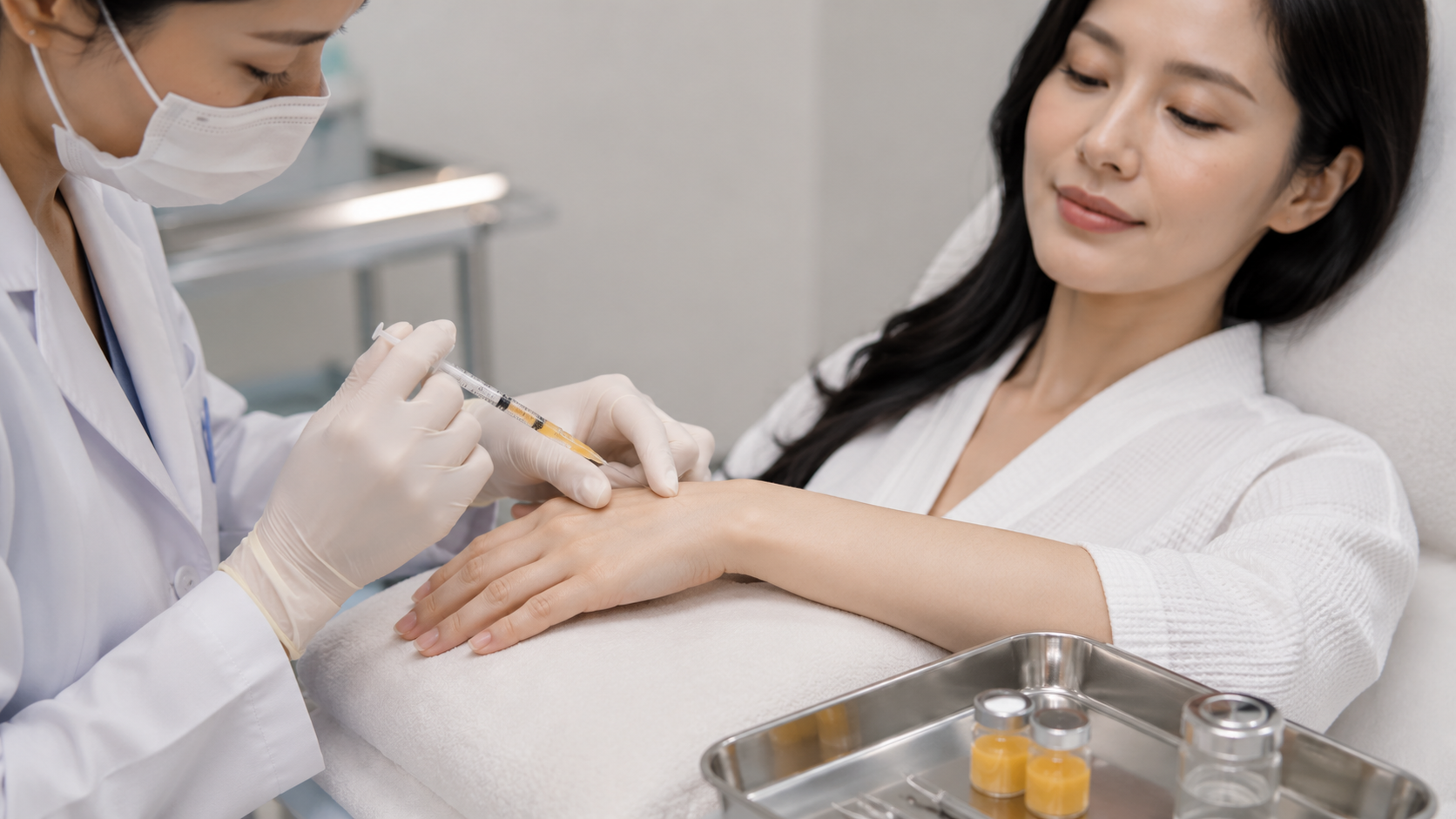
Hand rejuvenation may involve more than one modality when a patient has both volume loss and skin-quality concerns, such as pairing fat grafting with laser or light-based treatments for surface texture or pigmentation; the appropriate combination is individualized rather than offered as a standard package.
Patients also interested in restoring facial volume in the same visit may review the clinic's Facial Fat Grafting page, which applies the same harvesting-and-reinjection approach to a different treatment area.
Whether to combine hand fat grafting with another procedure in a single session, rather than staging visits separately, depends on overall health, total anesthesia time, and each procedure's healing needs, decided individually — a consideration that matters particularly for international patients planning travel around recovery.
Safety, Precision, and Clinic Standards
Good-Line Plastic Surgery Clinic is a Registered Medical Institution for Attracting Foreign Patients, certified by Korea's Ministry of Health and Welfare under the Medical Overseas Expansion and Foreign Patients Attraction Act. Dr. Choi deokho is a full member of the Korean Society of Plastic and Reconstructive Surgeons. Hand fat grafting patients are assessed individually for donor fat, dorsal-hand anatomy, and medical history before a plan is finalized. As with any harvesting-and-reinjection procedure, temporary swelling, bruising, tenderness, and mild asymmetry at both the donor and injection sites are possible. Less common risks include infection, contour irregularity, small scars at the harvest or injection site, cyst formation, fat necrosis, and partial reabsorption of the transferred fat; fat embolism is described in the wider fat-grafting literature as a rare but serious complication that should be discussed individually with the surgeon (see ASPS — Fat Grafting History and Applications).
Risk reduction relies on more than injection technique alone: careful donor-site selection, sterile technique, controlled injection of small increments rather than large boluses, and consistent postoperative monitoring are treated as standard rather than optional. Scheduled follow-up visits are integral to the treatment plan, since early identification of unusual swelling, firmness, or asymmetry allows simpler management than addressing it later. Patients are encouraged to report unusual pain, rapid swelling, or sensory changes in the treated hand promptly rather than waiting for the next scheduled appointment.
The Bottom Line
Hand fat grafting at Good-Line uses a patient's own harvested fat to restore volume to the back of the hand where age- or volume-related fat loss has made tendons and veins prominent.
Fat is harvested from a donor site, processed (commonly by centrifugation), and reinjected into the dorsal hand with a disposable cannula under anesthesia suited to the extent of the case.
Reviewed and performed under Dr. Choi deokho, an experienced plastic surgeon with roughly 25 years at the clinic.
Because some transferred fat is naturally reabsorbed, the final result develops gradually and can take up to around six months to fully stabilize.
Results should be described as potentially long-lasting rather than guaranteed permanent, since aging and individual healing continue to affect the hand after treatment.
Frequently Asked Questions
What does hand fat grafting actually correct? It restores lost volume to the back of the hand, where age- or weight-related fat loss makes tendons, veins, and bony structures appear more prominent through thin, deflated skin. It targets volume specifically, rather than skin texture, pigmentation, or fine wrinkling.
Is hand fat grafting painful? Discomfort during the procedure is generally controlled with local anesthesia, sedation, or general anesthesia depending on the extent of the case. Afterward, soreness, tenderness, swelling, or bruising is common at both the donor and injection sites and is generally manageable with the surgeon's recommended aftercare.
What anesthesia is typically used? The anesthesia depends on the treatment plan and the amount of fat being harvested. Local anesthesia with sedation is generally used for smaller cases, while general anesthesia may be considered for more extensive treatment; the surgeon determines the safest option at consultation.
How long is recovery after hand fat grafting? Swelling, bruising, and soreness affect both the hand and the donor area in the first days after treatment, gradually improving over the following one to two weeks. More complete swelling resolution and contour stabilization generally take longer, and published evidence indicates the fully settled result can take up to about six months.
When will I see the final result? An initial change in hand volume is visible soon after treatment, but early swelling can make the hand look fuller than the eventual outcome. As swelling decreases and some of the transferred fat is naturally reabsorbed over the following months, the appearance becomes more representative of the stabilized final result.
How does hand fat grafting compare with dermal fillers on the hands? Fillers use a manufactured injectable material and require no donor-site harvesting, which can suit smaller corrections with less procedural time. Hand fat grafting uses the patient's own tissue and requires a harvesting step, but is generally considered a longer-lasting approach to restoring dorsal-hand volume; the right option depends on goals and anatomy, decided at consultation.
What are the risks specific to hand fat grafting? Common temporary effects include swelling, bruising, soreness, and mild asymmetry at the donor and injection sites. Less common risks include infection, contour irregularity, small scars, cysts, fat necrosis, and partial fat reabsorption; rarer complications such as fat embolism should be reviewed individually with the surgeon.
Is English-language consultation available for hand fat grafting? Yes, Good-Line Plastic Surgery Clinic offers English-language support and an online contact channel for international patients considering hand fat grafting, alongside a multilingual clinic website.
How many days should I plan to stay in Korea for hand fat grafting? The appropriate stay depends on the amount of fat harvested, whether the procedure is combined with other treatments, and individual healing, and should be confirmed directly with the clinic rather than assumed from a general guideline.
Book a Consultation at Good-Line Plastic Surgery Clinic

To discuss whether hand fat grafting fits your goals for restoring volume to the back of the hands, contact Good-Line Plastic Surgery Clinic in Gangnam-gu, Seoul at +82 2 543 1830 or through the clinic's online contact form. A consultation with the surgeon is the only reliable way to determine the donor site, technique, and expected outcome for your specific hand anatomy and goals.
Disclaimer
This page is for general informational purposes and does not constitute individualized medical advice. Candidacy, technique, and expected outcomes can only be determined through a consultation with a qualified physician.
Sources & Further Reading
Other Services
Explore additional treatments offered by our specialists.

Under-Eye Fat Repositioning
Under-eye fat repositioning is a transconjunctival lower-eyelid procedure that redistributes — rather than discards — the fat compartments beneath the eye, moving them around the orbital bone to correct hollowing and bulging caused by aging skeletal and.
Learn More

TRIPLE CELL
TRIPLE CELL is a non-invasive, radiofrequency-based skin treatment designed to deliver energy into different layers of the skin to support hydration, elasticity, and collagen-related skin recovery.
Learn More

Thermage Skin Tightening
Thermage Skin Tightening is a non-surgical radiofrequency treatment that heats targeted tissue beneath the skin to stimulate collagen remodeling, improving the appearance of mild-to-moderate skin laxity.
Learn More