Natural-Looking Face & Neck Lift Surgery and Personalized Anti-Aging Care in Apgujeong, Gangnam, Seoul
4.1 ★ Google · Board-Certified Plastic Surgeon
en-US

Eye Surgery · Consultation Required
Lower Blepharoplasty
Lower blepharoplasty is a surgical procedure that corrects under-eye bags, fat bulging, and excess or loose lower-eyelid skin through an incision made either inside the eyelid or just below the lash line, depending on which tissue needs to be addressed.
Schedule a Consultation
Lower Blepharoplasty

Reviewer Details
Medically reviewed by Dr. Choi deokho, Representative Director & Plastic Surgeon, Good-Line Plastic Surgery Clinic.
Registered as the clinic's legal representative in the Korean National Tax Service registry, Full Member of the Korean Society of Plastic and Reconstructive Surgeons · Last reviewed 2026-08-18 · Good-Line Plastic Surgery Clinic, Gangnam-gu, Seoul.
Lower blepharoplasty is a surgical procedure that improves the appearance of the lower eyelids by addressing under-eye bags, bulging or displaced fat, and age-related excess skin. At Good-Line Plastic Surgery Clinic in Seoul, the approach is selected according to each patient's lower-eyelid fat, skin laxity, and overall facial balance, with the goal of a rested, natural-looking under-eye area rather than an artificially flat or overly tight result.
What Is Lower Blepharoplasty?
Lower blepharoplasty is a surgical procedure that corrects under-eye bags, fat bulging, and excess or loose lower-eyelid skin through an incision made either inside the eyelid or just below the lash line, depending on which tissue needs to be addressed.
Improves under-eye bags, fat-related bulging, and the overall tired appearance of the lower eyelid.
Can involve fat repositioning or removal, and, when present, management of excess or loose lower-eyelid skin.
Anesthesia is typically local, sometimes combined with sedation, depending on the technique and whether other procedures are performed at the same time.
Commonly takes about 1-2 hours, depending on the technique used and whether fat repositioning, fat removal, or additional correction is performed.
Results become visible as swelling resolves, with a fully settled appearance generally assessed several months after surgery.
Who Performs Lower Blepharoplasty at Good-Line Plastic Surgery Clinic

Dr. Choi deokho
Representative Director and plastic surgeon
Dr. Choi deokho is the Representative Director and plastic surgeon at Good-Line Plastic Surgery Clinic, with approximately 25 years associated with the clinic since its founding in 2001. His stated core specializations include facial plastic surgery with a specific focus on eye surgery and eye revision, alongside rhinoplasty and facial contouring, and he holds full membership in the Korean Society of Plastic and Reconstructive Surgeons, the Korean Society for Microsurgery, the Korean Cleft Palate-Craniofacial Association, the Japan Society of Aesthetic Plastic Surgery, the American Society of Aesthetic Plastic Surgery, and the International Society of Aesthetic Plastic Surgery. Before recommending a specific lower-eyelid approach, Dr. Choi assesses lower-eyelid skin quality, fat volume and position, eyelid tone, and overall facial balance, since these anatomical factors — not a patient's stated preference for a particular technique — largely determine whether an internal, scarless approach is sufficient or whether external skin correction is also needed.
Because lower-eyelid concerns range from isolated fat bulging in an otherwise elastic eyelid to more complex cases involving loose skin, fine wrinkling, and reduced eyelid tone, the evaluation is not treated as a formality before a standard package is booked. A patient requesting lower blepharoplasty primarily for under-eye bags may, on examination, have sufficient skin elasticity for a scarless internal approach alone, while a patient with the same complaint but looser, less elastic lower-eyelid skin may be advised that an external incision with limited skin excision is needed for a durable result. This anatomy-first distinction is treated as central to the consultation, since applying an internal-only approach to a patient who needs skin correction — or an external approach to a patient who does not — can affect both the result and the recovery.
Lower Blepharoplasty Options Available
Transconjunctival Approach | Subciliary (Skin-Muscle Flap) Approach |
|---|---|
Access through the inner eyelid (conjunctiva); no external incision or visible scar | External incision placed just below the lower lash line |
Addresses fat bulging through repositioning or removal, without correcting skin | Allows removal or tightening of excess or loose lower-eyelid skin in addition to fat correction |
Best suited to patients with fat-related bulging and reasonably elastic skin, without significant excess skin | Best suited to patients with visible lower-eyelid skin laxity, fine wrinkling, or excess skin alongside fat bulging |
Generally associated with less visible external evidence of surgery and a comparatively quicker return to routine activity | Allows more comprehensive correction where skin, not just fat, is contributing to the tired appearance |
Choosing between these two approaches depends on individual examination rather than patient preference alone. A patient whose main concern is fat bulging, with skin that retains reasonable elasticity, is generally well suited to the transconjunctival approach, since there is no excess skin that needs to be removed and the internal incision leaves no visible trace once healed. A patient with looser or excess lower-eyelid skin — commonly a feature of more advanced aging or significant prior sun exposure — is less likely to achieve a lasting improvement from fat correction alone, since the loose skin itself continues to contribute to a tired or aged appearance regardless of how the fat is managed; this patient is generally better served by the subciliary approach, which allows the surgeon to address the skin directly. In some cases, a skin-pinch test and assessment of the three under-eye fat compartments are used at consultation to help decide which category a patient's anatomy falls into before a technique is confirmed.
Anesthesia for lower blepharoplasty is typically local, in some cases combined with sedation, depending on the technique selected and whether the procedure is combined with another treatment in the same session; the exact anesthesia plan is confirmed individually with the surgeon. As general guidance, the procedure commonly takes around 1-2 hours, though the exact duration for any individual patient depends on the technique used and whether additional correction — such as skin excision or combined fat repositioning and removal — is performed at the same time.
Who Is a Good Candidate for Lower Blepharoplasty?
Adults with noticeable under-eye bags, fat-related bulging, or a persistently tired-looking lower eyelid that does not resolve with sleep or lifestyle changes.
Patients with excess or loose lower-eyelid skin contributing to an aged appearance, generally better suited to the subciliary approach.
Patients with fat bulging and reasonably elastic skin without significant excess skin, generally well suited to the scarless transconjunctival approach.
Generally healthy individuals without active eye or eyelid-skin infection and without uncontrolled medical conditions that could increase surgical risk.
Patients able to disclose a complete medical and medication history, including any prior eyelid or eye surgery, before a technique is confirmed.
Patients with realistic expectations about the outcome, understanding that lower blepharoplasty can improve — but does not halt — ongoing natural aging around the eyes.
Patients with significant untreated dry-eye disease, uncontrolled bleeding disorders, or other significant unmanaged eye problems are generally not appropriate candidates until these issues are medically addressed.
What to Expect: Procedure, Recovery, and Results Timeline

Stage | What Typically Happens |
|---|---|
Day 0 (Day of Surgery) | Local anesthesia, in some cases with sedation; transconjunctival surgery accesses fat through the inner eyelid, while the subciliary approach uses an external incision below the lash line |
Day 1-3 | Swelling and bruising are most noticeable; cold compresses are commonly used during this period to help manage both |
Day 5-10 | Bruising continues to fade for most patients; many feel comfortable resuming light routine activity, though the subciliary approach generally involves a somewhat longer early recovery than the transconjunctival approach |
Week 4-8 | Residual swelling gradually resolves and the lower-eyelid contour continues to settle |
Month 12+ | The result is generally considered stable and long-lasting, though natural aging of the lower eyelid and surrounding skin continues afterward |
Before surgery, patients are generally asked to disclose a complete medical and medication history, including any prior eyelid or eye surgery, dry-eye issues, and bleeding disorders, and to review any medications or supplements that can increase bleeding risk, such as aspirin, anticoagulants, and fish oil, typically pausing them only on the surgeon's advice and usually 1-2 weeks beforehand. Smoking and alcohol are generally discouraged before surgery because both can affect healing and bleeding risk, and scheduling is generally avoided during an active eye infection or other acute illness. Patients should arrange transportation home after the procedure, since sedation may be used depending on the technique, and fasting instructions may apply if sedation or general anesthesia is planned.
Aftercare commonly includes cold compresses during the first 24-48 hours to reduce swelling, keeping the head elevated while sleeping, avoiding rubbing or applying pressure to the treated area, and using prescribed lubricating eye drops if dryness or irritation occurs. Patients are generally advised to avoid strenuous exercise, swimming, and prolonged sun exposure for one to two weeks, and to wear sunglasses outdoors during early healing. Attending scheduled follow-up visits is emphasized regardless of technique, since the transconjunctival approach leaves no external stitches to remove while the subciliary approach requires monitoring of the external incision as it heals.
International patients evaluating lower blepharoplasty in Seoul commonly plan around 7-10 days in Korea to allow for the operation, early follow-up, and assessment before returning home, though the exact schedule depends on the technique used and individual healing and should be confirmed with the clinic. Many patients can consider flying home after the early postoperative review, often around 7 days, provided there are no complications and the surgeon considers travel appropriate; this should always be confirmed individually rather than assumed. Good-Line Plastic Surgery Clinic offers English-language consultation and an online contact channel to support this planning for patients traveling from abroad.
Combining Lower Blepharoplasty with Other Treatments
Patients whose primary concern is under-eye fat bulging or hollowing, without significant excess skin, may separately discuss the clinic's Under-Eye Fat Repositioning procedure, which redistributes fat around the orbital bone through a scarless transconjunctival approach rather than removing it outright.
Lower blepharoplasty is sometimes performed together with upper blepharoplasty in the same session when a patient's concerns involve both the upper and lower eyelid.
Patients addressing broader signs of facial aging alongside lower-eyelid concerns may also review the clinic's facelift and lifting options as part of a more comprehensive rejuvenation plan.
Whether to combine procedures in a single session or stage them separately depends on the patient's overall health, the combined anesthesia and recovery time involved, and — for international patients specifically — how much time is realistically available in Korea for recovery and follow-up.
Safety, Precision, and Clinic Standards
Good-Line Plastic Surgery Clinic is a Registered Medical Institution for Attracting Foreign Patients, certified by Korea's Ministry of Health and Welfare under the Medical Overseas Expansion and Foreign Patients Attraction Act. Dr. Choi deokho is a full member of the Korean Society of Plastic and Reconstructive Surgeons. Patient assessment before lower blepharoplasty includes a review of lower-eyelid skin, fat, and eyelid position, along with medical history and current medications, before a specific technique is confirmed. As with any eyelid surgery, temporary swelling, bruising, asymmetry, and dry or irritated eyes are possible, and less common risks include infection, hematoma, over- or under-correction of fat, and, rarely, changes to eyelid position such as ectropion or lower-eyelid retraction — a consultation with the surgeon is required to review individual risk (see ASPS — Eyelid Surgery Safety).
Sterile surgical technique and correct technique selection for each patient's lower-eyelid anatomy are treated as baseline requirements rather than differentiators, and scheduled postoperative follow-up is treated as an integral part of risk reduction rather than an optional courtesy visit, since a missed follow-up can delay identification of a complication — such as early signs of lid malposition — that would otherwise be manageable if caught early. Patients are encouraged to raise any concerning symptom, including unusual pain, vision changes, persistent dryness, or asymmetric swelling, with the clinic promptly rather than waiting for the next scheduled appointment.
The Bottom Line
Lower blepharoplasty at Good-Line addresses under-eye bags, fat bulging, and excess or loose lower-eyelid skin through either a scarless transconjunctival approach or a subciliary approach with limited skin excision.
Technique choice depends on lower-eyelid fat volume, skin elasticity, and the degree of excess skin present — not a single default method applied to every patient.
Reviewed and performed under Dr. Choi deokho, a board-registered, experienced plastic surgeon with roughly 25 years at the clinic and a specific stated focus on eye surgery and eye revision.
Results are considered long-lasting, though the final under-eye contour typically takes several months to fully settle, and natural aging of the surrounding face continues afterward.
Patients whose primary concern is fat-related hollowing without excess skin may be better served by the clinic's dedicated Under-Eye Fat Repositioning procedure instead.
Frequently Asked Questions
What is lower blepharoplasty and who is it for? Lower blepharoplasty is a surgical procedure that corrects under-eye bags, fat-related bulging, and excess or loose lower-eyelid skin. It is generally suitable for adults with a persistently tired-looking lower eyelid that does not improve with sleep or lifestyle changes, once a consultation confirms candidacy based on eyelid anatomy and overall health.
What is the difference between the transconjunctival and subciliary approaches? The transconjunctival approach accesses fat through an incision inside the eyelid, leaving no external scar, and is best suited to patients with fat bulging and reasonably elastic skin. The subciliary approach uses an external incision just below the lash line, which allows the surgeon to also remove or tighten excess skin — an option not available through the internal approach alone.
Is lower blepharoplasty painful? The procedure itself is generally performed with local anesthesia, sometimes combined with sedation, so significant pain during surgery is not expected. Afterward, mild discomfort, tightness, swelling, or bruising is common and is generally managed with cold compresses and, if prescribed, pain medication.
How long is the recovery, and when are results visible? Swelling and bruising are usually most noticeable during the first several days and gradually improve over the following one to two weeks, with many patients resuming light daily activity in that window. An initial improvement can be seen as swelling decreases, but the final result is generally assessed once tissue has fully settled, commonly around three to six months after surgery.
Will lower blepharoplasty leave a visible scar? The transconjunctival approach leaves no external scar, since the incision is made inside the eyelid. The subciliary approach places its incision just below the lash line specifically so that any resulting scar is well concealed within the natural lower-eyelid line once healing is complete.
What are the risks of lower blepharoplasty? Potential risks include bleeding or hematoma, infection, scarring, asymmetry, prolonged swelling, dry or irritated eyes, and, uncommonly, changes to eyelid position such as retraction or ectropion. Serious complications are uncommon, and the specific risk profile depends partly on which technique is used; this should be reviewed individually with the surgeon.
How many days should I plan to stay in Korea for lower blepharoplasty? A stay of approximately 7-10 days is commonly recommended to allow for the operation, early follow-up, and assessment before returning home. The exact schedule depends on the technique used and individual healing, and should be confirmed directly with the clinic.
Can lower blepharoplasty be combined with other procedures? Yes — it is sometimes performed together with upper blepharoplasty in the same session, and patients with broader facial aging concerns may also discuss combining it with facelift or lifting procedures. Whether combining treatments is appropriate depends on the patient's anatomy, overall health, and the total anesthesia and recovery time involved, and is assessed individually during consultation.
Book a Consultation at Good-Line Plastic Surgery Clinic
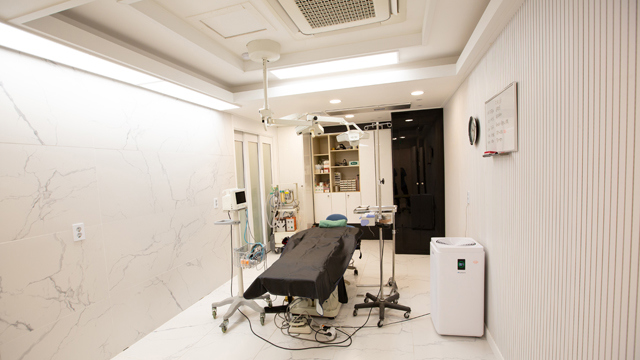
To discuss whether the transconjunctival or subciliary approach best fits your lower-eyelid anatomy and aesthetic goals, contact Good-Line Plastic Surgery Clinic in Gangnam-gu, Seoul at +82 2 543 1830 or through the clinic's online contact form. A consultation with Dr. Choi deokho is the only reliable way to determine which technique is appropriate for your specific lower-eyelid fat, skin elasticity, and aesthetic goals.
Disclaimer
This page is for general informational purposes and does not constitute individualized medical advice. Candidacy, technique, and expected outcomes can only be determined through a consultation with a qualified physician.
Sources & Further Reading
Other Services
Explore additional treatments offered by our specialists.

Under-Eye Fat Repositioning
Under-eye fat repositioning is a transconjunctival lower-eyelid procedure that redistributes — rather than discards — the fat compartments beneath the eye, moving them around the orbital bone to correct hollowing and bulging caused by aging skeletal and.
Learn More

TRIPLE CELL
TRIPLE CELL is a non-invasive, radiofrequency-based skin treatment designed to deliver energy into different layers of the skin to support hydration, elasticity, and collagen-related skin recovery.
Learn More

Thermage Skin Tightening
Thermage Skin Tightening is a non-surgical radiofrequency treatment that heats targeted tissue beneath the skin to stimulate collagen remodeling, improving the appearance of mild-to-moderate skin laxity.
Learn More