Natural-Looking Face & Neck Lift Surgery and Personalized Anti-Aging Care in Apgujeong, Gangnam, Seoul
4.1 ★ Google · Board-Certified Plastic Surgeon
en-US

Facial Contouring Surgery · Consultation Required
Nasolabial Fold Contouring
Nasolabial fold contouring is an umbrella term for the range of injectable, fat-based, thread, and surgical techniques used to reduce the visible depth of the folds that run from beside the nose down toward the corners of the mouth.
Schedule a Consultation
Nasolabial Fold Contouring

Reviewer Details
Medically reviewed by Dr. Choi deokho, Representative Director & Plastic Surgeon, Good-Line Plastic Surgery Clinic.
Registered as the clinic's legal representative in the Korean National Tax Service registry, Full Member of the Korean Society of Plastic and Reconstructive Surgeons · Last reviewed 2026-08-18 · Good-Line Plastic Surgery Clinic, Gangnam-gu, Seoul.
Nasolabial fold contouring at Good-Line Plastic Surgery Clinic in Seoul is an aesthetic treatment designed to soften the visible folds running from the sides of the nose toward the corners of the mouth, restoring a smoother, more balanced midface contour. The clinic offers several distinct approaches — injectable filler, autologous fat grafting, thread-based lifting, and surgical correction — with the specific technique matched to fold depth, skin condition, and the underlying cause identified at consultation. The goal is a softer-looking fold and improved facial balance rather than complete elimination of the natural crease.
What Is Nasolabial Fold Contouring?
Nasolabial fold contouring is an umbrella term for the range of injectable, fat-based, thread, and surgical techniques used to reduce the visible depth of the folds that run from beside the nose down toward the corners of the mouth.
Addresses folds caused by aging, midface volume loss, repeated facial movement, or underlying facial bone and soft-tissue structure.
Injectable approaches use dermal filler placed directly into or beneath the fold to add volume and smooth its appearance.
Fat-based correction uses the patient's own harvested and processed fat, reinjected into the midface to restore lost volume rather than a synthetic material.
Thread-based correction uses absorbable suspension threads to lift and support sagging midface tissue that has deepened the fold.
Surgical correction directly addresses more pronounced folds tied to structural skin laxity or significant tissue descent, generally through a facelift or facial-lifting approach.
Anesthesia ranges from topical or local anesthetic for injectable treatment to local anesthesia with sedation or general anesthesia for surgical correction, depending on the technique selected.
Who Performs Nasolabial Fold Contouring at Good-Line Plastic Surgery Clinic

Dr. Choi deokho
Representative Director and plastic surgeon
Dr. Choi deokho is the Representative Director and plastic surgeon at Good-Line Plastic Surgery Clinic, with approximately 25 years associated with the clinic since its establishment in 2001. His stated core specializations include facial plastic surgery, rhinoplasty, facial contouring, and anti-aging and lifting procedures, all of which inform how he evaluates midface volume loss and fold depth. He holds full membership in the Korean Society of Plastic and Reconstructive Surgeons, the Korean Society for Microsurgery, the Korean Cleft Palate-Craniofacial Association, the Japan Society of Aesthetic Plastic Surgery, the American Society of Aesthetic Plastic Surgery, and the International Society of Aesthetic Plastic Surgery. Patients considering nasolabial fold contouring are assessed individually for fold depth, skin and soft-tissue condition, and underlying cause before Dr. Choi deokho recommends a specific approach.
Because nasolabial folds can result from very different underlying causes — pure volume loss, repeated muscle movement, or structural skin laxity — Dr. Choi's evaluation places particular weight on identifying which cause is driving a given patient's fold, since an injectable or fat-based approach addresses volume loss directly but does not correct significant structural sagging the way a surgical lift can.
Nasolabial Fold Contouring Options Available
Injectable Filler | Fat Grafting | Thread-Based Correction | Surgical Correction |
|---|---|---|---|
Dermal filler injected directly into or beneath the fold to add volume and smooth its appearance | Patient's own harvested and processed fat reinjected into the midface to restore lost volume | Absorbable suspension threads placed to lift and support sagging midface tissue | Facelift or facial-lifting approach that directly repositions and tightens descended tissue |
Best for mild to moderate folds caused primarily by volume loss, with minimal downtime desired | Best for patients wanting a longer-lasting, natural-tissue result and who have suitable donor fat | Best for early tissue laxity contributing to fold depth alongside volume loss | Best for pronounced folds tied to significant structural skin laxity or tissue descent |
Outpatient, commonly about 30-60 minutes; topical or local anesthetic | Requires a donor-site harvesting step in addition to the injection itself; local anesthesia, sedation, or general anesthesia depending on extent | Local anesthesia; less downtime than a surgical lift but generally more involved than filler alone | Local anesthesia with sedation or general anesthesia; longest procedure and recovery among these options |
Beyond these four named approaches, the clinic frames nasolabial fold contouring as a spectrum, with the technique depending on how much of the fold is attributable to volume loss versus tissue descent. For injectable filler, the area is assessed and marked, anesthesia or pain control applied, filler placed with attention to layering and symmetry, and the area checked before discharge. Fat-grafting correction follows the clinic's broader protocol: fat is harvested by liposuction, processed through centrifugation, and reinjected into the nasolabial region with a disposable cannula, with the first four to five days treated as a particularly important window for fat engraftment. Thread-based correction places absorbable threads along a planned vector to lift sagging tissue, while surgical correction is generally performed as part of a broader facelift procedure.
The underlying cause of the fold constrains which technique will hold up over time: a fold reflecting primarily lost volume, with elastic skin, is often well served by an injectable or fat-based approach, while genuine skin laxity and tissue descent is less likely to hold with volume restoration alone — which is why the surgeon's direct examination, not a fixed menu, determines the plan.
Who Is a Good Candidate for Nasolabial Fold Contouring?
Adults with visible nasolabial folds, loss of midface volume, or facial aging who want to soften the folds, with realistic expectations rather than expecting complete elimination.
Patients whose fold is driven mainly by volume loss, with generally elastic skin, for injectable or fat-based correction.
Patients with earlier-stage tissue laxity, for thread-based lifting, or more pronounced structural laxity and midface descent, for surgical correction.
Generally healthy individuals without active skin infection, uncontrolled medical conditions, or known allergies to the proposed treatment material.
Not suitable candidates generally include those who are pregnant or breastfeeding until they discuss postponing treatment with their doctor, and those with significant healing problems, until appropriately assessed.
What to Expect: Procedure, Recovery, and Results Timeline
Anesthesia and the procedure itself vary substantially by technique — topical or local anesthetic for injectable treatment, local anesthesia for thread-based correction, and local anesthesia with sedation or general anesthesia for fat grafting or surgical correction — with the exact plan confirmed with the surgeon based on which approach is selected.
Stage | What typically happens |
|---|---|
Day 0 | Treatment area assessed and marked; anesthesia or pain control applied; selected technique (filler, fat grafting, threads, or surgical correction) performed; area checked before discharge |
Day 1-3 | Mild swelling, redness, tenderness, or bruising is common at injection or incision sites; discomfort is generally manageable |
Day 5-10 | For injectable and thread-based correction, most visible swelling and bruising has typically settled; fat-grafting and surgical patients are still within an early, closely monitored healing window |
Week 4-8 | Injectable results are generally assessed once swelling has fully settled; fat-grafting and surgical results continue to develop as tissue heals and any residual swelling resolves |
Month 12+ | Collagen-stimulating and thread-based results may still be developing; fat-grafting outcomes reflect the portion of transferred fat that has been retained long-term; surgical correction is generally considered stable |
A non-surgical injectable treatment commonly takes approximately 30-60 minutes as an outpatient procedure; fat-grafting requires additional time for donor-site harvesting and processing before reinjection. Many international patients complete an injectable procedure and early follow-up within approximately 1-3 days; those considering fat grafting, thread-based, or surgical correction should confirm the appropriate stay with the surgeon, since these generally require a longer recovery window.
Before treatment, patients should disclose their full medical history, allergies, current medications, and any history of reactions to injectable products, and avoid arriving with active skin irritation in the treatment area. Aftercare generally involves avoiding unnecessary pressure on the treated area and attending follow-up visits; for fat grafting specifically, the clinic treats the first four to five days as an important engraftment window, supporting healing with concentrated vitamin C.
With an immediately volumizing injectable, improvement can be visible right after treatment, though early swelling can temporarily affect the appearance. Collagen-stimulating products instead develop progressively over following weeks or months. Fat-grafting longevity depends on how much transferred fat is retained after natural reabsorption, while thread-based and surgical correction each follow their own settling pattern.
Combining Nasolabial Fold Contouring with Other Treatments
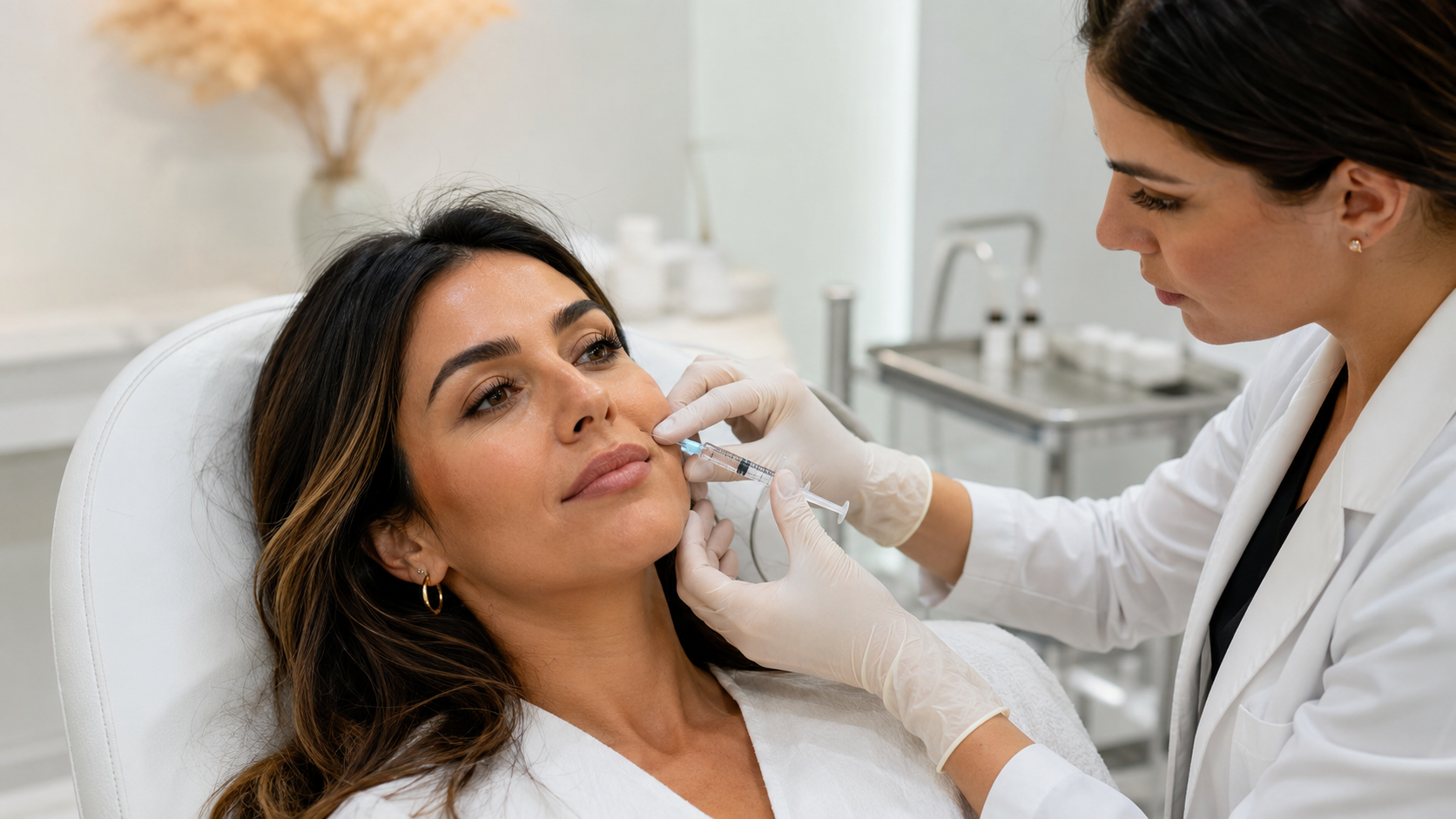
Nasolabial fold contouring may be combined with other facial-contouring or rejuvenation procedures when clinically appropriate, based on individual assessment rather than a fixed package.
Patients whose fold is driven primarily by broader facial volume loss may also be evaluated for the clinic's Facial Fat Grafting approach, which restores volume to sunken cheeks and temples beyond the fold itself.
Patients with broader age-related concerns spanning the jawline, cheeks, and neck may discuss combining correction with a broader facelift or anti-aging plan during the same consultation.
Combining nasolabial fold contouring with chin augmentation or forehead contouring may also be considered for overall facial harmonizing.
Combining an injectable or fat-based treatment with another facial procedure in the same visit can reduce the total number of clinic trips required, which matters for international patients coordinating travel. Combining a more involved technique such as surgical correction or fat grafting with additional procedures can extend anesthesia time, so the surgical team weighs the combination against the patient's overall health before recommending whether to combine or stage treatments.
Safety, Precision, and Clinic Standards
Good-Line Plastic Surgery Clinic is a Registered Medical Institution for Attracting Foreign Patients, certified by Korea's Ministry of Health and Welfare under the Medical Overseas Expansion and Foreign Patients Attraction Act. Dr. Choi deokho is a full member of the Korean Society of Plastic and Reconstructive Surgeons. Patients are assessed individually for fold depth, skin and soft-tissue condition, and underlying cause before a technique is selected, alongside a full review of medical history, allergies, and current medications. Possible effects can include swelling, bruising, tenderness, asymmetry, infection, and contour irregularity, and injectable treatments in the midface specifically carry a rare but serious risk of vascular complications if material enters or compresses a blood vessel — a consultation with the surgeon is required to review individual risk (see ASPS Dermal Fillers).
Sterile technique and correct anatomical placement are treated as baseline requirements rather than differentiators, particularly for injectable approaches in the midface where vascular anatomy must be respected. Patients are encouraged to raise any concerning symptom promptly rather than waiting for the next scheduled appointment.
The Bottom Line
Nasolabial fold contouring at Good-Line spans injectable filler, fat grafting, thread-based lifting, and surgical correction.
Technique choice depends on an individual assessment of fold depth, skin condition, and underlying cause — not a single default treatment applied to every patient.
The goal is a softer-looking fold and improved facial balance; results vary according to anatomy, technique, and the degree of tissue aging, and complete elimination of the fold is not a realistic expectation.
Reviewed and performed under Dr. Choi deokho, a board-registered, experienced plastic surgeon with roughly 25 years at the clinic.
Non-surgical injectable options generally involve considerably less downtime than fat grafting or surgical correction.
Frequently Asked Questions
What is nasolabial fold contouring? Nasolabial fold contouring is an aesthetic treatment designed to soften the visible folds running from the sides of the nose toward the corners of the mouth, using injectable filler, fat grafting, thread-based lifting, or surgical correction depending on fold depth and underlying cause.
Am I a good candidate for nasolabial fold contouring? Adults with visible nasolabial folds, midface volume loss, or facial aging who are in generally good health and have realistic expectations about improvement — rather than complete elimination of the fold — are generally good candidates. Patients with active skin infection or uncontrolled medical conditions may not be suitable until appropriately assessed.
What is the difference between injectable filler and fat grafting for nasolabial folds? Injectable filler uses a manufactured dermal filler placed directly into or beneath the fold, requiring no harvesting step. Fat grafting instead uses the patient's own fat, harvested, processed, and reinjected into the midface — a living-tissue alternative requiring an additional donor-site step.
Is nasolabial fold contouring painful? For non-surgical injectable treatment, mild discomfort, pressure, or stinging may occur, generally manageable with a topical or local anesthetic. Fat-grafting and surgical correction involve more discomfort during early recovery, managed with prescribed pain medication.
How long does treatment take, and how many days should I stay in Korea? Non-surgical injectable treatment commonly takes about 30-60 minutes, and many international patients complete treatment and follow-up within approximately 1-3 days. Fat grafting, thread-based, and surgical correction each involve a longer procedure and recovery, so the appropriate stay should be confirmed with the surgeon.
When will I see results, and how long do they last? With an immediately volumizing filler, improvement can be visible right after treatment, though the final result is best judged once swelling settles. Collagen-stimulating injectables and thread-based correction develop progressively; fat-grafting longevity depends on how much transferred fat is retained, while surgical correction is generally the most durable option.
What are the risks of nasolabial fold contouring? Possible risks include swelling, bruising, tenderness, asymmetry, infection, and contour irregularity. Injectable treatments in the midface carry a rare but serious risk of vascular complications if filler enters or compresses a blood vessel, which is why an individualized consultation is essential.
Can nasolabial fold contouring be combined with other procedures? Yes — it may be combined with other facial-contouring or rejuvenation procedures, including facial fat grafting or a broader anti-aging plan, when clinically appropriate. Suitability depends on anatomy, overall health, and total anesthesia and recovery time, assessed individually during consultation.
Book a Consultation at Good-Line Plastic Surgery Clinic
To discuss whether injectable filler, fat grafting, thread-based lifting, or surgical correction best fits your nasolabial folds and facial goals, contact Good-Line Plastic Surgery Clinic in Gangnam-gu, Seoul at +82 2 543 1830 or through the clinic's online contact form. A consultation with the surgical team is the only reliable way to determine which technique fits your specific fold depth, skin condition, and facial anatomy.
Disclaimer
This page is for general informational purposes and does not constitute individualized medical advice. Candidacy, technique, and expected outcomes can only be determined through a consultation with a qualified physician.
Sources & Further Reading
Other Services
Explore additional treatments offered by our specialists.

Under-Eye Fat Repositioning
Under-eye fat repositioning is a transconjunctival lower-eyelid procedure that redistributes — rather than discards — the fat compartments beneath the eye, moving them around the orbital bone to correct hollowing and bulging caused by aging skeletal and.
Learn More

TRIPLE CELL
TRIPLE CELL is a non-invasive, radiofrequency-based skin treatment designed to deliver energy into different layers of the skin to support hydration, elasticity, and collagen-related skin recovery.
Learn More

Thermage Skin Tightening
Thermage Skin Tightening is a non-surgical radiofrequency treatment that heats targeted tissue beneath the skin to stimulate collagen remodeling, improving the appearance of mild-to-moderate skin laxity.
Learn More