Natural-Looking Face & Neck Lift Surgery and Personalized Anti-Aging Care in Apgujeong, Gangnam, Seoul
4.1 ★ Google · Board-Certified Plastic Surgeon
en-US

Nose Surgery · Consultation Required
Non-Surgical Filler Rhinoplasty
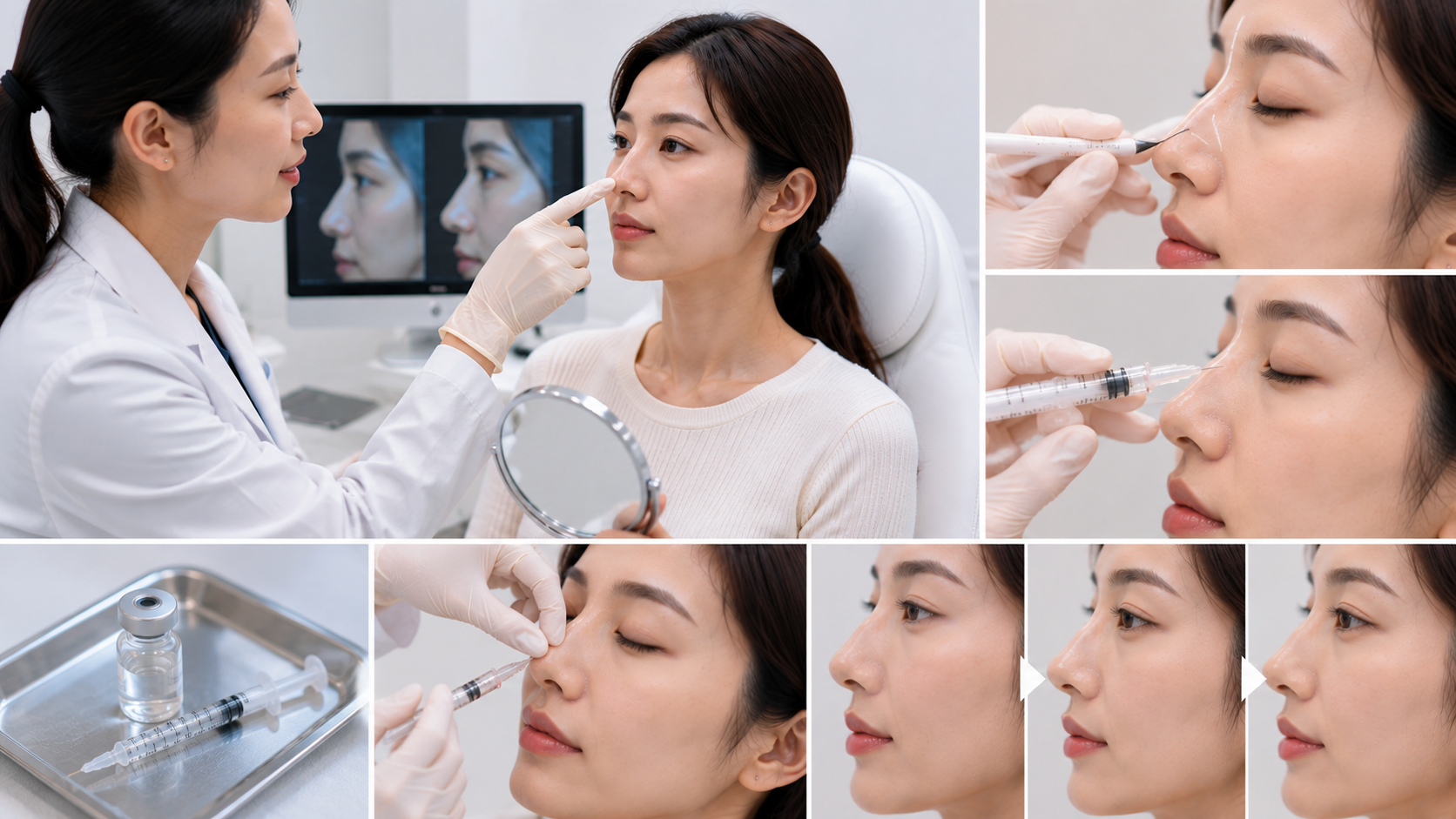
Non-surgical filler rhinoplasty is a quick injectable treatment that uses hyaluronic acid dermal filler to add volume and smooth the contour of the nose without any incision.
Schedule a Consultation
Non-Surgical Filler Rhinoplasty

Reviewer Details
Medically reviewed by Dr. Choi deokho, Representative Director & Plastic Surgeon, Good-Line Plastic Surgery Clinic.
Registered as the clinic's legal representative in the Korean National Tax Service registry, Full Member of the Korean Society of Plastic and Reconstructive Surgeons · Last reviewed 2026-08-18 · Good-Line Plastic Surgery Clinic, Gangnam-gu, Seoul.
Non-surgical filler rhinoplasty at Good-Line Plastic Surgery Clinic in Seoul is an injectable, "petit" treatment that adds volume to the nasal bridge, dorsum, or selected tip areas using hyaluronic acid filler rather than a surgical incision. It is designed for patients seeking a subtle, temporary contour change with minimal downtime rather than a permanent structural correction.
What Is Non-Surgical Filler Rhinoplasty?
Non-surgical filler rhinoplasty is a quick injectable treatment that uses hyaluronic acid dermal filler to add volume and smooth the contour of the nose without any incision.
Uses injectable hyaluronic acid filler, placed directly into the nasal bridge, dorsum, or, in select cases, the tip.
Performed under topical or local numbing rather than general anesthesia.
Takes approximately 10-30 minutes from injection to completion.
Visible change appears almost immediately, typically within about 10 minutes of injection.
Effects are temporary, generally lasting six to eighteen months as the body gradually metabolizes the filler.
Who Performs Non-Surgical Filler Rhinoplasty at Good-Line Plastic Surgery Clinic

Dr. Choi deokho
Representative Director and plastic surgeon
Dr. Choi deokho is the Representative Director and plastic surgeon at Good-Line Plastic Surgery Clinic, with approximately 25 years associated with the clinic since its establishment in 2001. Rhinoplasty and revision rhinoplasty are stated as a particular focus of his practice, and non-surgical filler rhinoplasty is offered within that same nasal-anatomy expertise rather than as a separate, generic injectable service. He holds full membership in the Korean Society of Plastic and Reconstructive Surgeons, the Korean Society for Microsurgery, the Korean Cleft Palate-Craniofacial Association, the Japan Society of Aesthetic Plastic Surgery, the American Society of Aesthetic Plastic Surgery, and the International Society of Aesthetic Plastic Surgery. Before injecting, Dr. Choi evaluates whether a patient's concern is a simple volume deficit — a sunken bridge or wide-looking nostrils that a filler can reasonably address — or a structural issue that filler cannot correct, since setting that expectation accurately at consultation is treated as central to the injectable's safe and appropriate use. Because filler placed at the nasal tip carries a distinct, recognized vascular risk — particularly in a patient who has previously had incisional nose surgery — his evaluation of prior surgical history before any tip-area injection is treated as a mandatory safety step rather than a routine intake question.
Non-Surgical Filler Rhinoplasty Options Available
Bridge & Dorsum Augmentation | Tip & Contour Refinement |
|---|---|
Adds volume along the nasal bridge and dorsum to smooth a sunken profile or camouflage a minor irregularity | Used selectively for certain hooked-nose or nasal-tip contour concerns |
Best for patients with a low or flat bridge, or wide-looking nostrils, seeking a straighter profile line | Best for a specific, limited tip-contour concern identified at consultation |
The primary, most commonly requested use of nasal filler at the clinic | Requires added caution — tip injection carries a recognized vascular-occlusion risk, and is evaluated with particular care in patients with a prior incisional nose surgery |
Results and technique are assessed and adjusted at the same visit as swelling settles | Not recommended for every patient; suitability is determined case by case during examination |
Both variants use the same injectable hyaluronic acid filler material; what differs is the area treated and the corresponding risk profile. Filler placed along the bridge and dorsum is the option Dr. Choi's evaluation process most commonly recommends, since this area has more forgiving vascular anatomy than the nasal tip. Filler placed at or near the tip is reserved for carefully selected cases, because the tip's blood supply is more delicate and a previous incisional rhinoplasty can have altered that anatomy in ways that are not always visible externally, raising the risk of vascular compromise if filler is placed without a full understanding of the underlying vascular architecture. For this reason, a patient requesting tip filler after a prior nose surgery elsewhere is evaluated with particular caution, and in some cases the treatment plan will exclude the tip and address only the bridge instead.
Patients sometimes ask whether filler can simply replace surgical rhinoplasty for a patient who wants a permanent change. It cannot: non-surgical filler rhinoplasty adds volume rather than building or removing structure, does not reshape the tip the way a cartilage graft can, cannot narrow a wide bridge, and is temporary rather than permanent — a distinct treatment intended for subtle, short-to-medium-term enhancement rather than a substitute for structural correction. Patients considering a lasting change to bridge height, width, or tip projection are generally better served by discussing rhinoplasty directly with the surgeon.
Who Is a Good Candidate for Non-Surgical Filler Rhinoplasty?
Adults seeking a temporary improvement in nasal shape, such as added bridge volume or the visual appearance of a straighter profile, rather than a permanent structural change.
Patients with a low nasal bridge or wide-looking nostrils who want a quick, low-downtime enhancement.
Patients who are reluctant to undergo nose surgery, or who do not currently have enough time available for a surgical procedure and its recovery.
Patients able to accurately disclose current medications, allergies, previous filler treatments, and any prior nasal surgery, including incisional rhinoplasty, before treatment.
Patients without active infection or significant skin inflammation at or near the treatment area, and who are otherwise medically suitable for filler treatment.
Patients with realistic expectations that results are temporary, generally lasting six to eighteen months, and will require repeat treatment to maintain.
Not generally suitable candidates include those with active infection, significant local skin inflammation, or a nasal-tip vascular history that the surgeon judges unsuitable for tip-area injection, until these issues are addressed or ruled out.
What to Expect: Procedure, Recovery, and Results Timeline
Because this is an injectable, non-surgical treatment rather than a surgical procedure, the recovery and downtime pattern differs materially from surgical rhinoplasty — there is no incision, no splint, and generally no significant recovery period.
Stage | What typically happens |
|---|---|
Day 0 | Local or topical numbing is applied; hyaluronic acid filler is injected into the bridge, dorsum, or selected tip area over roughly 10-30 minutes; a visible contour change is generally apparent almost immediately, often within about 10 minutes |
Day 1-3 | Mild swelling, redness, or tenderness at injection sites is common and generally subsides within two to three days; most patients resume routine daily activity right away |
Day 5-10 | Any residual swelling has generally settled, making the result easier to assess accurately; patients are advised to continue avoiding pressure on the nose |
Week 4-8 | The treated area is considered stable, with the added volume and contour fully visible once any transient swelling has resolved |
Month 12+ | The filler gradually metabolizes over time; because the effect typically lasts six to eighteen months, most patients require a touch-up or repeat treatment well before month 12 to maintain the original result — unlike surgical rhinoplasty, this treatment does not produce a permanent structural outcome |
Before treatment, patients should tell the clinician about any medications, allergies, previous filler treatments, medical conditions, and any previous nasal procedures, including surgical rhinoplasty. Patients are generally advised to stop blood-thinning medications, aspirin, or anti-inflammatory supplements for several days beforehand, on medical advice only, to minimize bruising. Aftercare instructions commonly include avoiding pressing hard on the nose, avoiding heavy eyeglasses that rest on the treated bridge, and avoiding massaging the injection site for the first few weeks following treatment. Because this is an outpatient injectable procedure with no surgical incision, an overnight stay in Korea is generally not required, though the appropriate schedule around the appointment should still be confirmed directly with the clinic, particularly if any swelling or an unexpected reaction occurs shortly after treatment.
International patients considering non-surgical filler rhinoplasty in Seoul commonly ask how it compares logistically to surgical rhinoplasty, since the absence of a lengthy recovery period changes the practical travel planning involved. Because there is usually no surgical recovery period to plan around, some patients are able to combine a consultation and treatment within a single, shorter visit to Korea than a surgical procedure would require, though flying immediately after treatment should still be discussed with the treating clinician if any swelling or complication is present. Good-Line Plastic Surgery Clinic offers English-language consultation and an online contact channel so that international patients can confirm scheduling and aftercare expectations before booking.
Combining Non-Surgical Filler Rhinoplasty with Other Treatments
Non-surgical filler rhinoplasty is sometimes used as a trial or interim step for patients who want to preview a possible bridge or tip change before committing to permanent rhinoplasty, though the two are evaluated as distinct treatments with different goals and permanence.
Thread lifts are another non-surgical option the clinic discusses for minor nasal-tip elevation, offering a different mechanism and duration than filler and addressed separately at consultation.
Patients whose broader concern involves overall facial balance rather than the nose alone may also wish to review the clinic's Facial Contouring Surgery page.
Whether combining nasal filler with another treatment in the same visit is appropriate depends on the patient's anatomy, the areas being treated, and the surgeon's assessment of any added risk — this is determined individually during consultation rather than offered as a standard package for every patient.
Safety, Precision, and Clinic Standards
Good-Line Plastic Surgery Clinic is a Registered Medical Institution for Attracting Foreign Patients, certified by Korea's Ministry of Health and Welfare under the Medical Overseas Expansion and Foreign Patients Attraction Act. Dr. Choi deokho is a full member of the Korean Society of Plastic and Reconstructive Surgeons. Every patient considering non-surgical filler rhinoplasty is assessed for medical history, current medications, allergies, and any previous nasal procedures before treatment is planned. Compared with surgical rhinoplasty, non-surgical filler rhinoplasty generally involves less swelling and bruising, but it carries its own distinct, filler-specific safety considerations. Common, generally temporary effects include swelling, redness, tenderness, and bruising at the injection site. Less common but more serious risks include infection, skin injury, and vascular occlusion — a known filler-specific risk in which the filler is inadvertently injected into or compresses a blood vessel, which can affect skin viability and, in rare cases, vision, particularly when filler is placed at the nasal tip (see ASPS — Dermal Fillers Risks and Safety).
Risk reduction for this specific treatment relies on a clinician's detailed knowledge of nasal vascular anatomy, sterile injection technique, careful and gradual filler placement, and a clear plan for recognizing and managing a vascular complication promptly if one occurs. This is treated as a non-negotiable baseline for tip-area injection in particular, given the documented association between nasal-tip filler and vascular compromise, especially in a nose that has been altered by a previous incisional surgery. Patients are asked to disclose any prior nasal surgery, filler treatment, or vascular condition before injection, and are instructed to contact the clinic promptly if they notice unusual pain, skin discoloration, or a change in skin temperature or color following treatment, since early recognition of a vascular event allows for the fastest possible management.
The Bottom Line
Non-surgical filler rhinoplasty at Good-Line uses injectable hyaluronic acid filler to add bridge, dorsum, or select tip volume without an incision.
The treatment takes roughly 10-30 minutes, with a visible change apparent almost immediately and generally minimal downtime.
Results are temporary, typically lasting six to eighteen months, and require repeat treatment to maintain — unlike permanent surgical rhinoplasty.
Reviewed and performed under Dr. Choi deokho, a plastic surgeon with a stated particular focus on rhinoplasty and roughly 25 years at the clinic.
Tip-area injection carries a distinct vascular-occlusion risk and is evaluated with particular caution, especially for patients with a prior incisional nose surgery.
Frequently Asked Questions
Who is a good candidate for non-surgical filler rhinoplasty? Non-surgical filler rhinoplasty may suit adults seeking a temporary improvement in nasal shape — such as added bridge volume or a straighter-looking profile — who are in good general health, free of active infection or significant local skin inflammation, and hold realistic expectations that the result is temporary.
How long does the treatment take? The injection itself is a relatively quick outpatient procedure, commonly taking around 15-30 minutes, depending on the treatment plan and the areas addressed.
Is non-surgical filler rhinoplasty painful? Local or topical numbing is typically used to minimize discomfort during injection, so significant pain is not generally expected. Mild pressure, tenderness, or swelling at the injection site can occur afterward.
How long do results last? Results are visible almost immediately, often within about 10 minutes of injection, and typically last six to eighteen months as the body gradually metabolizes the hyaluronic acid filler. Maintaining the result requires a repeat treatment.
How is this different from surgical rhinoplasty? Surgical rhinoplasty reshapes the underlying bone and cartilage through an incision to create a permanent structural change, while non-surgical filler rhinoplasty adds temporary volume with an injectable filler and no incision. Filler cannot narrow a wide bridge or reshape the tip the way a cartilage graft can, and it does not replace surgery for patients wanting a lasting structural correction.
What are the risks of nasal filler? Common effects include temporary swelling, redness, tenderness, and bruising at the injection site. Less common but more serious risks include infection, skin injury, and vascular occlusion, which can affect skin viability and, in rare cases, vision — a risk that is particularly relevant when filler is placed at the nasal tip.
Is it safe to inject filler into the nasal tip after previous nose surgery? This requires added caution. Filler injection into the nasal tip can be more dangerous after a previous incisional nose surgery, depending on the individual's altered vascular anatomy, so this history is specifically evaluated before any tip-area injection is considered, and the plan may be adjusted to exclude the tip.
How many days should I plan to stay in Korea for this treatment? Because it is non-surgical, an overnight stay is generally not required, and some patients are able to combine consultation and treatment in a single, shorter visit than surgical rhinoplasty would require. The exact schedule should still be confirmed directly with the clinic.
Is English-language consultation available for this treatment? Yes, Good-Line Plastic Surgery Clinic offers English-language support and an online consultation channel for international patients considering non-surgical filler rhinoplasty, alongside a multilingual clinic website.
Book a Consultation at Good-Line Plastic Surgery Clinic

To discuss whether non-surgical filler rhinoplasty is the right fit for your nasal anatomy and goals — or whether a surgical option would better meet your expectations — contact Good-Line Plastic Surgery Clinic in Gangnam-gu, Seoul at +82 2 543 1830 or through the clinic's online contact form. A consultation with Dr. Choi deokho is the only reliable way to determine whether filler treatment can safely meet your specific expectations.
Disclaimer
This page is for general informational purposes and does not constitute individualized medical advice. Candidacy, technique, and expected outcomes can only be determined through a consultation with a qualified physician.
Sources & Further Reading
Other Services
Explore additional treatments offered by our specialists.

Under-Eye Fat Repositioning
Under-eye fat repositioning is a transconjunctival lower-eyelid procedure that redistributes — rather than discards — the fat compartments beneath the eye, moving them around the orbital bone to correct hollowing and bulging caused by aging skeletal and.
Learn More

TRIPLE CELL
TRIPLE CELL is a non-invasive, radiofrequency-based skin treatment designed to deliver energy into different layers of the skin to support hydration, elasticity, and collagen-related skin recovery.
Learn More

Thermage Skin Tightening
Thermage Skin Tightening is a non-surgical radiofrequency treatment that heats targeted tissue beneath the skin to stimulate collagen remodeling, improving the appearance of mild-to-moderate skin laxity.
Learn More