Natural-Looking Face & Neck Lift Surgery and Personalized Anti-Aging Care in Apgujeong, Gangnam, Seoul
4.1 ★ Google · Board-Certified Plastic Surgeon
en-US

Skin & Laser Treatments · Consultation Required
Rejuran
Rejuran is a polynucleotide-based skin booster injection that uses purified DNA fragments to stimulate tissue repair, hydration, and skin regeneration from within the dermis.
Schedule a Consultation
Rejuran
Reviewer Details
Medically reviewed by Dr. Choi deokho, Representative Director & Plastic Surgeon, Good-Line Plastic Surgery Clinic.
Registered as the clinic's legal representative in the Korean National Tax Service registry, Full Member of the Korean Society of Plastic and Reconstructive Surgeons · Last reviewed 2026-08-18 · Good-Line Plastic Surgery Clinic, Gangnam-gu, Seoul.
Rejuran is a polynucleotide (PN) injectable skin-regeneration treatment offered at Good-Line Plastic Surgery Clinic in Seoul, using purified DNA fragments delivered into the dermis to support tissue repair, hydration, and long-term skin quality. Rather than adding volume or softening muscle movement, Rejuran works by stimulating the skin's own regenerative processes over a course of sessions. It is generally selected for patients whose primary concern is skin texture, resilience, and regeneration rather than lifting, contouring, or volume replacement.
What Is Rejuran?
Rejuran is a polynucleotide-based skin booster injection that uses purified DNA fragments to stimulate tissue repair, hydration, and skin regeneration from within the dermis.
Delivered by fine-needle injection directly into the dermis, the skin layer where structural repair processes take place.
Uses purified polynucleotide (PN) fragments — processed DNA material — rather than hyaluronic acid or a collagen-stimulating filler.
Designed to support tissue repair and improve hydration, elasticity, and overall skin resilience over a course of treatment.
Typically requires a structured session plan rather than a single visit, since regenerative effects develop and accumulate gradually.
Distinct in mechanism from hyaluronic acid boosters like RE20 (hydration) and collagen-stimulating fillers like Juvelook Volume (volume), even though all three are injectable skin treatments offered at the same clinic.
Who Performs Rejuran at Good-Line Plastic Surgery Clinic
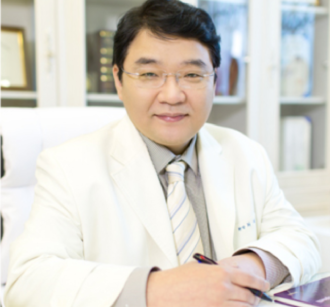
Dr. Choi deokho
Representative Director and plastic surgeon
Dr. Choi deokho is the Representative Director and plastic surgeon at Good-Line Plastic Surgery Clinic, with approximately 25 years associated with the clinic since its establishment in 2001. His stated core specializations include facial plastic surgery and facial rejuvenation, alongside rhinoplasty and facial contouring, and Rejuran is offered within the clinic's broader anti-aging and skin-care treatment planning rather than as an isolated add-on. He holds full membership in the Korean Society of Plastic and Reconstructive Surgeons, the Korean Society for Microsurgery, the Korean Cleft Palate-Craniofacial Association, the Japan Society of Aesthetic Plastic Surgery, the American Society of Aesthetic Plastic Surgery, and the International Society of Aesthetic Plastic Surgery. Patients considering Rejuran are evaluated for skin condition, scarring, and aging concerns before a specific treatment area and session plan is proposed, since the number and spacing of sessions materially affects the result. For patients who are also considering surgical facial rejuvenation, Dr. Choi deokho can advise on whether Rejuran alone, or Rejuran combined with another procedure, better matches the degree of change the patient is seeking.
Because Rejuran and the clinic's other injectable skin boosters address overlapping but distinct concerns — regeneration, hydration, and volume, respectively — part of the consultation is confirming which underlying concern a patient is actually describing before finalizing a plan, rather than assuming every request for a "skin booster" calls for the same product.
Rejuran Options Available
Good-Line Plastic Surgery Clinic offers Rejuran alongside two other injectable skin treatments, each built on a different active technology and matched to a different primary concern:
Rejuran | RE20 | Juvelook Volume |
|---|---|---|
Polynucleotide (PN) — purified DNA fragments for tissue repair and regeneration | Hyaluronic acid (HA) — direct hydration and skin revitalization | PDLLA (poly-D,L-lactic acid) — collagen-stimulating volumizer |
Best for aging, damaged, or scar-prone skin needing regeneration and improved texture | Best for dry, dull, or dehydrated skin needing a hydration boost | Best for volume loss and reduced skin firmness needing gradual restoration |
Effects build gradually over a course of sessions and commonly last several months | Effects are visible relatively quickly and continue building over a course of sessions | Effects build gradually over weeks to months and may last a year or longer |
Patients frequently ask which of these three is "best," but the more useful framing is which underlying concern each is built to address: Rejuran's polynucleotide fragments are aimed at stimulating the skin's own repair processes, RE20's hyaluronic acid is aimed at direct hydration, and Juvelook Volume's PDLLA is aimed at gradually rebuilding lost facial volume through collagen stimulation. A patient whose primary concern is scar-prone or aging skin texture is generally a better fit for Rejuran than for RE20, while a patient whose primary concern is simple dehydration and dullness may not need Rejuran's regenerative mechanism at all. These three treatments are not interchangeable substitutes for one another, and the clinic's consultation process is designed to match the specific concern to the specific product rather than defaulting to whichever skin booster a patient names first.
Who Is a Good Candidate for Rejuran?
Adults with aging, damaged, or scar-prone skin seeking regeneration and improved texture through a non-surgical option.
Patients whose primary concern is skin quality, resilience, and elasticity rather than volume loss or surface hydration alone.
Patients seeking a gradual, cumulative improvement over a course of sessions rather than an immediate, single-visit change.
Generally healthy individuals without active skin infection in the treatment area.
Patients without a known allergy to polynucleotide-based products, since treatment may need to be postponed for those with such an allergy.
Patients whose expectations already account for the gradual, cumulative nature of the result, rather than an immediate transformation after one session.
What to Expect: Procedure, Recovery, and Results Timeline
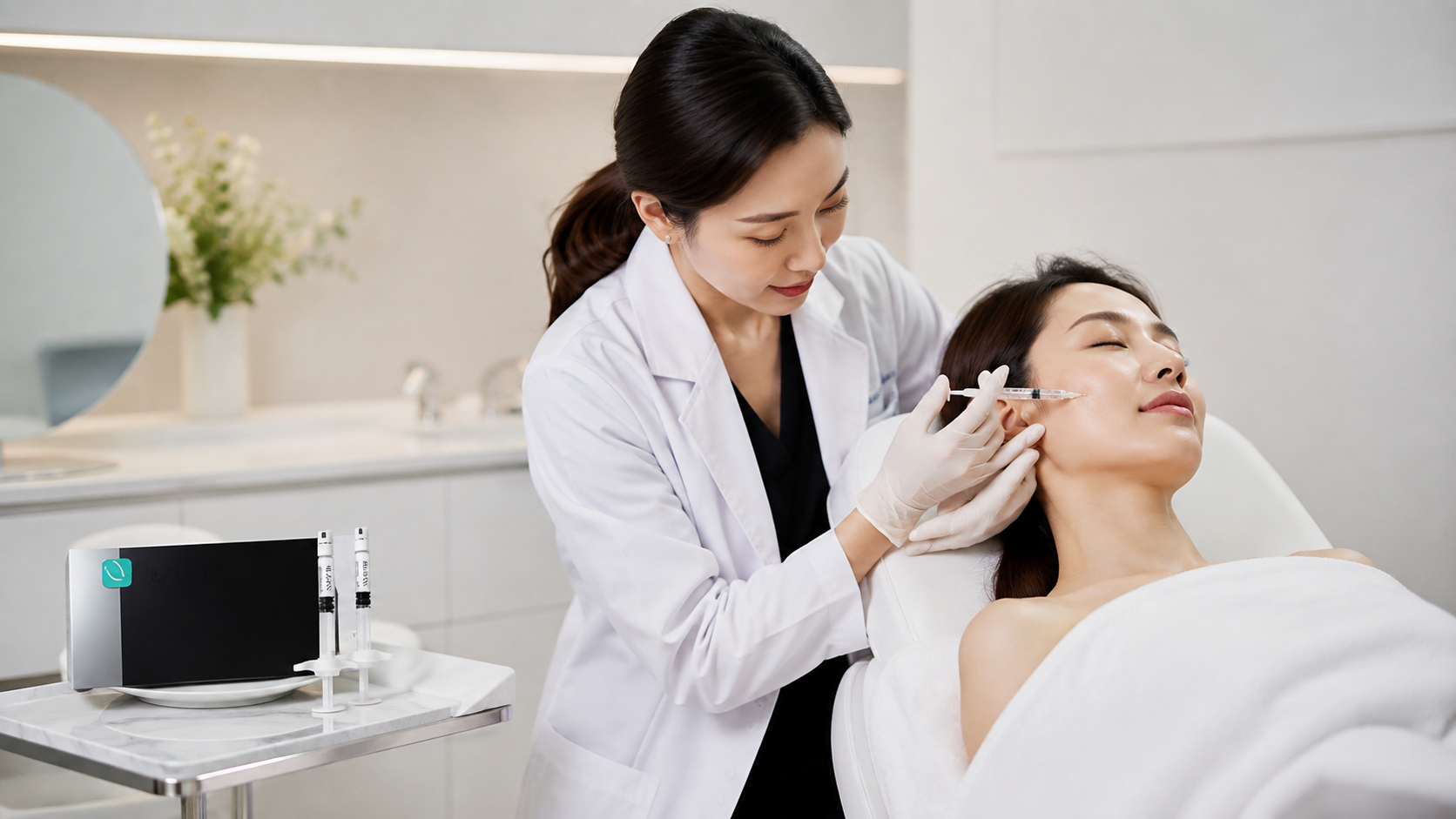
Rejuran is generally delivered as a course of multiple sessions rather than a single treatment, with topical numbing available to manage discomfort, which is generally described as mild to moderate.
Stage | What typically happens |
|---|---|
Day 0 | Polynucleotide solution is injected into the dermis using fine needles across the treatment area; topical numbing may be used beforehand |
Day 1-3 | Mild swelling, redness, bruising, or small bumps at injection sites are common and generally most noticeable in this window |
Day 5-10 | Swelling and redness generally continue to resolve; small injection-site bumps typically flatten as the skin settles |
Week 4-8 | Early improvements in texture and elasticity become more noticeable as tissue-repair effects continue to build session over session |
Month 12+ | Regenerative effects from a completed course commonly persist for several months, after which maintenance sessions are considered based on how the skin has responded |
Because Rejuran's mechanism works by supporting the skin's own repair processes rather than delivering an immediate filling or hydrating effect, results are cumulative: a single injection is rarely expected to produce the same improvement as a completed course of sessions spaced appropriately apart. The exact number of sessions and the interval between them is confirmed individually based on the patient's skin condition, the areas being treated, and how the skin responds to earlier sessions in the course, rather than fixed in advance for every patient.
Before treatment, patients are asked to disclose known allergies — particularly to polynucleotide-based products — along with current medications, skin conditions, and any recent procedures in the treatment area. Aftercare commonly involves monitoring the injection sites as swelling and any small bumps resolve over the days following each session, alongside general sun protection and a gentle skincare routine, consistent with aftercare guidance for the clinic's other injectable skin treatments. International patients should confirm the recommended length of stay in Korea and the earliest safe date to fly home individually with the clinic, since these depend on the specific session plan and how many treatments are scheduled during a single visit.
Combining Rejuran with Other Treatments
Rejuran is often planned alongside RE20 for patients whose concerns span both regeneration and hydration, since the two work through different mechanisms without significantly overlapping recovery demands.
Patients with both texture/regeneration concerns and volume loss may have Rejuran sequenced together with Juvelook Volume, since PN-driven tissue repair and PDLLA-driven collagen stimulation address different underlying tissue needs.
Patients considering a broader non-surgical skin plan may also review the clinic's Skin & Laser Treatments page, which covers energy-based options such as 3D Ulthera Lift and Secret RF microneedling alongside these injectable treatments.
The appropriate sequencing and spacing between combined treatments is planned individually, based on which specific technologies are involved and how the patient's skin responds over the course of treatment, rather than delivered as a single fixed package applied uniformly to every patient.
Safety, Precision, and Clinic Standards
Good-Line Plastic Surgery Clinic is a Registered Medical Institution for Attracting Foreign Patients, certified by Korea's Ministry of Health and Welfare under the Medical Overseas Expansion and Foreign Patients Attraction Act. Dr. Choi deokho is a full member of the Korean Society of Plastic and Reconstructive Surgeons. Patients are screened for active skin infection and known allergies to polynucleotide-based products before treatment. As with any injectable treatment, temporary swelling, redness, bruising, or small bumps at injection sites are possible, and none of these effects on their own indicate a treatment failure (see Polynucleotides and Polydeoxyribonucleotides in Dermatology — Journal of Cutaneous and Aesthetic Surgery).
Correct candidate selection is treated as central to safety, not a formality before booking. Patients with active skin infection in the treatment area, or a known allergy to polynucleotide-based products, are asked to postpone treatment until the issue is resolved or an alternative is discussed with the physician. Needle depth and injection technique are calibrated to the treatment area and the patient's specific skin condition, since the dermis varies in thickness across the face, and inconsistent injection depth is one of the more preventable causes of uneven results with any dermal injectable.
Follow-up between sessions is treated as part of the treatment plan rather than an optional check-in, since Rejuran is delivered as a course rather than a single visit: assessing how the skin has responded to an earlier session allows the physician to adjust the next session's plan rather than repeating an identical protocol regardless of the previous outcome. Patients are also asked to report any unusual or worsening symptoms promptly rather than waiting for the next scheduled appointment, consistent with the clinic's general approach to monitoring injectable and energy-based treatments across its skin-care treatment planning.
The Bottom Line
Rejuran is a polynucleotide (PN) injectable that supports the skin's own tissue-repair process, delivered by fine-needle injection into the dermis.
It is distinct from hyaluronic acid boosters like RE20 and collagen-stimulating fillers like Juvelook Volume, though all three are available at the same clinic.
Results are cumulative, building over a course of sessions rather than after a single visit, and commonly persist for several months.
Reviewed and performed under Dr. Choi deokho, an experienced plastic surgeon with roughly 25 years at the clinic.
Candidate screening for allergy and active skin infection, alongside individualized session planning, matters as much to the outcome as the injection itself.
Frequently Asked Questions
What is Rejuran, exactly? Rejuran is a polynucleotide (PN)-based skin booster injection that uses purified DNA fragments, delivered into the dermis by fine needle, to support tissue repair, hydration, and skin regeneration over a course of sessions.
Is Rejuran the same as a hyaluronic acid skin booster like RE20? No — Rejuran works through polynucleotide fragments that support the skin's own tissue-repair processes, while RE20 delivers hyaluronic acid directly for hydration. Patients whose primary concern is aging, damaged, or scar-prone skin are generally better matched to Rejuran, while those whose concern is simple dryness or dullness may be better matched to RE20; the physician helps determine which fits during consultation.
Is Rejuran painful? Discomfort is generally described as mild to moderate, and topical numbing may be used before injections to improve comfort.
How many Rejuran sessions will I need? This depends on the patient's skin condition and treatment goals and is confirmed individually at consultation, since Rejuran's regenerative effects are cumulative and generally build over a course of sessions rather than after a single visit.
What is the recovery like after Rejuran? Mild swelling, redness, bruising, or small bumps at injection sites are common in the first few days and generally resolve within several days, with most patients able to resume normal activity shortly after each session.
How long do Rejuran results last? Improvements in texture and elasticity build gradually over a course of sessions, with effects commonly lasting several months; maintenance sessions are considered afterward based on how the skin has responded.
Who should avoid or postpone Rejuran? Patients with an active skin infection in the treatment area, or a known allergy to polynucleotide-based products, should postpone treatment until the issue is resolved or discuss alternatives with the physician.
Can Rejuran be combined with other treatments at Good-Line Plastic Surgery Clinic? Yes — Rejuran is often planned alongside RE20 for patients with both regeneration and hydration concerns, or sequenced with Juvelook Volume for patients who also have volume loss, with the specific combination and timing determined individually during consultation.
Book a Consultation at Good-Line Plastic Surgery Clinic
To discuss whether Rejuran, RE20, Juvelook Volume, or a combination best fits your skin concerns, contact Good-Line Plastic Surgery Clinic in Gangnam-gu, Seoul at +82 2 543 1830 or through the clinic's online contact form. A consultation is the most reliable way to confirm whether Rejuran's regenerative mechanism matches your specific skin concern and goals.
Disclaimer
This page is for general informational purposes and does not constitute individualized medical advice. Candidacy, technique, and expected outcomes can only be determined through a consultation with a qualified physician.
Sources & Further Reading
Other Services
Explore additional treatments offered by our specialists.
Under-Eye Fat Repositioning
Under-eye fat repositioning is a transconjunctival lower-eyelid procedure that redistributes — rather than discards — the fat compartments beneath the eye, moving them around the orbital bone to correct hollowing and bulging caused by aging skeletal and.
Learn More

TRIPLE CELL
TRIPLE CELL is a non-invasive, radiofrequency-based skin treatment designed to deliver energy into different layers of the skin to support hydration, elasticity, and collagen-related skin recovery.
Learn More
Thermage Skin Tightening
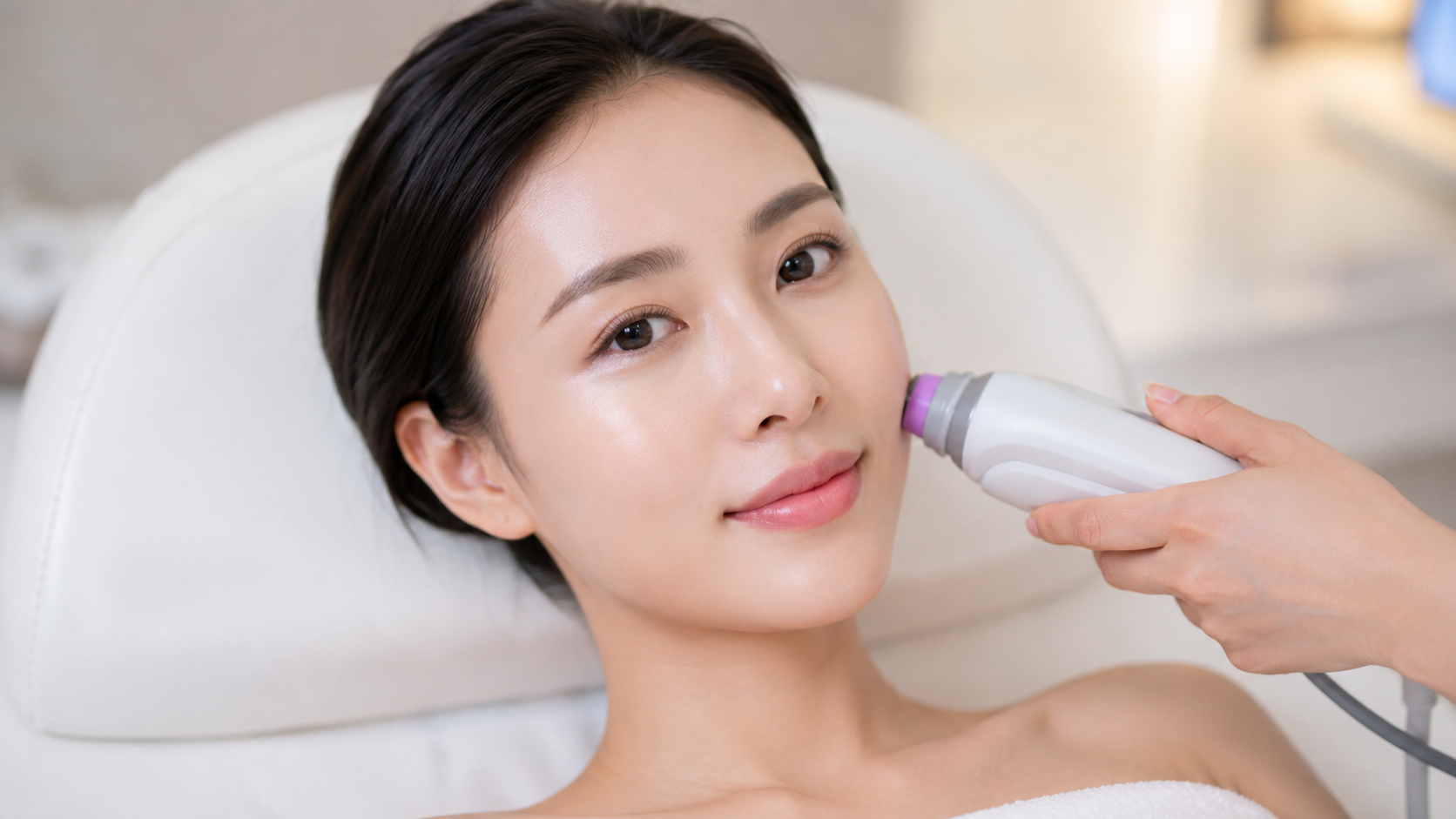
Thermage Skin Tightening is a non-surgical radiofrequency treatment that heats targeted tissue beneath the skin to stimulate collagen remodeling, improving the appearance of mild-to-moderate skin laxity.
Learn More