Natural-Looking Face & Neck Lift Surgery and Personalized Anti-Aging Care in Apgujeong, Gangnam, Seoul
4.1 ★ Google · Board-Certified Plastic Surgeon
en-US

Nose Surgery · Consultation Required
Rhinoplasty Revision
Rhinoplasty revision is a surgical correction of a previous nose surgery, planned individually around the specific problem present and performed under appropriate anesthesia with patient monitoring throughout.
Schedule a Consultation
Rhinoplasty Revision

Rhinoplasty revision is a corrective surgical procedure that addresses complications or an unsatisfactory result from a previous nose surgery, such as an exposed or displaced implant, a crooked bridge, a hardened nose, or nasal-tip discoloration. Unlike a first-time procedure, revision surgery works with tissue that has already been operated on once, so the surgical plan is built around existing scar tissue, the condition of any prior implant or graft, and how the nose has healed since the earlier operation.
Reviewer Details
Medically reviewed by Dr. Choi deokho, Representative Director & Plastic Surgeon, Good-Line Plastic Surgery Clinic.
Registered as the clinic's legal representative in the Korean National Tax Service registry, Full Member of the Korean Society of Plastic and Reconstructive Surgeons · Last reviewed 2026-08-18 · Good-Line Plastic Surgery Clinic, Gangnam-gu, Seoul.
What Is Rhinoplasty Revision?
Rhinoplasty revision is a surgical correction of a previous nose surgery, planned individually around the specific problem present and performed under appropriate anesthesia with patient monitoring throughout.
Addresses problems such as implant exposure or visibility, implant movement or displacement, inflammation, a nose that has become hard to the touch, a crooked bridge, or discoloration at the nasal tip.
Differs from primary rhinoplasty because the surgeon must work around scar tissue and altered nasal structure left by the earlier operation, rather than starting from unaltered anatomy.
May involve removing a problematic implant or prosthesis before any further correction of the nasal structure can proceed.
Frequently uses the patient's own tissue — autologous cartilage or dermal fat grafts — rather than reinserting a new implant of the same type, particularly when covering previously exposed or thinned tissue.
Commonly takes longer than a primary procedure and is generally considered more technically demanding because of the previously operated tissue involved.
Who Performs Rhinoplasty Revision at Good-Line Plastic Surgery Clinic
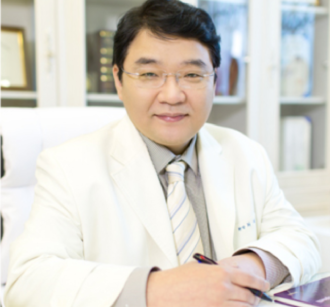
Dr. Choi deokho
Representative Director and plastic surgeon
Dr. Choi deokho is the Representative Director and plastic surgeon at Good-Line Plastic Surgery Clinic, with approximately 25 years associated with the clinic since its establishment on May 25, 2001. His stated core specializations place particular focus on rhinoplasty and revision rhinoplasty, alongside eye surgery and eye revision, and facial contouring, and he holds full membership in the Korean Society of Plastic and Reconstructive Surgeons, the Korean Society for Microsurgery, the Korean Cleft Palate-Craniofacial Association, the Japan Society of Aesthetic Plastic Surgery, the American Society of Aesthetic Plastic Surgery, and the International Society of Aesthetic Plastic Surgery. Dr. Choi deokho evaluates every revision case by first reviewing what was done in the original surgery — including which implant or graft material was used — before examining how the existing nasal structure, skin, and tissue elasticity have responded to that earlier procedure.
Because revision cases arrive with a wide range of underlying problems — an exposed implant, a crooked or hardened bridge, or a nasal tip that has changed color or shape over time — his evaluation places significant weight on correctly identifying the specific mechanical cause of the patient's dissatisfaction before recommending a correction plan, rather than defaulting to a single standard revision technique. A patient whose primary concern is a visibly displaced implant is assessed differently from a patient whose bridge has become crooked without any implant-related problem, since the first case generally requires implant removal and tissue reconstruction while the second may call for direct correction of the underlying structure alone. This distinction is treated as central to planning a safe and effective revision, not a formality before scheduling surgery.
Rhinoplasty Revision Options Available
Implant Removal & Correction | Structural & Contour Correction | Autologous Tissue Reconstruction |
|---|---|---|
Removal of a problematic implant that has become exposed, displaced, hardened, or inflamed | Direct correction of a crooked bridge or unsatisfactory height and shape not caused by an implant problem | Use of the patient's own cartilage or dermal fat to rebuild structure or cover previously thinned or exposed tissue |
Best for patients with a visible, moved, or hardened implant, or implant-related inflammation | Best for patients whose main concern is bridge alignment or overall shape and proportion | Best for patients needing tissue coverage or reconstruction rather than a new synthetic implant |
Often combined with tissue reconstruction once the implant is removed | May be combined with implant removal depending on the underlying cause | Reduces reliance on additional foreign material where the patient's own tissue is suitable |
The appropriate combination of these approaches depends on what is actually driving the patient's concern, which is why the consultation begins with a review of the previous surgery rather than a menu-style selection of a revision technique. Depending on the problem identified, the surgical plan may involve removing a problematic prosthesis, correcting the underlying nasal structure directly, and covering or reconstructing tissue using the patient's own cartilage or dermal fat rather than reinserting a new implant of the same type — an approach the clinic specifically describes for cases involving exposed nasal-tip cartilage, where soft tissue coverage using autologous material is used after the problematic foreign material has been removed.
Because revision surgery works with tissue that has already been operated on once, choosing among these approaches is a clinical decision grounded in the surgeon's direct examination of scar tissue, remaining tissue elasticity, and the specific implant or structural problem present — not a matter of patient preference for one option over another. A patient with a straightforward implant exposure and otherwise healthy surrounding tissue may need a more contained correction than a patient whose nose shows multiple compounding problems, such as a hardened, crooked bridge together with tip discoloration, which generally requires a more extensive combination of these approaches addressed in a single operation.
Who Is a Good Candidate for Rhinoplasty Revision?
Patients with complications or unsatisfactory results from a previous rhinoplasty who require correction of the implant, bridge, tip, or surrounding tissue.
Patients experiencing an exposed or visible implant, implant movement, inflammation, a hard nose, a crooked bridge, or nasal-tip discoloration following prior nose surgery.
Individuals whose nose has sufficiently healed from the earlier operation, since suitability is determined only after an individual examination of healing, skin condition, and nasal structure.
Patients with persistent cosmetic or functional concerns after a previous rhinoplasty, including residual asymmetry, contour irregularities, structural problems, or breathing difficulties.
Generally healthy individuals who are medically fit for anesthesia and do not have an active infection or significant uncontrolled medical condition.
Patients able to disclose details of their previous rhinoplasty, including the implant or graft material used, to help the surgeon plan an appropriate revision.
Not generally suitable: patients whose nose has not sufficiently healed from the previous surgery, or those with unrealistic expectations, until these issues are addressed with the surgeon.
What to Expect: Procedure, Recovery, and Results Timeline
Stage | What typically happens |
|---|---|
Day 0 | Local anesthesia with sedation or general anesthesia; the existing implant, structure, or tissue is assessed and the planned correction — implant removal, structural correction, or tissue grafting — is performed |
Day 1-3 | Swelling and bruising peak within the first two days; soreness, congestion, and a nasal splint are commonly present |
Day 5-10 | Splint or dressing typically removed around one week; bruising and much of the visible swelling gradually improve |
Week 4-8 | Most patients resume normal social activity; more strenuous activity generally requires additional time; nasal swelling continues to resolve gradually |
Month 12+ | Full tissue recovery and final structural settling assessed once residual swelling has resolved, particularly at the nasal tip |
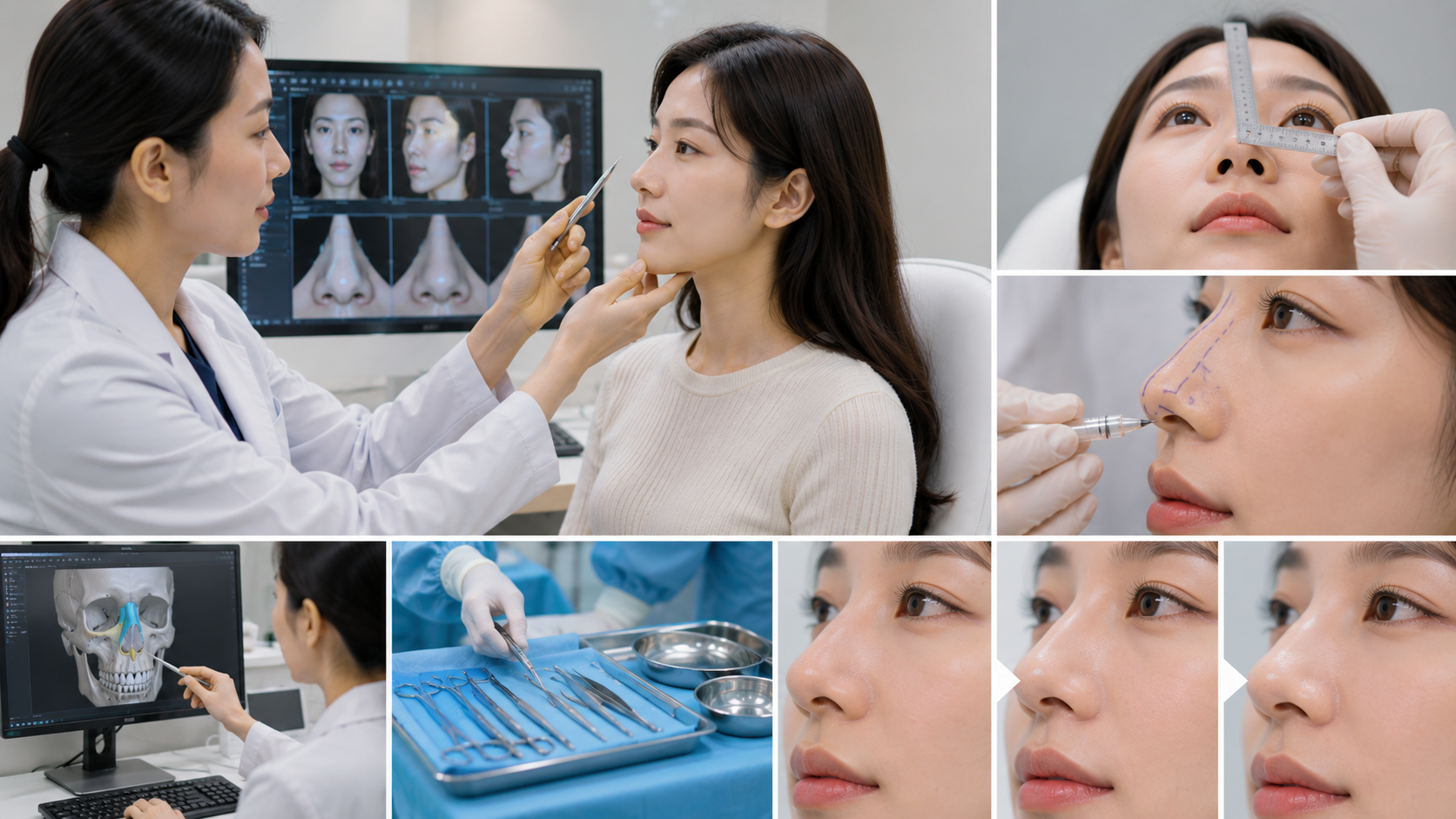
Rhinoplasty revision is planned individually after a consultation that reviews the previous surgery, assesses tissue elasticity and scar formation, and identifies the specific implant or structural issue present. Depending on the problem, surgery generally proceeds with anesthesia, removal of a problematic prosthesis where applicable, correction of the underlying nasal structure, and, when needed, coverage or reconstruction using the patient's own cartilage or dermal fat. The operation generally takes two to four hours — longer than a typical primary rhinoplasty of one to three hours — because the surgeon must work around existing scar tissue and previously altered anatomy, and the exact duration varies considerably depending on complexity and whether grafting or functional correction is required. Patients typically have a day-care clinic stay followed by progress checkups at one week, one month, and six months after surgery.
During the first week, swelling, bruising, soreness, nasal congestion, and a nasal splint may be present; some pain, tenderness, and pressure are expected and are generally managed with prescribed medication. Over two to four weeks, bruising and much of the visible swelling gradually improve and many patients can resume normal social activities, though more strenuous activity generally requires additional time, and nasal swelling can continue to resolve for many months. A final or near-final result may take around twelve months or longer to appear, particularly at the nasal tip, and some revision cases may take even longer depending on healing and surgical complexity — early appearance after splint removal should not be judged as the final outcome. Before surgery, patients should disclose their previous procedures, implants, and full medical history during consultation; aftercare involves following the surgeon's wound-care and activity instructions and reporting any signs of infection or implant exposure promptly rather than waiting for the next scheduled visit. International patients are generally advised to allow approximately seven to ten days in Korea after a facial cosmetic procedure such as rhinoplasty before flying, though the surgeon should give final clearance individually, since revision surgery can involve more extensive healing than a primary procedure.
Combining Rhinoplasty Revision with Other Treatments
Rhinoplasty revision is generally planned as its own careful procedure first, since the existing nasal structure and tissue need individual reassessment before any combination is considered.
Patients whose revision concern is limited to the nose but who are also considering a broader facial-balance goal may discuss whether Rhinoplasty planning principles — evaluating the nose alongside the forehead, philtrum, and facial proportions — should inform the revision plan during the same consultation.
Whether combining revision surgery with another procedure in the same session is appropriate depends on the patient's overall health, the total anesthesia time involved, and the complexity of the revision itself, and is assessed individually with the surgeon rather than offered as a standard package.
Safety, Precision, and Clinic Standards
Good-Line Plastic Surgery Clinic is a Registered Medical Institution for Attracting Foreign Patients, certified by Korea's Ministry of Health and Welfare under the Medical Overseas Expansion and Foreign Patients Attraction Act. Dr. Choi deokho is a full member of the Korean Society of Plastic and Reconstructive Surgeons, among other national and international professional bodies. Every revision consultation includes a review of the previous surgery, an assessment of tissue elasticity and scar formation, and a discussion of medical history and current medications before a revision plan is finalized. Risk is reduced through careful preoperative assessment, review of the previous surgery, appropriate surgical planning, qualified surgical and anesthesia care, sterile technique, postoperative monitoring, and adherence to detailed aftercare instructions (see ASPS — Rhinoplasty Risks and Safety).
As with any revision surgery, potential risks include infection, bleeding or nosebleeds, anesthesia-related complications, poor wound healing or scarring, persistent swelling, altered sensation, breathing difficulties, septal perforation, unsatisfactory appearance, and the possibility of additional surgery; because revision rhinoplasty involves previously operated tissue, it can be technically more challenging than a primary procedure. Scheduled postoperative monitoring is treated as a core part of the surgical plan rather than an optional courtesy visit, since early identification of implant exposure, infection, or an unusual healing pattern generally allows for simpler management than addressing the same issue later. Patients are encouraged to contact the clinic promptly about any concerning symptom — unusual pain, fever, spreading redness, or a change in the firmness or appearance of the nose — rather than waiting for the next scheduled appointment.
The Bottom Line
Rhinoplasty revision at Good-Line corrects complications and unsatisfactory results from a previous nose surgery, including implant exposure, displacement, a crooked or hardened bridge, and nasal-tip discoloration.
The revision approach — implant removal, structural correction, autologous tissue reconstruction, or a combination — depends on the specific problem identified during consultation, not a single default method.
Reviewed and performed under Dr. Choi deokho, a board-registered plastic surgeon with a particular focus on rhinoplasty and revision rhinoplasty and roughly 25 years at the clinic.
Revision surgery commonly takes longer than a primary procedure, and final results can take twelve months or longer to fully stabilize, particularly at the nasal tip.
Because revision surgery works with previously operated tissue, it is generally more technically demanding, which is why detailed disclosure of the previous surgery and diligent follow-up matter more than in a first-time procedure.
Frequently Asked Questions
Who is a good candidate for rhinoplasty revision? A good candidate is generally someone with persistent cosmetic or functional concerns after a previous rhinoplasty — such as residual asymmetry, contour irregularities, structural problems, or breathing difficulties — whose nose has sufficiently healed before considering another operation. Suitability is confirmed only after an individual examination of healing, skin condition, and nasal structure.
How is rhinoplasty revision different from a first-time rhinoplasty? Primary rhinoplasty works with nasal tissue that has not been surgically altered before, while revision surgery must account for existing scar tissue, a prior implant or graft, and any structural changes left by the earlier operation. This generally makes revision surgery more complex, longer in duration, and more individually planned than a first-time procedure.
How long does rhinoplasty revision surgery take? Revision rhinoplasty commonly takes longer than primary rhinoplasty because the surgeon may need to work around scar tissue and altered nasal structures. A typical primary rhinoplasty takes around one to three hours, while revision cases commonly take two to four hours and can vary considerably depending on complexity and whether grafting or functional correction is required.
What problems does rhinoplasty revision address? The clinic describes correcting problems such as an exposed or visible implant, implant movement or displacement, inflammation, a nose that has become hard to the touch, a crooked bridge, and discoloration at the nasal tip. The specific correction plan depends on which of these issues is present.
When will I see my final results after revision surgery? Some changes become visible once the splint is removed, typically around one week, but early results should not be considered final because swelling can obscure the nasal contour for some time. A final or near-final result generally takes around twelve months or longer, particularly at the nasal tip, and some revision cases may take even longer depending on healing and surgical complexity.
What are the risks of rhinoplasty revision? Potential risks include infection, bleeding or nosebleeds, anesthesia-related complications, poor wound healing or scarring, persistent swelling, altered sensation, breathing difficulties, septal perforation, unsatisfactory appearance, and the possibility of additional surgery. Because revision rhinoplasty involves previously operated tissue, it can be technically more challenging than a primary procedure, and individual risks should be discussed directly with the surgeon.
How should I prepare for a revision consultation? Preparation generally includes disclosure of your previous rhinoplasty history — including the implant or graft material used, when known — your full medical history, current medications and supplements, and any allergies, along with following the surgeon's instructions regarding eating, drinking, medications, and smoking before surgery. Arranging transportation and postoperative support is also generally advised.
How many days should I plan to stay in Korea for revision surgery? As a general cosmetic-surgery travel recommendation, ASPS suggests waiting approximately seven to ten days after facial cosmetic procedures such as rhinoplasty before flying, though the surgeon should give final clearance individually because revision surgery can involve more extensive healing than a primary procedure. The exact appropriate stay should be confirmed directly with the clinic for your specific case.
Is English-language consultation available for rhinoplasty revision? Yes — Good-Line Plastic Surgery Clinic offers English-language support and an online consultation channel for international patients considering rhinoplasty revision, alongside a multilingual clinic website.
Book a Consultation at Good-Line Plastic Surgery Clinic
To discuss whether rhinoplasty revision can correct your previous nose surgery result, contact Good-Line Plastic Surgery Clinic in Gangnam-gu, Seoul at +82 2 543 1830 or through the clinic's online contact form. A consultation that reviews your previous surgery in person is the only reliable way to determine which revision approach fits your specific nasal structure and goals.
Disclaimer
This page is for general informational purposes and does not constitute individualized medical advice. Candidacy, technique, and expected outcomes can only be determined through a consultation with a qualified physician.
Sources & Further Reading
Other Services
Explore additional treatments offered by our specialists.

Under-Eye Fat Repositioning
Under-eye fat repositioning is a transconjunctival lower-eyelid procedure that redistributes — rather than discards — the fat compartments beneath the eye, moving them around the orbital bone to correct hollowing and bulging caused by aging skeletal and.
Learn More

TRIPLE CELL
TRIPLE CELL is a non-invasive, radiofrequency-based skin treatment designed to deliver energy into different layers of the skin to support hydration, elasticity, and collagen-related skin recovery.
Learn More

Thermage Skin Tightening
Thermage Skin Tightening is a non-surgical radiofrequency treatment that heats targeted tissue beneath the skin to stimulate collagen remodeling, improving the appearance of mild-to-moderate skin laxity.
Learn More