Natural-Looking Face & Neck Lift Surgery and Personalized Anti-Aging Care in Apgujeong, Gangnam, Seoul
4.1 ★ Google · Board-Certified Plastic Surgeon
en-US

Anti-Aging & Lifting Surgery · Consultation Required
SMAS Facelift
An SMAS facelift repositions the deeper support layer of the face — not merely the skin covering it — which is why it is generally associated with a more natural and longer-lasting result than a skin-only lift.
Schedule a Consultation
SMAS Facelift

An SMAS facelift is a surgical procedure that lifts and repositions the superficial musculoaponeurotic system (SMAS) — the connective-tissue and muscle layer beneath the skin — together with the overlying facial tissue, rather than tightening only the surface of the skin. It is generally chosen by adults with noticeable jowling, jawline laxity, and loose facial or neck skin who want a more durable correction than a skin-only lift or a non-surgical treatment can provide. At Good-Line Plastic Surgery Clinic in Gangnam-gu, Seoul, the procedure is planned and performed individually according to each patient's degree of sagging, skin quality, and facial structure.
Reviewer Details
Medically reviewed by Dr. Choi deokho, Representative Director & Plastic Surgeon, Good-Line Plastic Surgery Clinic.
Registered as the clinic's legal representative in the Korean National Tax Service registry, Full Member of the Korean Society of Plastic and Reconstructive Surgeons · Last reviewed 2026-08-18 · Good-Line Plastic Surgery Clinic, Gangnam-gu, Seoul.
What Is SMAS Facelift?
An SMAS facelift repositions the deeper support layer of the face — not merely the skin covering it — which is why it is generally associated with a more natural and longer-lasting result than a skin-only lift.
Surgically lifts and repositions the SMAS layer along with the overlying tissue, addressing age-related sagging, jowls, and loss of jawline definition at a structural level.
Commonly performed with local anesthesia plus sedation, general anesthesia, or monitored deep sedation combined with local anesthesia, depending on the surgical plan and extent of correction.
Incisions are placed around the hairline and ear, where the resulting scars are concealed within the hairline and natural skin creases once healing is complete.
Involves repositioning of the SMAS and facial tissues, removal of excess skin where appropriate, and careful layered closure.
Typically takes several hours in the operating room, with the exact operative time depending on the surgical technique used and the extent of correction needed.
Does not stop the natural aging process — it resets the visible signs of aging that had accumulated up to the time of surgery, after which aging continues as normal.
Who Performs SMAS Facelift at Good-Line Plastic Surgery Clinic
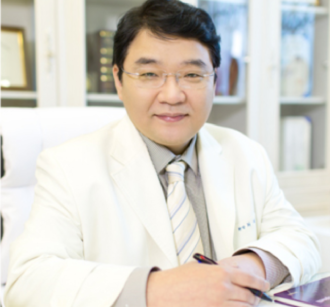
Dr. Choi deokho
Representative Director and plastic surgeon
Dr. Choi deokho is the Representative Director and plastic surgeon at Good-Line Plastic Surgery Clinic, with approximately 25 years associated with the clinic since its establishment on 2001-05-25. His stated core specializations include facial plastic surgery, anti-aging and lifting procedures, rhinoplasty, and facial contouring, and he holds full membership in the Korean Society of Plastic and Reconstructive Surgeons, the Korean Society for Microsurgery, the Korean Cleft Palate-Craniofacial Association, the Japan Society of Aesthetic Plastic Surgery, the American Society of Aesthetic Plastic Surgery, and the International Society of Aesthetic Plastic Surgery.
Before recommending an SMAS facelift, Dr. Choi evaluates each patient's skin laxity, facial structure, jowling, neck condition, asymmetry, and medical history, since the appropriate lifting technique depends heavily on the degree of sagging present rather than on which procedure name a patient initially requests. A patient who asks specifically for a facelift but whose examination shows only mild sagging is generally counseled toward a less invasive option such as thread lifting, since surgery carries a longer recovery and cost that is not justified when a lighter-touch treatment would achieve a comparable result for that patient's degree of aging. Conversely, a patient with noticeable jowling and jawline laxity is counseled that non-surgical treatments applied to a case that needs surgical correction tend to produce only a brief, disappointing improvement, which is why the SMAS facelift consultation at Good-Line begins with an individual physical examination rather than a standard technique applied to every patient who requests the procedure by name.
SMAS Facelift Options Available
Because "facelift" spans a range of surgical depth and non-surgical alternatives, the table below compares the standard SMAS facelift with the deep plane facelift technique discussed in broader facial-rejuvenation literature, and with the non-surgical alternatives patients sometimes consider first.
SMAS Facelift (Standard) | Deep Plane Facelift | Non-Surgical Alternatives |
|---|---|---|
Repositions the SMAS layer and overlying tissue through incisions around the hairline and ear | Goes beneath the SMAS to release facial ligaments and reposition tissue as a single connected unit | Thread lifting, energy-based skin tightening, or injectable treatments; no incision |
Best for mild-to-moderate jowling and jawline laxity requiring a durable, structural correction | Best for more advanced aging around the nose, mouth, and cheeks requiring more comprehensive repositioning | Best for mild-to-moderate sagging where a subtle lift with little downtime is preferred |
Comparatively shorter operative time and recovery than a deep plane approach | Longer operative time and recovery, generally associated with results cited in the range of 10-15 years | Results generally provide less extensive lifting than surgical facelift, and require earlier maintenance |
Choosing between a standard SMAS facelift and a deep plane approach is not simply a matter of selecting the more aggressive-sounding technique. A deep plane facelift can address deeper signs of aging more comprehensively and is often associated with longer-lasting results, sometimes cited in the range of ten to fifteen years compared with five to ten years for an SMAS facelift, but it also typically involves a longer operative time and a longer recovery period. For patients with milder-to-moderate aging, a standard SMAS facelift often achieves a comparable improvement in the areas that matter most — jawline definition, jowling, and midface support — with less surgical time and a shorter path back to normal activity. This is why the recommendation at Good-Line Plastic Surgery Clinic is grounded in Dr. Choi's direct examination of each patient's anatomy rather than a general preference for the more extensive technique.
Patients sometimes arrive at consultation already having researched non-surgical alternatives such as thread lifting, energy-based tightening devices, or injectable treatments. These options generally provide less extensive lifting than an SMAS facelift and are described as more appropriate for mild-to-moderate sagging where a subtle improvement with minimal downtime is the goal. When examination shows established jowling, jawline laxity, or loose neck skin beyond what these lighter-touch treatments can meaningfully address, the surgical SMAS facelift is presented as the option more likely to meet the patient's stated goals, rather than pursuing repeated non-surgical treatments that are unlikely to produce a comparable structural result.
Who Is a Good Candidate for SMAS Facelift?
Adults with noticeable facial and neck laxity, jowling, and loss of jawline definition who want a lasting, structural lifting effect rather than a temporary improvement.
Patients for whom non-surgical treatments such as thread lifting or energy-based tightening have been assessed as insufficient for their degree of sagging.
Generally healthy individuals who are medically suitable for elective surgery under sedation or general anesthesia.
Patients with realistic expectations who understand that a facelift resets accumulated signs of aging rather than halting the aging process going forward.
Patients able to plan for several weeks of gradually improving recovery before final results are assessed.
Not suitable candidates generally include those with uncontrolled medical conditions, active infections, significant healing risk factors, pregnancy, or unrealistic expectations, until these issues are addressed or resolved.
Individual suitability can only be confirmed through a physical examination and consultation with the surgeon, since skin quality and the degree of sagging vary considerably between patients of similar age.
What to Expect: Procedure, Recovery, and Results Timeline
Stage | What typically happens |
|---|---|
Day 0 | Local anesthesia plus sedation, general anesthesia, or monitored deep sedation, depending on the surgical plan; incisions made around the hairline and ear, SMAS layer and tissue repositioned, excess skin removed as needed, layered closure |
Day 1-3 | Swelling and bruising are usually most noticeable during this window; tightness, tenderness, and temporary numbness around the incision sites are common |
Day 5-10 | Swelling and bruising gradually begin to improve; many patients can resume light daily activity, though the surgical sites continue healing |
Week 4-8 | Substantial recovery has generally taken place, though final refinement of the facial contour continues as residual swelling fully resolves |
Month 12+ | Final surgical result generally settled and assessed; results considered long-lasting, though natural aging continues afterward |
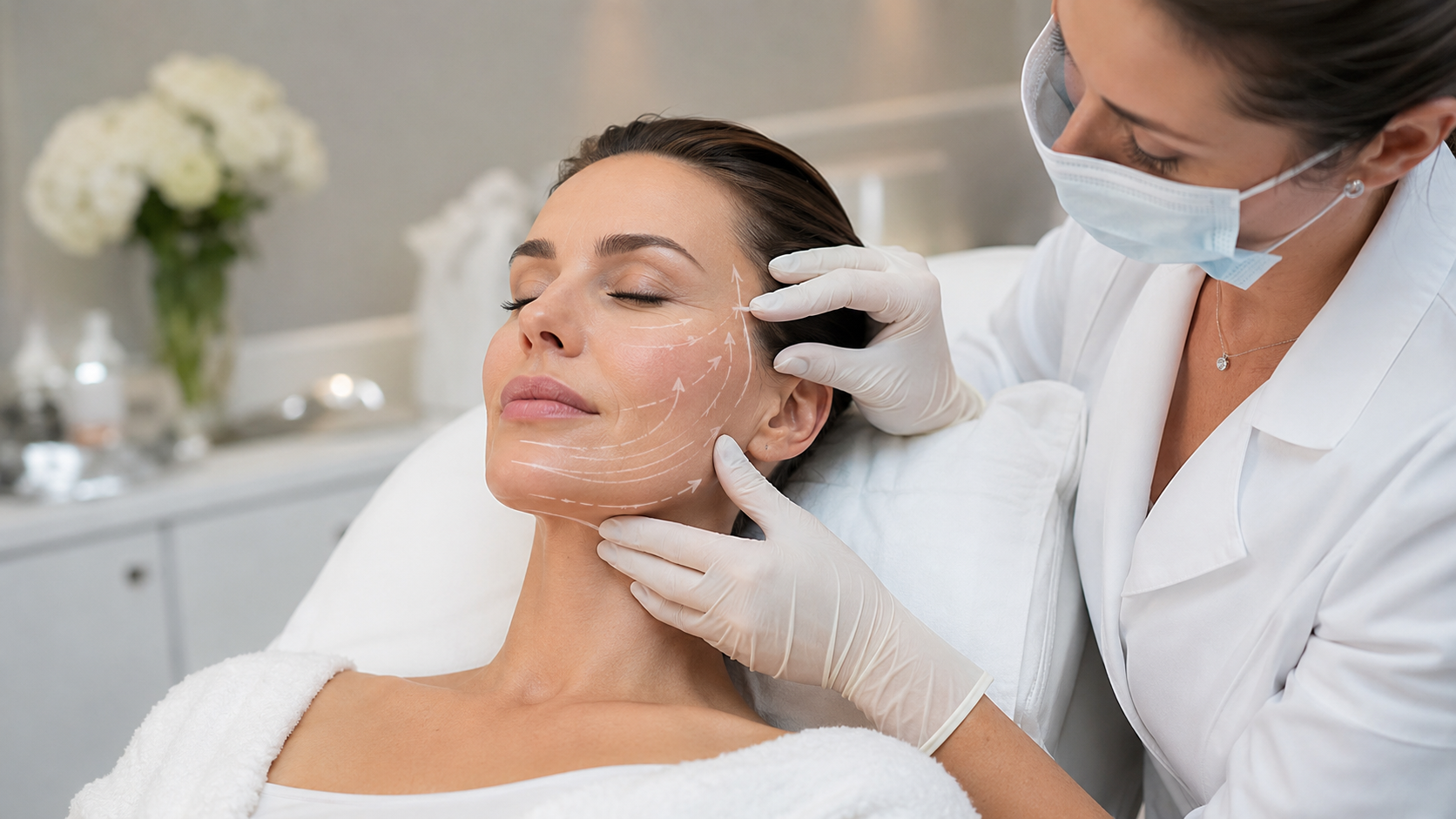
On the day of surgery, incisions are made around the hairline and ear, and the SMAS layer and overlying facial tissue are repositioned before any necessary excess skin is removed and the incisions are closed in layers. Discomfort, tightness, swelling, and bruising are common in the days that follow and are usually managed with prescribed pain medication; most patients describe the intensity as greatest during the first several days, improving gradually over the following one to two weeks. An improvement in facial contour is generally visible once early swelling decreases, but the appearance continues to refine during the following weeks and months as deeper tissue settles.
Because operative time and the extent of tissue repositioning vary according to the individual treatment plan, the exact recovery timeline is confirmed with the surgeon rather than assumed from a general schedule. Preparation for surgery generally includes a full medical history and medication review, with particular attention to blood-thinning medications and supplements that may need to be paused before surgery on the surgeon's advice, and smoking cessation is generally recommended given its effect on healing and blood supply to surgical tissue. Aftercare commonly includes keeping the surgical area clean, following wound-care and medication instructions, avoiding strenuous activity as advised, keeping the head elevated during early recovery, and attending scheduled follow-up visits so any unusual swelling, asymmetry, or wound-healing concern can be identified and managed early rather than left until the next routine appointment.
International patients considering an SMAS facelift in Seoul are encouraged to raise their available time in Korea openly during consultation, since the appropriate length of stay depends on individual healing and the extent of the procedure rather than a single fixed number of days that applies to every patient. English-language consultation and an online contact channel are available for patients coordinating travel and recovery from abroad.
Combining SMAS Facelift with Other Treatments
SMAS facelift surgery is frequently combined with neck lifting, eyelid surgery, brow procedures, or fat-related facial contouring for a more complete, harmonized result in a single surgical session.
For deep wrinkles around the mouth, fat removal around the cheeks and chin liposuction may be performed together with the SMAS facelift.
Because the neck and lower face are closely connected both anatomically and visually, patients addressing jowling and jawline laxity are often evaluated for whether the neck should be treated in the same session — treating only the face while leaving significant neck laxity untreated can sometimes leave the two areas looking mismatched. Patients interested in this combination may review the clinic's Neck Wrinkle Removal Surgery page.
Combining procedures within a single session can reduce total recovery time compared with staging the same procedures across separate visits, which matters in particular for international patients planning travel around their recovery.
Combining too many procedures in one session can extend anesthesia time and lengthen recovery in ways that may outweigh the convenience, so the surgical team weighs the specific combination against the patient's overall health and each procedure's individual healing requirements before recommending whether to combine or stage treatments.
Safety, Precision, and Clinic Standards
Good-Line Plastic Surgery Clinic is a Registered Medical Institution for Attracting Foreign Patients, certified by Korea's Ministry of Health and Welfare under the Medical Overseas Expansion and Foreign Patients Attraction Act. Dr. Choi deokho is a full member of the Korean Society of Plastic and Reconstructive Surgeons. Every SMAS facelift patient is assessed individually for skin laxity, facial structure, jowling, neck condition, asymmetry, and medical history before a surgical plan is finalized. As with any facial surgery, temporary swelling, bruising, tightness, numbness, infection, bleeding, scarring, and asymmetry are possible, and nerve injury, delayed healing, or the possibility of revision surgery are recognized risks that are discussed individually before the procedure. A facelift does not stop the ongoing natural aging process — it resets the visible signs of aging that had already accumulated (see ASPS — Facelift Safety).
Risk reduction relies on careful preoperative assessment, appropriate surgical planning, sterile technique, anesthesia monitoring, and postoperative follow-up rather than any single safeguard. Postoperative monitoring through scheduled follow-up visits is treated as an integral part of the surgical plan, since early identification of unusual swelling, asymmetry, or wound-healing concerns generally allows for simpler management than addressing the same issue later. Patients are encouraged to report any unusual pain, fever, or rapidly increasing swelling promptly rather than waiting for the next scheduled visit, since prompt evaluation supports a smoother recovery and reduces the chance of a minor issue becoming a more significant one.
The Bottom Line
An SMAS facelift surgically repositions the deeper support layer beneath the skin, producing a more natural and durable result than a skin-only lift.
Technique choice — standard SMAS, deep plane, or a non-surgical alternative — depends on the individual degree of sagging, not on which procedure a patient initially requests.
Reviewed and performed under Dr. Choi deokho, an experienced plastic surgeon with roughly 25 years at the clinic and full membership in the Korean Society of Plastic and Reconstructive Surgeons.
Recovery generally involves several days of noticeable swelling and bruising, gradual improvement over several weeks, and final refinement over subsequent months.
SMAS facelift surgery does not stop natural aging; it resets previously accumulated visible signs of aging.
Combining the SMAS facelift with neck lifting, eyelid surgery, brow procedures, or fat-related contouring is common for a more complete facial result.
Frequently Asked Questions
What exactly does an SMAS facelift lift, compared to a regular facelift? "Facelift" is a general term that can describe several different depths of surgery; an SMAS facelift specifically lifts and repositions the superficial musculoaponeurotic system — the muscle and connective-tissue layer beneath the skin — together with the overlying tissue, rather than tightening only the skin's surface. This structural repositioning is generally why an SMAS facelift produces a more natural-looking, longer-lasting improvement than a skin-only lift.
How long does the surgery itself take? An SMAS facelift commonly takes several hours in the operating room, with the exact duration depending on the surgical technique used and the extent of correction needed. The precise operative time is confirmed with the surgeon once the individual treatment plan has been finalized during consultation.
How is an SMAS facelift different from a deep plane facelift? An SMAS facelift repositions the SMAS layer and overlying tissue through incisions around the hairline and ear, while a deep plane facelift goes beneath the SMAS to release facial ligaments and reposition tissue as a single connected unit. The deep plane approach is generally suited to more advanced aging and is often associated with longer-lasting results, but it also typically involves a longer operative time and recovery than a standard SMAS facelift.
Is thread lifting or energy-based tightening a substitute for a surgical SMAS facelift? Not for patients with established jowling or jawline laxity. Non-surgical alternatives such as thread lifting and energy-based tightening devices generally provide a more modest, shorter-lived improvement suited to mild-to-moderate sagging; patients with more advanced facial and neck laxity are generally better served by a surgical SMAS facelift rather than repeated non-surgical treatments.
Will an SMAS facelift leave visible scars? Incisions are placed around the hairline and ear specifically so that resulting scars are concealed within the hairline and natural skin creases once healing is complete, rather than located in a visible open area of the face.
What is the recovery timeline, and when can I fly home? Swelling and bruising are usually greatest during the first several days and gradually improve over the following one to two weeks, though complete tissue recovery and final contour refinement take longer, generally continuing over several months. The appropriate length of stay in Korea before flying home depends on the individual healing process and should be confirmed directly with the surgeon rather than assumed from a general guideline.
Can an SMAS facelift be combined with other procedures in the same session? Yes — an SMAS facelift is frequently combined with neck lifting, eyelid surgery, brow procedures, or fat-related facial contouring, and for deep wrinkles around the mouth, fat removal around the cheeks and chin liposuction may be performed together with the facelift. Whether combining procedures is appropriate depends on the patient's overall health and the total anesthesia and recovery time involved, and is assessed individually during consultation.
How long do SMAS facelift results last, and does the face keep aging afterward? Results are generally long-lasting, often cited in the range of five to ten years, though natural aging continues afterward. Individual longevity depends on skin quality, age at the time of surgery, sun exposure habits, and other lifestyle factors that influence how quickly the skin and tissue continue to age after surgery.
Book a Consultation at Good-Line Plastic Surgery Clinic
To discuss whether a standard SMAS facelift, a deep plane approach, or a non-surgical alternative best fits your degree of facial and neck aging, contact Good-Line Plastic Surgery Clinic in Gangnam-gu, Seoul at +82 2 543 1830 or through the clinic's online contact form. A consultation with Dr. Choi deokho, including an individual physical examination, is the only reliable way to determine which technique matches your specific anatomy, aesthetic goals, and available time for travel and recovery.
Disclaimer
This page is for general informational purposes and does not constitute individualized medical advice. Candidacy, technique, and expected outcomes can only be determined through a consultation with a qualified physician.
Sources & Further Reading
Other Services
Explore additional treatments offered by our specialists.

Under-Eye Fat Repositioning
Under-eye fat repositioning is a transconjunctival lower-eyelid procedure that redistributes — rather than discards — the fat compartments beneath the eye, moving them around the orbital bone to correct hollowing and bulging caused by aging skeletal and.
Learn More

TRIPLE CELL
TRIPLE CELL is a non-invasive, radiofrequency-based skin treatment designed to deliver energy into different layers of the skin to support hydration, elasticity, and collagen-related skin recovery.
Learn More

Thermage Skin Tightening
Thermage Skin Tightening is a non-surgical radiofrequency treatment that heats targeted tissue beneath the skin to stimulate collagen remodeling, improving the appearance of mild-to-moderate skin laxity.
Learn More