Natural-Looking Face & Neck Lift Surgery and Personalized Anti-Aging Care in Apgujeong, Gangnam, Seoul
4.1 ★ Google · Board-Certified Plastic Surgeon
en-US

Anti-Aging & Lifting Surgery · Consultation Required
V-OLET Fat-Dissolving Injection
V-OLET Fat-Dissolving Injection is a non-surgical treatment that uses injectable deoxycholic acid to break down and gradually reduce localized fat cells beneath the chin, improving the appearance of a double chin without an incision.
Schedule a Consultation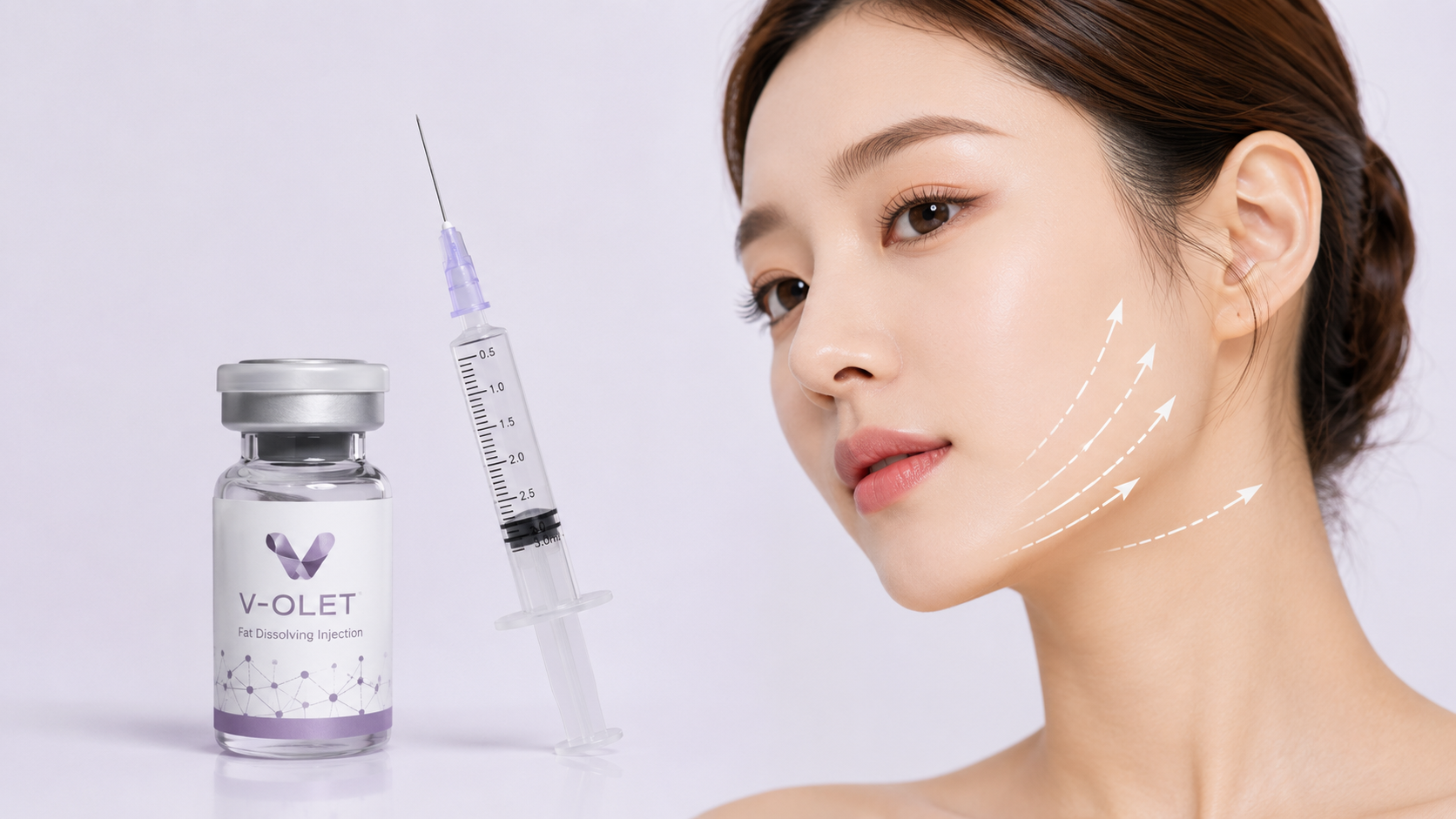
V-OLET Fat-Dissolving Injection
Reviewer Details
Medically reviewed by Dr. Choi deokho, Representative Director & Plastic Surgeon, Good-Line Plastic Surgery Clinic.
Registered as the clinic's legal representative in the Korean National Tax Service registry, Full Member of the Korean Society of Plastic and Reconstructive Surgeons · Last reviewed 2026-08-18 · Good-Line Plastic Surgery Clinic, Gangnam-gu, Seoul.
V-OLET Fat-Dissolving Injection is Good-Line Plastic Surgery Clinic's non-surgical injectable treatment for localized submental fat, delivered directly into the targeted fat layer beneath the chin without any incision. The injection solution contains deoxycholic acid (DCA), an agent that disrupts fat-cell membranes so the body can gradually clear the treated fat over the following weeks. It is intended specifically for patients whose double-chin appearance is caused primarily by excess fat rather than loose skin, and it is not a substitute for surgery when skin laxity is the main concern.
What Is V-OLET Fat-Dissolving Injection?
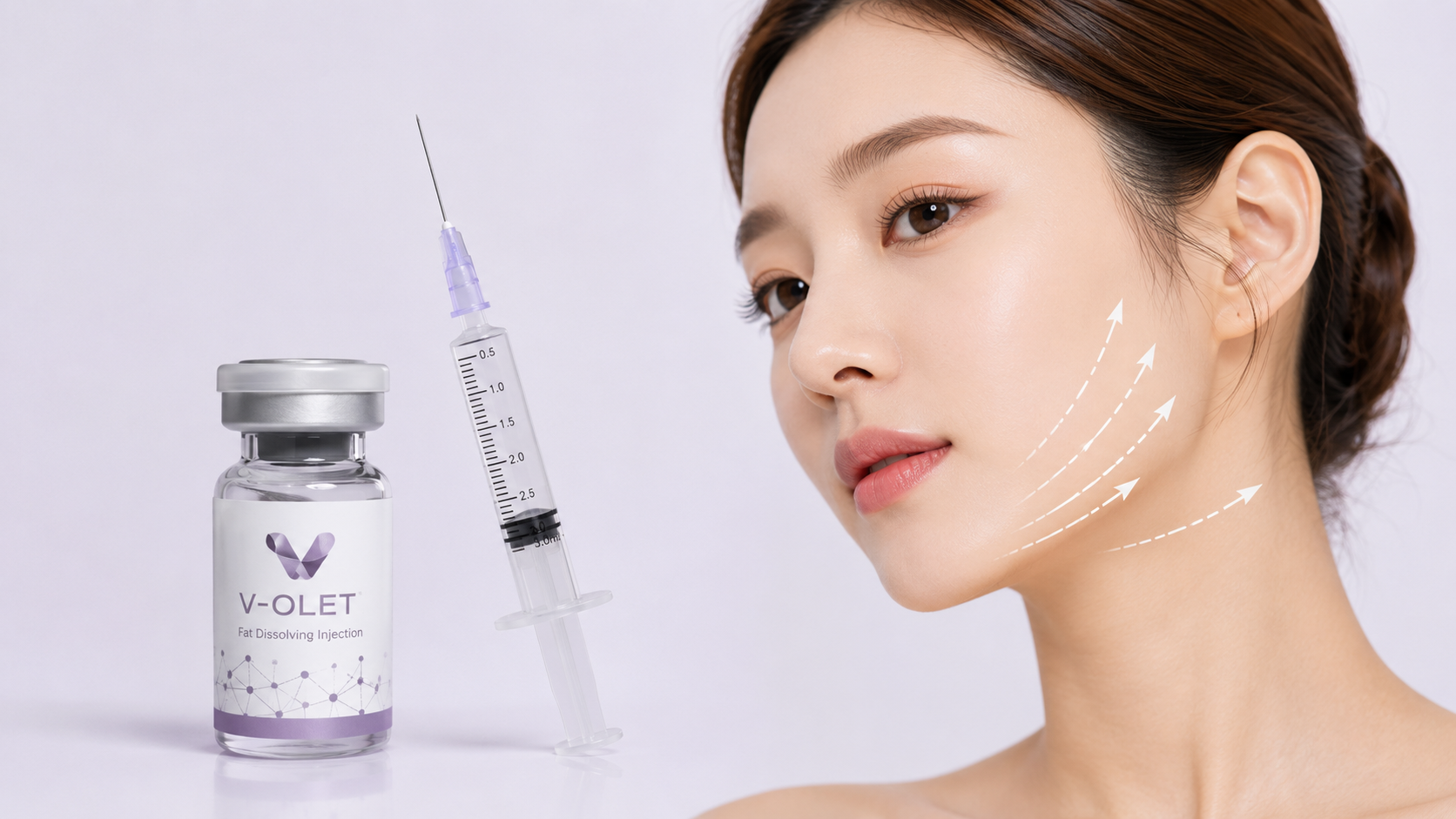
V-OLET Fat-Dissolving Injection is a non-surgical treatment that uses injectable deoxycholic acid to break down and gradually reduce localized fat cells beneath the chin, improving the appearance of a double chin without an incision.
Active injectable agent: deoxycholic acid (DCA), a compound that disrupts fat-cell membranes so damaged cells can be cleared by the body's own processes over time.
Delivered through multiple small injection points directly into the marked area of subcutaneous submental fat.
The injection procedure itself is relatively short, commonly described as around 10-15 minutes, though the total clinic visit is longer once consultation and area marking are included.
Most patients are placed on a session plan of approximately two to three treatments to reach a final result, rather than a single-visit outcome.
Performed using topical or local numbing measures for comfort; general anesthesia is not required for this treatment.
Who Performs V-OLET Fat-Dissolving Injection at Good-Line Plastic Surgery Clinic

Dr. Choi deokho
Representative Director and plastic surgeon
Dr. Choi deokho is the Representative Director and plastic surgeon at Good-Line Plastic Surgery Clinic, with approximately 25 years associated with the clinic since its founding in 2001. His stated core specializations include facial plastic surgery, anti-aging and lifting procedures, rhinoplasty, and facial contouring, and he holds full membership in the Korean Society of Plastic and Reconstructive Surgeons, the Korean Society for Microsurgery, the Korean Cleft Palate-Craniofacial Association, the Japan Society of Aesthetic Plastic Surgery, the American Society of Aesthetic Plastic Surgery, and the International Society of Aesthetic Plastic Surgery. Before recommending V-OLET, Dr. Choi deokho assesses the amount and location of submental fat, the patient's skin laxity, and the surrounding anatomy, since accurate patient selection is treated as a core part of the treatment's safety and effectiveness rather than a formality before an injection session. Patients whose double-chin appearance is driven mainly by loose skin, significant structural anatomy, or an underlying medical condition are counseled toward a different approach rather than proceeding with injections that would not address the underlying cause. Because correct injection technique, depth, and dosing directly affect both results and safety in the sensitive submental region, this evaluation and planning step is treated as inseparable from the injection itself.
V-OLET Fat-Dissolving Injection Session Plans by Fat Volume
Mild Submental Fullness | Moderate Submental Fullness | Pronounced Submental Fullness |
|---|---|---|
Smaller volume of localized fat, subtle double-chin appearance | Moderate volume of localized fat with a clearer double-chin contour | More significant localized fat requiring a fuller treatment course |
Typically fewer sessions within the clinic's general two-to-three session range | Generally falls within the typical two-to-three session course | May require the fuller end of the typical session range, assessed individually |
Each session followed by a recovery and reassessment period before the next injection is planned | Sessions spaced according to how the individual patient responds to treatment | Treatment plan and total sessions confirmed only after the surgeon's direct examination |
The exact number of sessions, the volume injected per visit, and the spacing between treatments are not fixed in advance for any patient — they depend on the amount of submental fat present, the treatment dose used, and how the individual patient responds after each session, as assessed at follow-up. The clinic's general experience is that a final effect is typically reached after approximately two to three treatments rather than after a single visit, though patients with a smaller amount of fat to begin with may need fewer sessions to reach a satisfactory result. This session-based structure is one of the key differences between V-OLET and a single surgical procedure: results build progressively across the treatment course rather than appearing all at once after one visit.
Who Is a Good Candidate for V-OLET Fat-Dissolving Injection?
Adults with localized submental fat (a double chin) who want non-surgical fat reduction rather than surgery.
Patients whose fullness under the chin is caused primarily by fat, with relatively good skin elasticity, rather than by loose or sagging skin.
Patients seeking gradual, progressive improvement across a short series of injection sessions rather than a single-visit result.
Patients without active infection or inflammation in the treatment area at the time of injection.
Patients without medical or medication-related factors that could increase the risks of the injection, as confirmed during consultation.
Not well suited to patients whose double-chin appearance is mainly caused by loose skin, significant structural anatomy, or an underlying medical condition — a different approach, such as a lifting or neck-contouring procedure, is generally more appropriate for these patients.
What to Expect: Procedure, Recovery, and Results Timeline
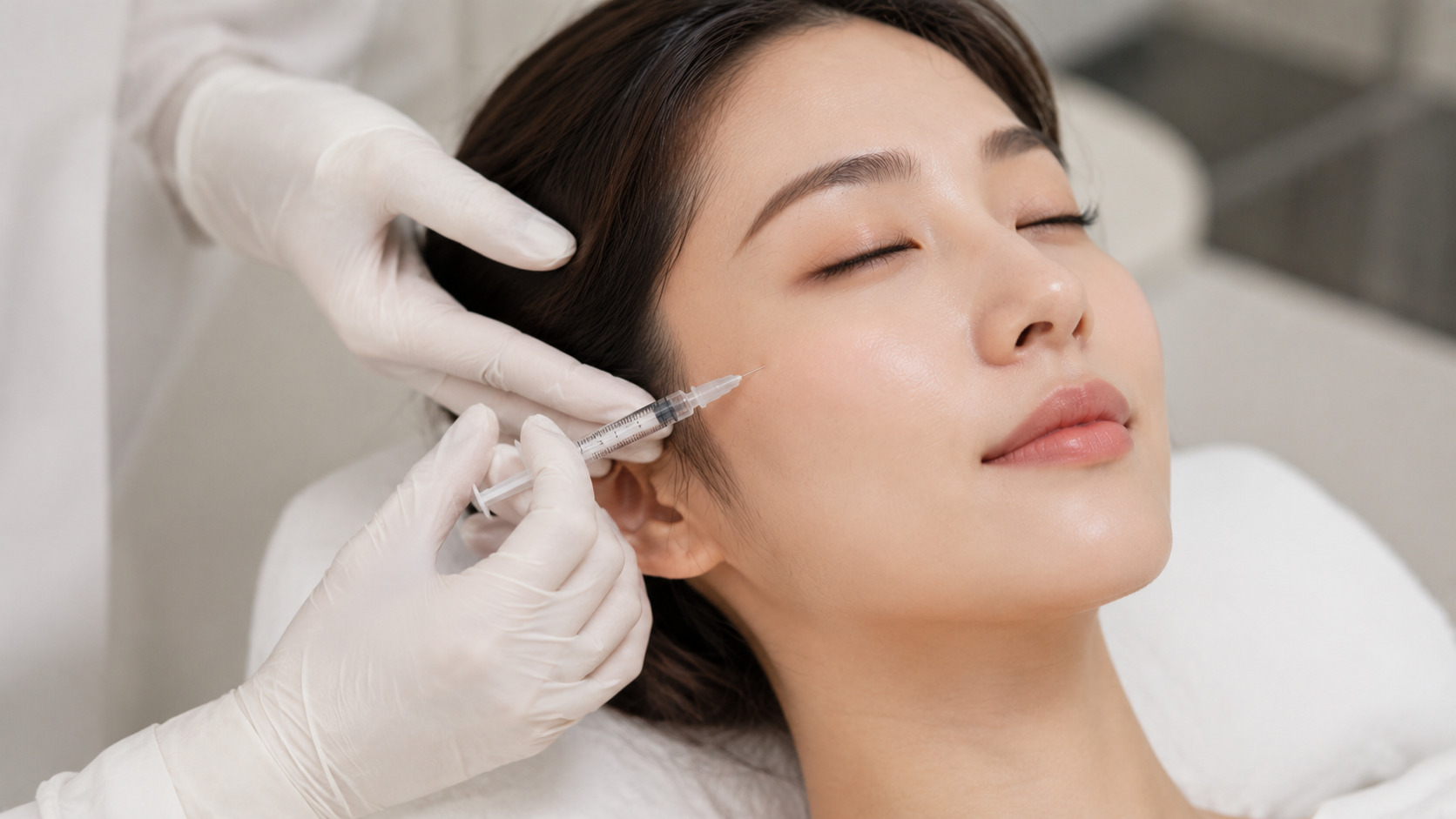
V-OLET typically requires multiple sessions to reach a final result, so the timeline below describes the pattern seen after each individual injection visit within that overall course.
Stage | What typically happens |
|---|---|
Day 0 | Treatment area is assessed and marked; topical or local numbing is applied; V-OLET is injected at multiple points into the targeted submental fat; no incision and no general anesthesia are involved |
Day 1-3 | Swelling, bruising, redness, tenderness, warmth, and temporary firmness at the injection site are most noticeable, reflecting the body's inflammatory response as it begins clearing damaged fat cells |
Day 5-10 | Swelling and bruising gradually improve, though some clinics note that swelling or bruising can persist for up to about two weeks in some patients |
Week 4-8 | Visible improvement in submental contour typically begins around three to four weeks as the body continues clearing damaged fat cells, with the appearance continuing to refine over subsequent weeks |
Month 12+ | Once the full course of typically two to three sessions is complete and swelling has fully resolved, results in the treated fat cells are considered long-lasting, though future weight changes can still alter the overall chin and neck contour |
Before each session, the treating clinician reviews the patient's medical history, current medications, allergies, the condition of the treatment area, and any previous cosmetic procedures in the same area, since these factors can affect both safety and the injection plan. Because V-OLET is injection-based rather than surgical, preparation is comparatively minimal compared with a surgical procedure, though patients are still asked to disclose blood-thinning medications, supplements, and any active skin problems in the treatment area, and to avoid unnecessary activities that could increase bruising beforehand. Aftercare generally involves following the clinic's specific instructions, avoiding unnecessary pressure or manipulation of the treated area, and attending any recommended follow-up so the treating physician can confirm the treatment is settling as expected and plan the timing of any subsequent session.
Because injections are placed in the sensitive submental region, particular care is taken with injection depth and technique, since injury to nearby nerves can cause temporary — and, rarely, more persistent — weakness of facial movement if not performed carefully. Safety in this treatment depends heavily on appropriate patient selection, accurate identification of the treatment area, correct injection depth and technique, appropriate dosing for the individual patient, and consistent sterile technique, all of which are treated as standard requirements for every session rather than optional refinements.
Combining V-OLET Fat-Dissolving Injection with Other Treatments
Patients whose main concern is submental fat alone, with reasonably elastic skin, are generally well suited to V-OLET on its own.
Patients with both localized submental fat and a degree of skin laxity or neck-contour concern may be evaluated for combining V-OLET with a complementary lifting approach rather than relying on injections alone, since V-OLET does not address loose skin.
For patients whose neck and lower-face concerns extend beyond submental fat, Good-line Thread Lifting is one option the surgeon may discuss alongside V-OLET during consultation, since a mild lifting effect combined with fat reduction can address both fullness and laxity concerns in the same treatment plan.
The decision to combine or stage V-OLET with another procedure is made individually based on the surgeon's direct examination, not offered as a standard package to every patient regardless of anatomy.
Safety, Precision, and Clinic Standards
Good-Line Plastic Surgery Clinic is a Registered Medical Institution for Attracting Foreign Patients, certified by Korea's Ministry of Health and Welfare under the Medical Overseas Expansion and Foreign Patients Attraction Act. Dr. Choi deokho is a full member of the Korean Society of Plastic and Reconstructive Surgeons. Every V-OLET candidate is assessed individually for the amount and location of submental fat, skin elasticity, and surrounding anatomy before treatment is recommended. The injection is delivered at multiple points into the targeted subcutaneous fat using topical or local numbing rather than general anesthesia. Common effects after injection include swelling, bruising, redness, tenderness, warmth, firmness, and numbness at the injection site, all of which are generally temporary. Less common but more significant risks include prolonged swelling, uneven contour, skin injury, infection, and nerve-related effects, including temporary or, rarely, more lasting weakness of facial movement if a nearby nerve is affected (see FDA — Kybella (deoxycholic acid) drug label). Patients are asked to attend any recommended follow-up visit between sessions so the treating physician can confirm the treatment is settling as expected before planning the next injection.
The Bottom Line
V-OLET is Good-Line Plastic Surgery Clinic's non-surgical deoxycholic-acid injection for localized submental fat, delivered without any incision.
It typically requires a course of approximately two to three sessions rather than producing a full result after a single visit.
Results develop progressively as the body clears damaged fat cells, with visible improvement generally beginning around three to four weeks after a session.
It reduces fat but does not address loose skin — patients with significant skin laxity are generally better served by a lifting or neck-contouring procedure instead, sometimes combined with V-OLET.
Reviewed and performed under Dr. Choi deokho, an experienced plastic surgeon with roughly 25 years at the clinic.
Frequently Asked Questions
What is V-OLET Fat-Dissolving Injection made of? V-OLET contains deoxycholic acid (DCA), a compound that works by disrupting fat-cell membranes in the treated area, allowing the body to gradually clear the damaged fat cells over the following weeks.
How many sessions of V-OLET are usually needed? Most patients are placed on a plan of approximately two to three sessions to reach a final result, though the exact number depends on the amount of submental fat present and how the individual patient responds to each treatment.
Is V-OLET painful? Some discomfort, stinging, tenderness, warmth, or a burning sensation can occur during or shortly after the injections, with intensity varying by individual sensitivity and injection area. Topical or local numbing is generally used to improve comfort.
Does V-OLET remove loose skin under the chin? No — V-OLET reduces localized submental fat through an injectable treatment; it does not tighten or remove loose skin. Patients whose primary concern is skin laxity rather than fat volume are generally better served by a different approach, such as a lifting or neck-contouring procedure.
When will I see results after V-OLET? Results are gradual rather than immediate. Visible improvement typically begins around three to four weeks after a session as the body processes the damaged fat cells, with the appearance continuing to refine over the following weeks.
How long does swelling last after V-OLET injections? Swelling, bruising, and tenderness are common in the first several days and generally improve gradually, though some patients experience swelling or bruising for up to about two weeks before it fully resolves.
Are V-OLET results permanent? Fat cells that are broken down and cleared by the body are not expected to return in the same way, so results in the treated area can be long-lasting. However, future weight changes can still affect the overall appearance of the chin and neck area.
Can V-OLET be combined with other anti-aging treatments? Yes, in appropriate cases — patients with both localized submental fat and a degree of skin laxity may be evaluated for combining V-OLET with a complementary lifting approach, such as thread lifting, rather than relying on injections alone. Whether combination treatment is appropriate is determined individually during consultation.
Book a Consultation at Good-Line Plastic Surgery Clinic

To find out whether V-OLET Fat-Dissolving Injection is the right approach for your submental fullness, or whether it should be combined with a complementary lifting procedure, contact Good-Line Plastic Surgery Clinic in Gangnam-gu, Seoul at +82 2 543 1830 or through the clinic's online contact form. A consultation with Dr. Choi deokho is the only reliable way to determine the amount of fat present, your skin elasticity, and the session plan best suited to your goals.
Disclaimer
This page is for general informational purposes and does not constitute individualized medical advice. Candidacy, technique, and expected outcomes can only be determined through a consultation with a qualified physician.
Sources & Further Reading
Other Services
Explore additional treatments offered by our specialists.

Under-Eye Fat Repositioning
Under-eye fat repositioning is a transconjunctival lower-eyelid procedure that redistributes — rather than discards — the fat compartments beneath the eye, moving them around the orbital bone to correct hollowing and bulging caused by aging skeletal and.
Learn More

TRIPLE CELL
TRIPLE CELL is a non-invasive, radiofrequency-based skin treatment designed to deliver energy into different layers of the skin to support hydration, elasticity, and collagen-related skin recovery.
Learn More

Thermage Skin Tightening
Thermage Skin Tightening is a non-surgical radiofrequency treatment that heats targeted tissue beneath the skin to stimulate collagen remodeling, improving the appearance of mild-to-moderate skin laxity.
Learn More