Natural-Looking Face & Neck Lift Surgery and Personalized Anti-Aging Care in Apgujeong, Gangnam, Seoul
4.1 ★ Google · Board-Certified Plastic Surgeon
en-US

Medical Guide
Double Eyelid Revision Surgery: A Guide from Seoul
Considering double eyelid revision surgery in Korea? Learn how Goodline Plastic Surgery in Seoul approaches fixing a previous procedure and eyelid scars.
Schedule a Consultation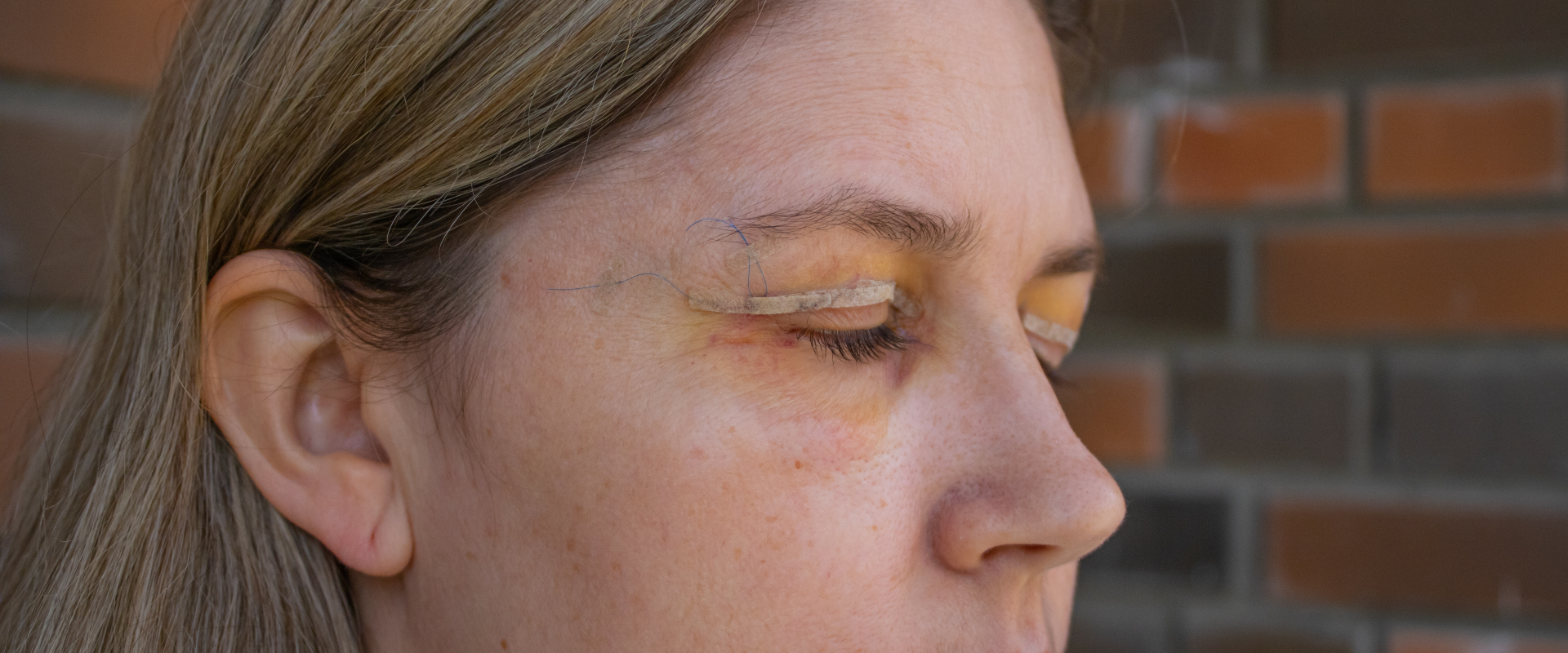
Double Eyelid Revision Surgery: Fixing a Previous Procedure
Medically reviewed by Dr. Choi Deokho, Board-Certified Plastic Surgeon, Representative Director, Goodline Plastic Surgery
Not every double eyelid surgery turns out the way a person hoped. Sometimes the crease sits too high or too low. Sometimes one eye looks noticeably different from the other. Sometimes a fold has faded and no longer shows, or a scar has become more visible than expected. If you are living with a result that does not feel like your own eyes, you are not alone, and a second procedure is often possible.
This guide explains what double eyelid revision surgery involves, why it tends to be more complex than a first-time operation, and how the team at Goodline Plastic Surgery in Seoul thinks about correcting a previous procedure. Our aim here is to be honest with you: revision eyelid surgery can improve many concerns, but it works within real anatomical limits. Understanding those limits before you decide is part of making a good choice.
What Is Double Eyelid Revision Surgery?
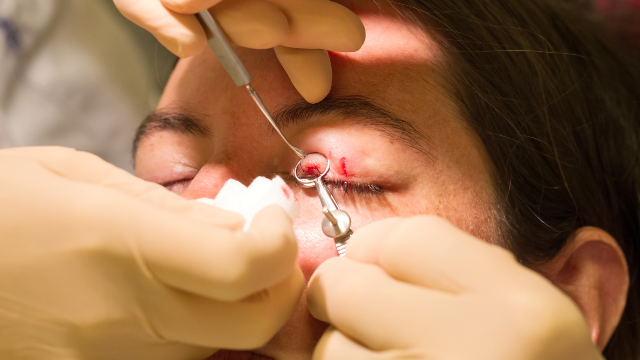
Double eyelid revision surgery, sometimes called revision blepharoplasty, is a second (or later) procedure performed to correct or improve the outcome of an earlier double eyelid operation. The goal is to address a specific concern, such as an unnatural crease height, poor symmetry between the two eyes, a fold that has partially or fully disappeared, or a visible scar.
A first double eyelid surgery works with tissue that has never been operated on. A revision, by contrast, works with tissue that has already been altered. There may be internal scarring, adhesions between layers of the lid, changes in how the skin and muscle sit, and sometimes missing or repositioned fat. Because of this, revision surgery is planned around what is actually present in the lid today, not around what a standard first-time procedure would assume.
Revision is not simply "doing the surgery again." It is a distinct undertaking that begins with figuring out why the first result fell short, then designing a correction for that particular situation. This is why a careful in-person examination matters so much before any plan is made.
Common Reasons People Seek a Revision
People come in for double eyelid revision for a wide range of reasons. Some of the most common include:
- A crease that is too high or too deep. An overly high fold can look surprised, harsh, or unnatural, and it may not match the person's facial features.
- A crease that is too low or too shallow. A fold set too low can look faint or can be partially hidden by overhanging skin.
- A fold that has faded or disappeared. With buried-suture (non-incisional) techniques in particular, a crease can loosen or release over time, so the double eyelid effect diminishes.
- Asymmetry between the two eyes. One of the most frequent reasons for revision is that the two eyelids no longer match in height, shape, or depth.
- Multiple or "triple" folds. Sometimes extra creases form above or below the intended fold, creating a layered appearance.
- A visible or thickened scar. Incisional methods leave a scar along the crease line, and occasionally that scar is more noticeable than desired.
- Pretarsal fullness or puffiness below the crease, or a hollow, over-resected look if too much tissue was removed at the first operation.
Published clinical reviews of revision upper-lid surgery describe this same list of concerns, and note that dissatisfaction after a first double eyelid operation may stem from scarring, a low versus high fold, a shallow versus deep fold, triple folds, pretarsal fullness, drooping of the lid (ptosis), and asymmetry. Knowing which of these applies to you is the starting point.
Why Revision Is More Complex Than a First Procedure
This is the part we want to be especially clear about. Revision double eyelid surgery is generally more challenging than a first-time procedure, and there are concrete reasons for that.
Scar tissue. Once tissue has been cut and healed, scar tissue forms internally. This scar tissue can bind layers together that would normally glide, distort the natural planes of the lid, and make dissection more delicate. Working around it takes time and care.
Altered anatomy. A previous surgery may have removed skin, fat, or muscle, or repositioned them. There is sometimes less tissue to work with, which limits certain options and means the surgeon has to plan around what remains.
Healing that is slower and less predictable. Because the tissue has already been disturbed, revision lids commonly take longer to settle and may heal more slowly than a first operation. Swelling can linger, and the final shape can take longer to reveal itself.
Higher intrinsic variability. Clinical series looking at secondary (revision) blepharoplasty report a higher rate of needing further adjustment than first-time surgery, precisely because of asymmetry, lid drooping, and scarring from the original operation combined with ongoing natural aging.
None of this means revision should be avoided. It means it should be approached realistically, with a surgeon who examines your lids closely and explains what is and is not achievable in your specific case.
An Honest Word on Symmetry
Here is something we state plainly to every patient considering eyelid revision: perfect symmetry cannot be guaranteed.
Human faces are naturally asymmetric. The two sides of almost everyone's face differ slightly in bone structure, brow position, lid thickness, and how they heal. After a previous surgery, those natural differences are layered on top of surgical changes and scar tissue. A skilled revision can improve balance and bring the two eyes much closer together, and that is a realistic and worthwhile goal. But an absolutely identical, mirror-image result is not something any responsible surgeon can promise.
We would rather have this conversation with you before surgery than have you feel misled afterward. Results vary from person to person, and a good outcome is measured by meaningful improvement and a natural look, not by an impossible standard.
How the Procedure Works at Goodline
Every revision plan is individual, because every previous result and every lid is different. That said, the general framework tends to follow a similar path.
Consultation and examination. Dr. Choi Deokho and the team begin by examining your eyelids, understanding what was done before (as far as it can be determined), and listening to what specifically bothers you. Candidacy for revision, and the right technique for your case, can only be decided by a hands-on exam, not from photographs alone.
Anesthesia. Double eyelid revision is typically performed under local anesthesia, sometimes with light sedation for comfort. The right approach for you is discussed in advance.
The procedure itself. Depending on the problem, the surgeon may release adhesions or scar tissue, adjust the height or depth of the crease, recreate a fold that has faded, redistribute or preserve fat, refine a scar, or address asymmetry between the two lids. Where a previous incision exists, the surgeon usually works along or near that line to avoid adding new scars where possible.
Duration. A double eyelid revision commonly takes roughly one to three hours. The time varies with the complexity of the case; releasing dense scar tissue or correcting significant asymmetry takes longer than a straightforward adjustment.
Because these are ranges based on typical cases, your own procedure may fall outside them. Your surgeon will give you a more specific estimate once your plan is set.
Recovery and What to Expect
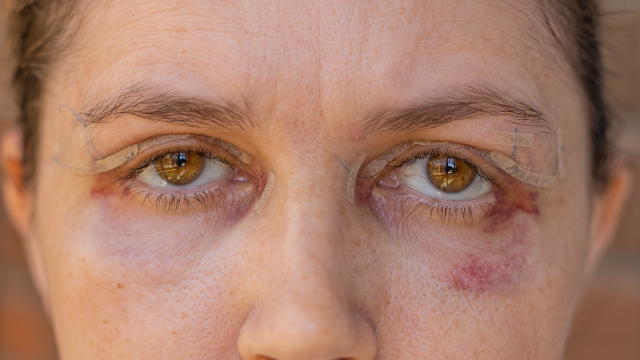
Recovery from eyelid revision follows the same general arc as other eyelid surgery, but as noted above, revision tissue often heals more slowly because of prior scarring.
In the early days you can expect swelling and some bruising around the eyes. This is normal and usually most pronounced in the first several days, then gradually eases. Many people find that keeping the head elevated and using cold compresses as directed helps in the initial phase. Sutures placed along an incision are typically removed within about a week, though your surgeon will confirm timing for your case.
The more subtle part of recovery is patience. The fold shape, the way the crease sits, and the final symmetry can continue to refine over weeks and months as swelling fully resolves and the tissue settles. It is common for a revision to look somewhat asymmetric or unsettled early on and to improve steadily. Judging the final result too soon is a frequent source of unnecessary worry.
Because recovery timelines vary with the individual and the complexity of the surgery, we avoid promising a fixed "back to normal" date. Your follow-up visits are where progress is assessed and any concerns are addressed.
Risks and Realistic Limits
Like any surgery, double eyelid revision carries risks, and these deserve straightforward discussion rather than reassurance. Possible risks and limitations include:
- Residual or new asymmetry, since perfect matching cannot be guaranteed.
- Scarring, including the possibility that a scar heals more visibly than hoped, which is a particular consideration when scar tissue already exists.
- Swelling and bruising that can be prolonged relative to a first operation.
- Over- or under-correction of the crease height or depth, sometimes requiring further adjustment.
- Dry eye, irritation, or difficulty fully closing the eyes (lagophthalmos), particularly where skin has been removed at previous operations.
- Infection or delayed healing, as with any surgical procedure.
- The chance that a further revision may be wanted, which is statistically more common after secondary surgery than after a first procedure.
A responsible plan accounts for these possibilities and discusses them openly. There is sometimes a limit to how much can be corrected in a single stage, especially where tissue is scarred or scarce, and occasionally a staged approach is more sensible than trying to fix everything at once.
Are You a Candidate?
Good candidates for double eyelid revision are generally people who are bothered by a specific, identifiable concern from a previous procedure, who are in reasonable general health, and who understand the realistic limits of what revision can achieve. It is often recommended to wait until the tissues from the previous surgery have fully settled before undertaking a revision, so that the surgeon is working with stable, healed anatomy.
Candidacy, timing, and the right technique can only be determined through an in-person examination. If you are considering treatment, the most useful next step is a consultation where your lids can be assessed directly.
About Goodline Plastic Surgery
Goodline Plastic Surgery is a plastic surgery clinic located in the Apgujeong area of Gangnam, Seoul, near Apgujeong Station Exit 4. The clinic was established in 2001 and is a Registered Medical Institution for Attracting Foreign Patients, certified by Korea's Ministry of Health and Welfare.
Eye surgery, including revision eye surgery, is among the areas Dr. Choi Deokho works in. For international patients, the clinic offers basic English-language support and online consultation through its contact page, and translated documents are available. You can learn more at the Goodline Plastic Surgery website or reach out through the contact page to ask about a consultation.
Frequently Asked Questions
How long should I wait after my first surgery before a revision?
It is generally advisable to wait until the tissues from your first procedure have fully healed and settled before considering a revision, so the surgeon can work with stable anatomy. The right timing depends on your individual healing and the nature of the concern. This is one of the first things assessed at your consultation.
Can revision surgery guarantee my eyes will look identical?
No. Perfect symmetry cannot be guaranteed, because faces are naturally asymmetric and prior surgery adds scar tissue and altered anatomy. A well-planned revision can meaningfully improve balance and create a more natural look, and that is a realistic goal, but an exact mirror-image result is not something any surgeon can promise.
Will revision surgery leave a new scar?
Where possible, the surgeon works along or near your existing crease or incision line to avoid adding new scars. Any incisional eyelid surgery involves a scar, and because scar tissue is already present, healing can be less predictable. How a scar settles varies between individuals.
Why does revision take longer to heal than my first surgery?
Tissue that has already been operated on carries internal scarring and adhesions, and it tends to heal more slowly and less predictably. Swelling can linger longer, and the final shape may take more weeks or months to settle. Patience during recovery is genuinely part of the process.
What kind of anesthesia is used?
Double eyelid revision is typically performed under local anesthesia, sometimes with light sedation added for comfort. The approach suited to your case is discussed with you before surgery.
Can a fold that completely disappeared be recreated?
In many cases, yes. A crease that has faded or released, which can happen especially after buried-suture techniques, can often be recreated during a revision. Whether and how depends on your current lid anatomy, which is why an examination is needed to give you a realistic answer.
Is there a limit to how much can be corrected at once?
Sometimes. Where tissue is heavily scarred or where skin or fat is scarce from previous surgery, there can be a limit to how much is safely correctable in one stage. In some cases a staged approach is recommended rather than attempting everything at once. Your surgeon will advise what is realistic for you.
The Bottom Line
- Double eyelid revision surgery corrects concerns from a previous procedure, such as crease height, faded folds, asymmetry, or a visible scar.
- It is generally more complex than a first operation because of scar tissue and altered anatomy, and it commonly heals more slowly.
- Perfect symmetry cannot be guaranteed; a realistic goal is meaningful improvement and a natural appearance, and results vary between individuals.
- The procedure is typically done under local anesthesia with possible light sedation and commonly takes about one to three hours depending on complexity.
- Candidacy, timing, and technique can only be decided through an in-person examination with a qualified surgeon.
This article is for general educational purposes only and is not a substitute for professional medical advice, diagnosis, or treatment. It is not a self-diagnosis tool. Always consult a qualified healthcare provider about your individual situation before making any decision about surgery. Results vary from person to person, and no specific outcome is promised or guaranteed.
References
- Upper Eyelid Blepharoplasty (StatPearls, NCBI Bookshelf)
- Revision Upper Blepharoplasty (PMC)
- Secondary Upper Lid Blepharoplasty: A Clinical Series (PMC)
- Eyelid Surgery (American Society of Plastic Surgeons)
More Articles
Continue reading our clinical guides.

Revision Rhinoplasty in Seoul: What US Patients Should Know
Revision rhinoplasty in Seoul for US patients: why secondary nose surgery is harder, what recovery looks like, honest expectations, and Goodline's plan.
Learn More
Rejuran vs RE20 vs Juvelook Volume: Skin Boosters Compared
Three injectables that look alike on a clinic menu and solve three unrelated problems. Hydration, repair and volume differ in timeline and in results.
Learn More

Primary vs Revision Rhinoplasty: The Differences That Matter
A second nose operation is not the first one repeated. Scar tissue, longer operating time and a result that takes a year change what you should expect.
Learn More