Natural-Looking Face & Neck Lift Surgery and Personalized Anti-Aging Care in Apgujeong, Gangnam, Seoul
4.1 ★ Google · Board-Certified Plastic Surgeon
en-US

Medical Guide
Rejuran vs RE20 vs Juvelook Volume: Skin Boosters Compared
Three injectables that look alike on a clinic menu and solve three unrelated problems. Hydration, repair and volume differ in timeline and in results.
Schedule a Consultation
Rejuran vs RE20 vs Juvelook Volume: Skin Boosters Compared
Medically reviewed by Dr. Choi Deokho, Representative Director, Goodline Plastic Surgery
They arrive in the same syringe, through the same fine needle, in the same thirty-minute appointment. On a treatment menu they sit in the same section. And they are three different substances solving three different problems, which is why asking "which skin booster is better" produces an answer that is useless to you.
The better question is which problem you have. Once that is settled, the choice mostly settles itself.
What each one is made of
This is the distinction that matters, and it is rarely the one presented first.
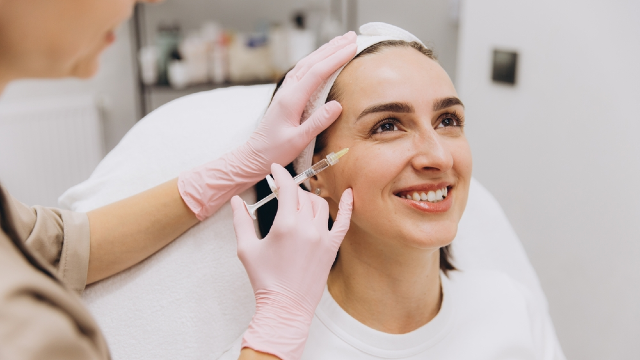
RE20 is hyaluronic acid. Goodline Plastic Surgery describes it as a hyaluronic acid-based formulation delivered through a fine-needle injection technique, injected into the skin to deliver hyaluronic acid directly into the dermis. Hyaluronic acid holds water. That is the mechanism, and it is the whole mechanism.
Rejuran is polynucleotide. The clinic describes it as a polynucleotide, or PN, based formulation, injected into the skin using fine needles and delivering polynucleotide solution into the dermis to support tissue repair. Not water retention — repair.
Juvelook Volume is PDLLA. The clinic describes it as a poly-D,L-lactic acid collagen-stimulating formulation, injected into targeted areas to stimulate the skin's natural collagen production and restore lost volume. The material is not the result. It prompts the skin to make the result.
Three substances, three mechanisms: hold water, support repair, stimulate collagen. Nothing about the appointment distinguishes them. Everything about the outcome does.
Who each one is described for
Goodline Plastic Surgery's candidate descriptions follow the mechanisms closely, which is a useful sign that the menu is not arbitrary.
For RE20, the clinic describes adults with dry, dull, or dehydrated skin who want a hydration boost. Those three adjectives are the entire indication. If your complaint is that your skin looks tired and feels tight and does not hold makeup well, this is the category you are in.
For Rejuran, the clinic describes adults with aging, damaged, or scar-prone skin seeking regeneration and improved texture. The word doing the work there is texture. Not plumpness, not glow — the surface quality of skin that has been through something, whether that is acne, sun, or time.
For Juvelook Volume, the clinic describes adults experiencing volume loss or reduced skin firmness who want gradual, natural-looking volumization. This is a structural complaint rather than a surface one. The face has lost something that used to be there.
If you read those three and recognized yourself in exactly one, your decision is made. If you recognized yourself in all three, that is also informative, and it is a reason to be assessed rather than to pick.
The timelines are not comparable
This is where most disappointment comes from, and it is entirely avoidable by knowing the number in advance.
RE20 shows up quickly. The clinic describes hydration and radiance improvements as visible soon after treatment, with results building over a course of sessions. Quick is the point. Hydration is a condition you can change in days because water moves.
Rejuran builds and then holds for months. The clinic describes improvements in texture and elasticity building gradually over a course of sessions, with effects lasting several months. Tissue repair is not a same-week process. You are asking the skin to do something, and it does it on its own schedule.
Juvelook Volume is the slowest and the longest. The clinic describes volumizing effects building gradually over weeks to months and says they may last a year or longer depending on the individual. Collagen stimulation is the slowest of the three mechanisms because the material is not the volume — your own tissue is, and it has to be made.
Set those side by side and an obvious trap appears. Someone who wants to look better for an event in ten days and chooses the collagen stimulator will conclude the treatment did nothing. Someone who wants a change that outlasts the season and chooses the hydrator will conclude it did not last. Both will be right about their experience and wrong about the treatment.
Recovery, honestly
All three are injections into skin, so the early days look similar and the differences are small.
For RE20 the clinic describes mild redness or swelling as common, generally resolving within a few days. For Rejuran it describes mild swelling, redness, or small bumps, generally resolving within several days. For Juvelook Volume it describes swelling that typically reduces over the first week, with gradual improvement over the following weeks.
The small bumps on the Rejuran list deserve a note, because people who have not been warned find them alarming. They are described by the clinic as a common effect that generally resolves within several days. Knowing that in advance is the difference between a normal recovery and a panicked message on day two.
Discomfort is described as generally mild for RE20 with topical numbing available, and generally mild to moderate for both Rejuran and Juvelook Volume, with topical numbing for Rejuran and topical or local numbing for Juvelook Volume. The gradient is real but small.
Risks
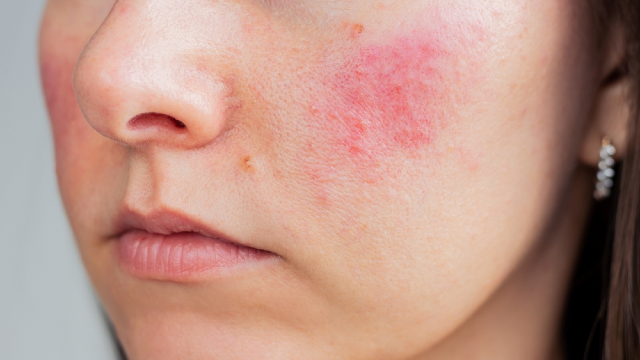
The clinic lists them plainly, and they are what injections into skin produce.
For RE20: redness, swelling, or bruising at injection sites. For Rejuran: swelling, redness, bruising, or small bumps at injection sites. For Juvelook Volume: swelling, redness, bruising, or lumps and nodules at injection sites.
The difference between a small bump and a nodule is not merely wording. A collagen-stimulating material works by provoking a tissue response, and a tissue response that is uneven or overdone is the characteristic complication of that class. The American Academy of Dermatology's overview of injectable fillers and its account of how long filler results last are worth reading alongside any clinic's description, as is the US Food and Drug Administration's page on soft tissue fillers, which sets out the device category and the reported adverse events in a way that no treatment menu does.
Goodline Plastic Surgery describes postponement for all three where there is an active skin infection, and where there is a known allergy to the relevant material: hyaluronic acid products for RE20, polynucleotide products for Rejuran, and PDLLA products for Juvelook Volume. If you have reacted to an injectable before, which material it was determines which of these three is affected.
Why "which is best" has no answer
Because the three were not designed to compete.
A reasonable way to think about it: RE20 addresses what the skin is holding, Rejuran addresses what the skin has been through, and Juvelook Volume addresses what the face has lost. Those are not three grades of the same thing. They are three different findings, and a person can have one, two, or all three at once.
This is also why the clinic's own descriptions are written as matching rather than ranking. Goodline Plastic Surgery states that it selects the appropriate skin booster and treatment plan based on each patient's hydration and skin quality needs; that it tailors the Rejuran treatment plan to each patient's skin condition and regeneration goals; and that it tailors the Juvelook Volume treatment plan to each patient's volume loss pattern and facial structure. Three statements, three different criteria, one underlying position: the assessment picks, not the patient.
What the clinic treats is set out under about the clinic.
What this means if you are traveling
A few practical consequences follow from the timelines, and they are the ones that get overlooked when a treatment is booked as an add-on to a trip.
A course is not a session. Two of the three are described as building over a course of sessions. If you are in Seoul for a week, you can have one session of anything, and for RE20 you may well see the point of it before you leave. For Rejuran you probably will not. That does not make the treatment wrong; it makes a single-visit expectation wrong.
The slowest one is the easiest to travel for. Juvelook Volume develops over weeks to months, so there is nothing you will miss by flying home. What you lose is not the result but the review, which matters most for the material whose complication profile includes lumps and nodules.
Flying itself is not the constraint. For Rejuran the clinic notes that flying time should be confirmed according to recovery and provider guidance, which is the sensible answer for all three: the limiting factor is whether you are swollen and whether anyone needs to look at you again, not the flight.
If you are planning around other treatments on the same trip, note that the Centers for Disease Control and Prevention's medical tourism guidance is explicit about continuity of care being the weak point of treatment abroad, and injectables given in a course are an obvious example: the second session has to happen somewhere.
What to ask at consultation
Four questions, and they are not the usual ones.
Which of my complaints is this treating? If the answer covers hydration, texture and volume at once, ask which it addresses first. A treatment that is said to do everything is being described loosely.
How many sessions, and over what period? The answer determines whether this is compatible with your travel at all.
When should I judge it? Ask for a date, not a range. "Several months" for a volumizer and "soon after" for a hydrator are different instructions, and judging either on the wrong date produces a false conclusion.
What happens if I get a lump? For the collagen stimulator especially, ask who assesses it and how, given that you will not be in the country. This is the question people skip and then need.
Published patient accounts are collected under customer reviews.
A note on how these are marketed
Worth saying plainly, because the category attracts a particular kind of description.
Skin boosters are frequently presented as a general-purpose improvement — glass skin, glow, rejuvenation — language that applies equally to all three and therefore distinguishes none of them. That framing is not false so much as empty, and it is the reason people arrive having chosen a product name rather than a treatment.
The clinic's own material does not do this. It gives each one a mechanism, a candidate description, a timeline, and a risk list, and those four things differ across the three in ways that are easy to check against your own complaint. Read the mechanism and the timeline before you read anything else, and the choice narrows before you walk in.
Frequently Asked Questions
Can I have more than one of them?
That is a question for assessment rather than a menu choice. The three address different findings, and the clinic describes selecting and tailoring treatment plans based on individual skin condition, regeneration goals and volume loss pattern. Combining is a plan, not a default.
Which one lasts longest?
Juvelook Volume, by the clinic's own account: effects building gradually over weeks to months and lasting a year or longer depending on the individual. Rejuran's effects are described as lasting several months. RE20's improvements are described as building over a course of sessions, without a stated duration.
Are the injections uncomfortable?
RE20 is described as generally mild discomfort, with topical numbing available. Rejuran and Juvelook Volume are described as generally mild to moderate, with topical numbing for Rejuran and topical or local numbing for Juvelook Volume.
What are the small bumps after Rejuran?
The clinic lists mild swelling, redness, or small bumps as common after Rejuran, generally resolving within several days. They are an expected feature of the early recovery rather than a sign that something has gone wrong, though anything persisting or worsening should be reviewed.
Who should not have these treatments?
The clinic describes postponement where there is an active skin infection, and where there is a known allergy to the relevant material — hyaluronic acid for RE20, polynucleotide for Rejuran, PDLLA for Juvelook Volume. Tell the clinician about any previous reaction to an injectable.
Can I fly home afterwards?
For Rejuran the clinic notes that flying time should be confirmed according to recovery and provider guidance, which is the right approach for all three. These are described as treatments with short recovery, so the usual question is whether swelling has settled and whether a review is planned.
Will I see anything immediately?
With RE20, possibly: the clinic describes hydration and radiance improvements as visible soon after treatment. With the other two, not meaningfully. Both are described as building gradually, and early swelling can make the first days misleading in either direction.
How do I know which one I need?
By describing the complaint rather than naming the product. Dry and dull points one way, rough or scarred texture another, and lost volume or firmness a third. If more than one applies, that is what the assessment is for.
The Bottom Line
- The three are different materials with different mechanisms: RE20 is hyaluronic acid delivered into the dermis, Rejuran is polynucleotide supporting tissue repair, and Juvelook Volume is PDLLA stimulating the skin's own collagen.
- They are described for different complaints — dry or dull skin, aging or scar-prone texture, and volume loss or reduced firmness respectively — so "which is better" is not an answerable question.
- The timelines differ sharply: RE20 shows improvement soon after treatment, Rejuran builds over sessions with effects lasting several months, and Juvelook Volume develops over weeks to months and may last a year or longer.
- Early recovery is similar and brief for all three, but the risk lists differ at the margin, with lumps and nodules specific to the collagen-stimulating material.
- Two of the three are described as working over a course of sessions, which is the detail that most often conflicts with a single trip.
This article is for general informational purposes and does not constitute individualized medical advice. It is not a self-diagnosis tool. Nothing here can establish which treatment suits your skin or whether any of them is appropriate for you. Only a qualified plastic surgeon or other clinician who has examined you can determine that, and any injection site that becomes increasingly painful, pale, discolored or vision-affecting should be assessed urgently where you are.
References
- American Academy of Dermatology — Injectable Fillers Overview
- American Academy of Dermatology — How Long Do Filler Results Last?
- American Academy of Dermatology — Preparing for Filler Treatment
- American Academy of Dermatology — Cosmetic Treatment Safety
- US Food and Drug Administration — Dermal Fillers (Soft Tissue Fillers)
- US Food and Drug Administration — Dermal Filler Dos and Don'ts
- MedlinePlus — Skin Aging
- MedlinePlus — Skin Conditions
- CDC Yellow Book — Medical Tourism
More Articles
Continue reading our clinical guides.

Revision Rhinoplasty in Seoul: What US Patients Should Know
Revision rhinoplasty in Seoul for US patients: why secondary nose surgery is harder, what recovery looks like, honest expectations, and Goodline's plan.
Learn More
Rejuran vs RE20 vs Juvelook Volume: Skin Boosters Compared
Three injectables that look alike on a clinic menu and solve three unrelated problems. Hydration, repair and volume differ in timeline and in results.
Learn More

Primary vs Revision Rhinoplasty: The Differences That Matter
A second nose operation is not the first one repeated. Scar tissue, longer operating time and a result that takes a year change what you should expect.
Learn More