Natural-Looking Face & Neck Lift Surgery and Personalized Anti-Aging Care in Apgujeong, Gangnam, Seoul
4.1 ★ Google · Board-Certified Plastic Surgeon
en-US

Medical Guide
Revision Rhinoplasty in Seoul: What US Patients Should Know
Revision rhinoplasty in Seoul for US patients: why secondary nose surgery is harder, what recovery looks like, honest expectations, and Goodline's plan.
Schedule a Consultation
Revision Rhinoplasty in Seoul: What US Patients Should Know
Medically reviewed by Dr. Choi Deokho, Board-Certified Plastic Surgeon, Representative Director, Goodline Plastic Surgery
When a first nose surgery does not heal the way a patient hoped, or when an implant causes problems years later, the next step is revision rhinoplasty. This is a fundamentally different operation from a first-time procedure. The tissue has already been operated on, scar has formed, and the surgeon is working with an altered anatomy rather than a clean starting point. For US patients considering revision surgery in Seoul, understanding these realities is essential to setting sensible expectations.
At Goodline Plastic Surgery in Apgujeong, Gangnam, revision rhinoplasty is one of the areas the clinic focuses on alongside primary rhinoplasty. This guide explains what revision surgery involves, why it is more challenging than a first operation, how recovery differs, and how to think honestly about what a secondary case can and cannot achieve.

What Revision Rhinoplasty Is
Revision rhinoplasty, sometimes called secondary rhinoplasty, is surgery performed on a nose that has already had at least one previous operation. Patients seek it for many reasons: a shape they are unhappy with, an implant that has become infected or shifted, a tip that has become thin or exposed, breathing that has worsened, or asymmetry that developed as the first surgery healed. In some cases the goal is primarily corrective and functional; in others it is refinement of the appearance. Often it is a combination.
The defining feature of revision surgery is that the surgeon is not starting fresh. Cartilage may have been removed or weakened, an implant may be in place, and scar tissue has changed how the layers of the nose move and heal. This is why revision rhinoplasty is widely regarded as one of the more demanding procedures in facial plastic surgery, and why realistic planning matters even more than in a first operation.
Why Secondary Cases Are More Challenging
There is a documented, well-recognized reason revision surgery is harder: it is performed on previously operated and scarred tissue. Scar tissue behaves differently from untouched tissue. It can be firm, unpredictable, and less forgiving, and it can distort the planes that a surgeon normally uses to separate and reshape structures. Several factors combine to make secondary cases more complex:
- Scar tissue from the earlier surgery makes dissection more difficult and healing less predictable.
- Reduced or missing cartilage from the first operation may mean there is not enough native material left to rebuild the framework, so tissue has to be brought in from elsewhere.
- Compromised skin and soft tissue, which may be thinner or have poorer blood supply after a previous procedure, can affect both safety and the final shape.
- Existing implants may need to be removed, and the space they occupied must then be reconstructed.
Because of these factors, a revision plan is often built around structural reconstruction rather than simple reshaping. The surgeon has to work with what the first operation left behind, which is why an in-person examination is so important before anyone can say what is realistic.
The Techniques Used in Revision Rhinoplasty
The documented approach to revision rhinoplasty at Goodline centers on rebuilding the nose in a way that is stable and uses the body's own tissue where possible. Key elements include:
Removing a problematic prosthesis
When a previous implant is the source of the problem, whether through infection, extrusion, shifting, or an unsatisfactory shape, the first step is often to remove the prosthesis. This resolves the immediate issue but leaves a gap in the structure that must be reconstructed.
Rebuilding with your own tissue
Rather than simply replacing one implant with another, revision surgery frequently rebuilds the nose using autologous tissue such as your own cartilage (from the septum, ear, or rib) or dermal fat. Using your own tissue can reduce the risks associated with foreign implants, which is particularly relevant in a nose that has already had complications. As with any autologous approach, there are trade-offs, including a donor site and the possibility that cartilage grafts can warp or partially resorb over time.
Covering exposed tip cartilage
A specific and important problem in some secondary cases is exposed or poorly covered tip cartilage, where the soft tissue over the tip has become too thin. Part of the reconstruction can involve covering exposed tip cartilage with soft tissue to protect it and restore a more natural, durable contour. This kind of soft-tissue work is a good example of why revision cases are individualized and cannot be reduced to a single standard technique.
How the Procedure Is Performed
Revision rhinoplasty at Goodline typically takes about two to four hours, which is generally longer than a first-time operation because of the extra work involved in dealing with scar tissue, removing an implant, harvesting cartilage, and reconstructing the framework. Anesthesia may be local with sedation or general, chosen according to the complexity of the case and your health and preferences, and decided together with the surgical team.
Because each revision starts from a different set of prior surgeries, there is no single fixed sequence. The surgeon assesses what is present, removes what is causing problems, and rebuilds using the most appropriate materials for your particular anatomy. The emphasis is on a stable, natural-looking result rather than a dramatic change, since tissue that has already been operated on tolerates aggressive maneuvers less well.
The choice of donor cartilage also shapes how the operation is planned. Septal cartilage is often used first when enough remains, but in a nose that has already been operated on, the septum may have been partly used or removed during the earlier surgery. In that situation the surgeon may turn to ear cartilage for softer contouring or to rib cartilage when a stronger structural framework is needed. Each source has its own recovery considerations and its own trade-offs, including the small scar and healing time at the donor site, and these are discussed with you before surgery so that you understand the full scope of the operation rather than only the changes to the nose itself.
Recovery After Revision Surgery
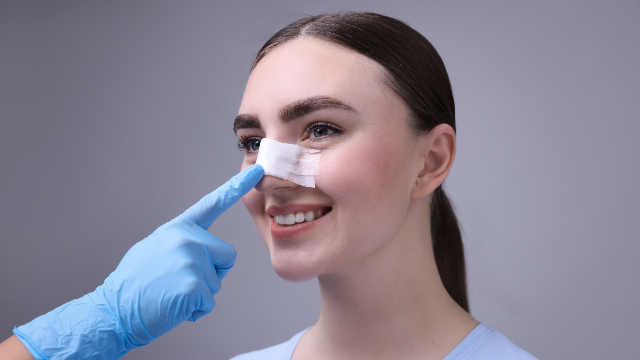
Recovery from revision rhinoplasty follows the same general pattern as primary surgery in the early days, with swelling, bruising, and congestion, but the overall timeline to a settled result is longer. Because scar tissue and reconstructed tissue take more time to soften and refine, the final result can take up to about 12 months to fully settle, and sometimes it feels slower than a first operation did.
In practical terms, this means patience is even more important in a secondary case. Early swelling will ease over the first weeks, but the fine details, especially around the tip, continue to change for many months. If you are traveling from the US, plan your stay around the surgery and early recovery, and coordinate the timing of follow-up care with the clinic, keeping in mind that any timeline is a guide rather than a guarantee because healing varies from person to person.
Setting Honest Expectations for a Secondary Case
Revision rhinoplasty can improve a difficult situation, but it is important to be candid about its limits. A nose that has been operated on before has less native cartilage, altered skin, and scar tissue, all of which constrain what is achievable. Perfect symmetry cannot be promised in any rhinoplasty, and this is especially true in revision cases. Some patients need more than one further procedure, and in complex situations the realistic goal may be meaningful improvement and stability rather than an idealized shape.
The honest risks of revision surgery include everything associated with primary surgery, such as swelling, bruising, bleeding, infection, and anesthesia reactions, plus a higher likelihood of unpredictable healing because of the existing scar tissue. There is also the possibility that the result, while improved, still does not fully match your hopes. A responsible surgeon will discuss these possibilities openly, explain what your particular tissue will allow, and avoid promising a guaranteed outcome. This transparent approach is not pessimism; it is the foundation of a sound decision.
Planning Your Revision in Seoul
Goodline Plastic Surgery is located in the Apgujeong area of Gangnam, Seoul, near Apgujeong Station Exit 4, and is a Registered Medical Institution for Attracting Foreign Patients certified by the Korean Ministry of Health and Welfare. The clinic was established in 2001 and offers basic English-language support. If you are considering revision surgery, gathering your previous operative records, implant details, and photographs from before your first surgery can help the surgeon understand your history.
The best first step is a consultation, which you can arrange online through the contact page. Because every revision is shaped by what came before, an in-person examination is the only way to determine whether you are a candidate and what a realistic plan looks like for your nose.
Frequently Asked Questions
Why is revision rhinoplasty harder than a first nose surgery?
It is performed on previously operated, scarred tissue, which heals less predictably and is harder to work with than untouched tissue. There may also be reduced native cartilage and altered skin from the first operation. These factors make the surgery more complex and are the main reason planning and realistic expectations matter so much.
Can revision surgery fix a problem implant from my first rhinoplasty?
Often yes. When an implant is infected, has shifted, or is causing an unsatisfactory shape, revision surgery can remove it and reconstruct the nose, frequently using your own cartilage or dermal fat rather than another implant. The specific plan depends on the condition of your tissue, which is assessed during an in-person examination.
How long is the recovery after revision rhinoplasty?
The early recovery resembles a primary operation, with swelling and bruising that ease over the first weeks. However, because scar tissue and reconstructed tissue take longer to settle, the final result can take up to about 12 months. Patience is especially important in secondary cases, and healing timelines vary between individuals.
Am I a candidate for revision rhinoplasty in Seoul?
Candidacy can only be determined by an in-person examination that assesses your scar tissue, remaining cartilage, skin quality, and goals. Bringing your previous operative records and photographs helps. Some noses are well suited to revision; others require a staged approach, and the surgeon will explain what is realistic for your specific case.
Will my revised nose be perfectly symmetrical?
No surgeon can promise perfect symmetry, and this is even more true in revision cases where scar tissue and altered anatomy limit what is achievable. The realistic goal is meaningful improvement and a stable, natural-looking result. Results vary from person to person, and some complex cases may benefit from more than one procedure.
How long does the revision procedure take?
Revision rhinoplasty at Goodline typically takes about two to four hours, longer than a first operation because of the added work of managing scar tissue, removing an implant if present, harvesting cartilage, and reconstructing the framework. Anesthesia may be local with sedation or general, decided with the surgical team based on your case.
The Bottom Line
- Revision rhinoplasty is a distinct, more demanding operation performed on previously operated, scarred tissue, and it requires careful individual planning.
- Common steps include removing a problematic prosthesis, rebuilding with your own cartilage or dermal fat, and covering exposed tip cartilage with soft tissue.
- Expect a longer procedure of roughly two to four hours and a longer settling period, with the final result taking up to about 12 months.
- Honest expectations are essential: perfect symmetry cannot be promised, healing is less predictable, and some complex cases may need more than one procedure.
- Only an in-person examination can determine whether you are a candidate and what a realistic outcome looks like for your nose.
Disclaimer: This article is for general educational purposes only and is not a self-diagnosis tool. It does not replace a personal consultation with a qualified physician. Only an in-person examination can determine whether revision surgery is appropriate for you, and individual results vary. If you have concerns about your health or a previous procedure, seek advice from a licensed medical professional.
References
- Rhinoplasty — StatPearls, NCBI Bookshelf
- Rhinoplasty — American Society of Plastic Surgeons
- Rhinoplasty Tip-Shaping Surgery — StatPearls, NCBI Bookshelf
- Septoplasty — American Society of Plastic Surgeons
More Articles
Continue reading our clinical guides.

Revision Rhinoplasty in Seoul: What US Patients Should Know
Revision rhinoplasty in Seoul for US patients: why secondary nose surgery is harder, what recovery looks like, honest expectations, and Goodline's plan.
Learn More
Rejuran vs RE20 vs Juvelook Volume: Skin Boosters Compared
Three injectables that look alike on a clinic menu and solve three unrelated problems. Hydration, repair and volume differ in timeline and in results.
Learn More

Primary vs Revision Rhinoplasty: The Differences That Matter
A second nose operation is not the first one repeated. Scar tissue, longer operating time and a result that takes a year change what you should expect.
Learn More