Natural-Looking Face & Neck Lift Surgery and Personalized Anti-Aging Care in Apgujeong, Gangnam, Seoul
4.1 ★ Google · Board-Certified Plastic Surgeon
en-US

Medical Guide
Double Eyelid Surgery Methods at Goodline in Seoul
Compare incisional and non-incisional double eyelid surgery in Korea: how each technique works, recovery, candidacy, and honest risks from a Seoul clinic.
Schedule a Consultation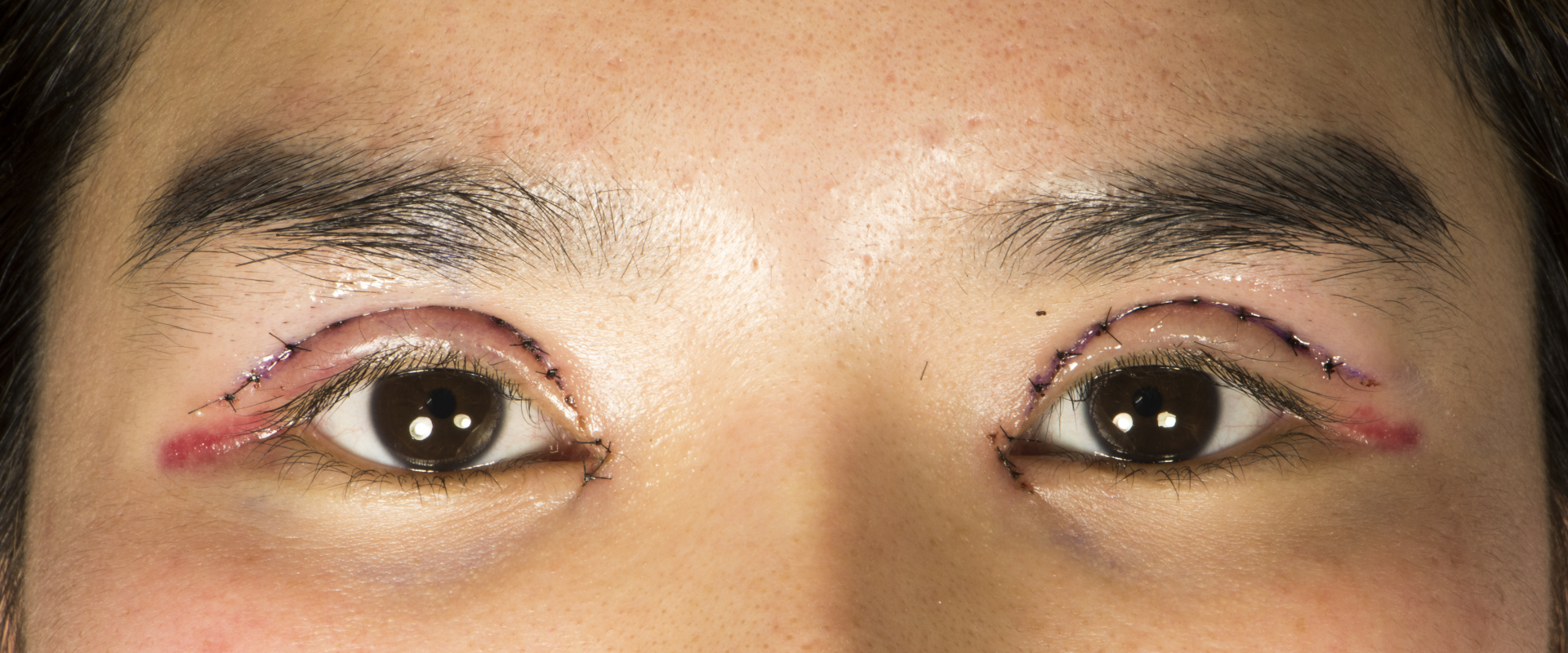
Double Eyelid Surgery: Incisional vs Non-Incisional Explained
Medically reviewed by Dr. Choi Deokho, Board-Certified Plastic Surgeon, Representative Director, Goodline Plastic Surgery
Double eyelid surgery is one of the most requested facial procedures among people with monolids or an inconsistent upper eyelid crease. The goal is to create or refine a supratarsal fold, the small line that appears when the upper eyelid skin tucks in above the lash line. When a defined crease is present, the eye can look more open and the eyelid area can be easier to manage day to day. Yet the phrase "double eyelid surgery" actually covers several distinct techniques, and choosing between them is not a matter of preference alone. It depends on your eyelid anatomy, skin thickness, the amount of fat behind the skin, muscle tone, and what you want your eyes to look like.
This guide explains the two main approaches, the incisional (cutting) method and the non-incisional (suture) method, along with the partial-incision option that sits between them. It also covers recovery expectations, honest risks, and how surgeons decide which route suits a given eyelid. The information here is educational and reflects techniques discussed at Goodline Plastic Surgery in Apgujeong, Gangnam, Seoul. It is not a substitute for a personal examination.
How the Upper Eyelid Crease Forms
To understand the difference between methods, it helps to know why a crease exists at all. In eyelids that naturally show a fold, fibers from the levator muscle mechanism, which lifts the eyelid, attach to the skin at a certain height. When the eye opens, these attachments pull the skin inward and a crease appears. In eyelids without a defined fold, those skin attachments are weaker, higher, or set behind a thicker pad of fat and muscle, so no consistent line forms.
Double eyelid surgery recreates that connection. Every technique, regardless of how much cutting is involved, aims to establish a durable link between the deeper eyelid structures and the overlying skin at a chosen height. The methods differ mainly in how they build that link and how they handle excess skin and fat.
Eyelid anatomy also varies across individuals and populations. Many East Asian eyelids have the orbital septum fusing lower on the eyelid and carry more fullness in the upper lid, which is one reason technique selection matters so much. There is no single crease shape that is correct; a natural-looking result is one that suits your own face.
The Non-Incisional (Suture) Method
The non-incisional method, sometimes called the buried-suture or stitch technique, avoids a long external cut. Instead, the surgeon makes a few small holes along the planned crease line and passes fine sutures through them. These buried sutures connect the eyelid skin to the underlying muscle, creating the fold from the inside. Because there is no continuous incision, tissue disruption is limited.
This approach tends to involve a shorter surgery and, for many people, a faster early recovery than the full incisional method. There is generally less visible bruising and swelling in the first days, and because no long scar is created, the surface heals with minimal external marking. For these reasons, the suture technique is often attractive to younger patients and to those with thinner eyelid skin, limited excess skin, and little bulging fat.
The trade-off is durability and scope. Because the fold relies on buried stitches rather than a healed internal scar, the crease can loosen, fade, or become uneven over time, and revision is possible. The suture method also cannot remove excess skin or reduce a heavy fat pad, so it is less suited to thicker or fuller eyelids. Results vary from person to person, and no crease can be described as permanent or guaranteed.
The Incisional Method
The incisional method uses a fine cut placed along the intended crease line. Through this opening, the surgeon can adjust or remove small amounts of skin, muscle, and fat as needed, then set the crease by securing the deeper tissue to the skin. As healing progresses, internal scar tissue reinforces the fold.
The main advantage is versatility. Because the surgeon works with the eyelid open, the incisional method can address thicker skin, a fuller fat layer, redundant skin, or an asymmetric starting point that the suture technique cannot fully manage. The resulting crease tends to be more stable over the long term, which is one reason it is often chosen for eyelids that need more than a simple fold.
The trade-offs are a longer procedure, more initial swelling and bruising, and a more gradual recovery. There is also a fine external scar along the crease line. In most cases this settles into the fold and becomes difficult to notice once healed, but scarring is an expected part of any cutting technique and cannot be promised to be invisible. As with all methods, symmetry cannot be guaranteed and touch-up surgery is sometimes needed.
The Partial-Incision Method
Between the two lies the partial-incision method, which uses one or a few short incisions rather than a full-length cut. This lets the surgeon remove or reposition a modest amount of fat and create a firmer fixation than sutures alone, while keeping the incision, swelling, and scar shorter than the full incisional route.
Partial incision can be a reasonable middle path for eyelids that have a little extra fat or slightly thicker skin but do not need extensive skin removal. As always, whether it is appropriate depends on the specifics of your eyelid, which is why a hands-on assessment matters more than any general rule.
How Surgeons Choose the Method
Method choice depends on anatomy, not fashion. During a consultation, a surgeon typically evaluates skin thickness and laxity, the amount and position of eyelid fat, muscle strength, the height and symmetry of any existing partial crease, eyelash direction, and whether the upper lid also droops (a separate issue discussed below). Your goals for crease height and shape are weighed against what your tissue can realistically support.
As a broad pattern, thinner eyelids with minimal fat and little excess skin may do well with the suture method, while thicker or fuller lids, or those with loose skin, often call for a partial or full incisional approach for a stable result. These are general tendencies, not fixed rules, and only an in-person examination can determine candidacy. If your upper lid sits low over the eye, the surgeon may find that eyelid ptosis is contributing and that a crease procedure alone will not address it.
At Goodline Plastic Surgery, the approach is individualized to eyelid type rather than applied as a single standard method. You can ask directly which technique is being recommended for you and why during a consultation, which can be arranged through the clinic's contact page.
Recovery: What to Expect
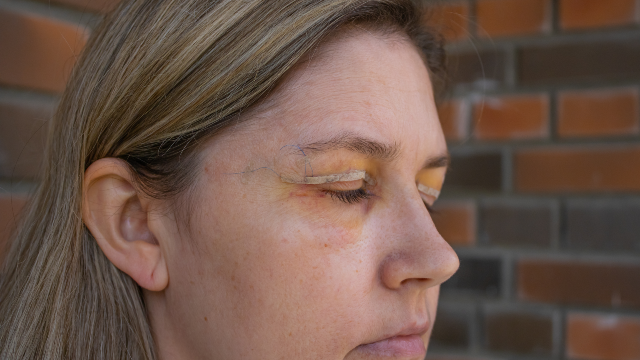
Recovery differs by technique, but some patterns are common. Swelling and bruising are heaviest in the first couple of days and then improve; for many patients the most pronounced swelling begins to ease around two to three days after surgery, with continued softening over the following weeks. Cold compresses in the early period, keeping the head elevated, and avoiding strenuous activity can help.
Non-surgical stitches, when used on the surface, are usually removed within about a week. The crease often looks higher, tighter, and more obvious at first; this is expected, and the fold gradually relaxes and settles into a more natural line as swelling resolves. Final settling of the crease can take weeks to months, and the suture method and incisional method follow somewhat different timelines, with the incisional route generally taking longer to fully mature.
Because recovery specifics depend on the technique used, your healing, and your daily activities, your surgeon's aftercare instructions take priority over any general timeline. Individual results and recovery vary, and it is normal for the two sides to swell and settle at slightly different rates in the early phase.
Honest Risks and Revision
All double eyelid techniques share a set of potential risks. These include asymmetry between the two creases, swelling and bruising, a crease that is set too high or too low, a fold that loosens or partly disappears (more associated with the suture method), and scarring (associated with incisional techniques). Less common issues include infection, prolonged swelling, small cysts at suture sites, and irritation or dryness of the eyes.
Revision surgery is sometimes necessary, whether to adjust height, correct asymmetry, or restore a fold that has faded. Revision on an eyelid that has already been operated on can be more complex because of scar tissue, and it is generally best planned only after the tissue has fully healed. No surgeon can guarantee perfect symmetry or a permanent crease; honest planning acknowledges that results vary and that a small chance of revision is part of the procedure.
Frequently Asked Questions
Is the non-incisional method always better because it heals faster?
Not necessarily. The suture method often involves a shorter surgery and quicker early recovery with no long scar, which suits thinner eyelids with little excess skin or fat. However, it cannot remove skin or fat and the crease can loosen over time. For thicker or fuller eyelids, an incisional or partial-incision approach may give a more stable result. The right choice depends on your anatomy.
How long until I can return to work or social activities?
Many people feel presentable within roughly one to two weeks, though this varies with the technique and the individual. Surface swelling and residual firmness can persist longer, and the crease continues to settle for weeks to months afterward. Incisional techniques generally take longer to look fully natural than suture techniques. Follow your surgeon's specific guidance rather than a fixed calendar.
Will the crease be permanent?
No procedure can promise a permanent crease. Incisional methods tend to be more durable because internal scar tissue reinforces the fold, while suture-based creases carry a higher chance of loosening or fading over time. Aging, healing, and daily eye movement all influence longevity. Results vary from person to person, and revision is sometimes needed later.
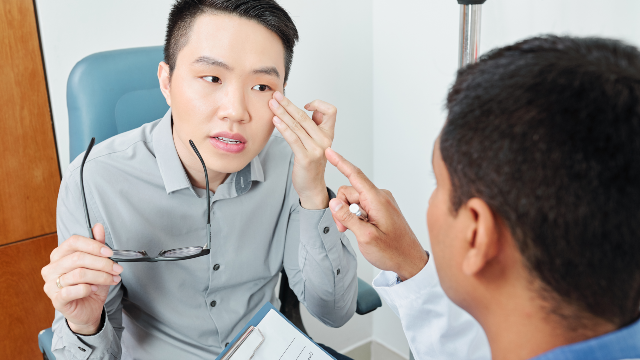
Can double eyelid surgery fix a drooping eyelid?
Not on its own. A drooping upper lid caused by a weak lifting muscle is called ptosis, and it is a distinct problem from the absence of a crease. If ptosis is present, creating a fold alone will not raise the eyelid margin, and a separate corrective step may be required. A proper examination can distinguish the two.
Is there a visible scar?
The suture (non-incisional) method leaves no long external scar because only small holes are used. Incisional and partial-incisional methods create a fine scar along the crease line. In most cases this settles within the fold and becomes hard to notice once healed, but no cutting technique can be described as scar-free.
How do I know which method suits me?
Only an in-person examination can determine this. A surgeon assesses your skin thickness, fat volume, muscle tone, existing crease, and goals, then recommends a technique accordingly. Candidacy is individual, so a method that works well for one person may be unsuitable for another. Ask your surgeon to explain the reasoning behind the recommendation.
The Bottom Line
- Double eyelid surgery creates or refines the upper eyelid crease by linking deeper eyelid tissue to the skin; the techniques differ in how much cutting is involved.
- The non-incisional (suture) method uses small holes and buried sutures, typically involving a shorter surgery, faster early recovery, and no long scar, but it cannot remove skin or fat and the crease can loosen.
- Incisional and partial-incision methods allow removal of skin or fat and tend to give a more stable, durable crease, at the cost of more swelling and a fine scar along the fold.
- Swelling is usually heaviest for the first couple of days and often begins easing around two to three days, while the crease continues to settle over weeks to months; results and recovery vary.
- Method choice depends on your eyelid anatomy and goals, and honest planning acknowledges risks such as asymmetry, scarring, crease loosening, and the possibility of revision.
This article is for general education only and is not a self-diagnosis tool. It does not replace a personal consultation with a qualified plastic surgeon, who can examine your eyelids and advise on suitable options. Candidacy, technique, and outcomes are individual, and results vary. To discuss your situation, contact Goodline Plastic Surgery directly. Goodline Plastic Surgery is a Registered Medical Institution for Attracting Foreign Patients certified by the Korean Ministry of Health and Welfare, established in 2001 and located in Apgujeong, Gangnam, Seoul, near Apgujeong Station Exit 4, with basic English-language support available.
References
- Upper Eyelid Blepharoplasty (StatPearls, NCBI Bookshelf)
- Anatomy, Head and Neck: Eyelid (StatPearls, NCBI Bookshelf)
- Asian Blepharoplasty (PubMed)
- Eyelid Surgery (American Society of Plastic Surgeons)
More Articles
Continue reading our clinical guides.

Revision Rhinoplasty in Seoul: What US Patients Should Know
Revision rhinoplasty in Seoul for US patients: why secondary nose surgery is harder, what recovery looks like, honest expectations, and Goodline's plan.
Learn More
Rejuran vs RE20 vs Juvelook Volume: Skin Boosters Compared
Three injectables that look alike on a clinic menu and solve three unrelated problems. Hydration, repair and volume differ in timeline and in results.
Learn More

Primary vs Revision Rhinoplasty: The Differences That Matter
A second nose operation is not the first one repeated. Scar tissue, longer operating time and a result that takes a year change what you should expect.
Learn More