Natural-Looking Face & Neck Lift Surgery and Personalized Anti-Aging Care in Apgujeong, Gangnam, Seoul
4.1 ★ Google · Board-Certified Plastic Surgeon
en-US

Medical Guide
Facial Fat Grafting in Korea: Natural Volume Restored
Facial fat grafting in Korea at Goodline Plastic Surgery restores volume with your own purified fat. Learn how it works, longevity, risks, and recovery.
Schedule a Consultation
Facial Fat Grafting in Korea: Natural Volume Restored
Medically reviewed by Dr. Choi Deokho, Board-Certified Plastic Surgeon, Representative Director, Goodline Plastic Surgery
As the face ages, it does not simply sag; it also loses volume. Fat pads in the cheeks, temples, and around the eyes shrink and shift, bone changes shape, and the once-smooth transitions between features become hollows and shadows. Facial fat grafting, also called fat transfer or autologous fat injection, addresses this loss by using your own fat to restore softness and fullness where it has faded. Because the material is your own tissue rather than a manufactured product, many people find the results feel natural.
This article explains how facial fat grafting works, how it differs from filler, how long it tends to last, and what the honest risks and recovery involve. It describes the service offered at Goodline Plastic Surgery in Seoul in general terms and is meant to help you prepare thoughtful questions before a consultation. It is educational information and does not replace an in-person examination.
How Facial Fat Grafting Works
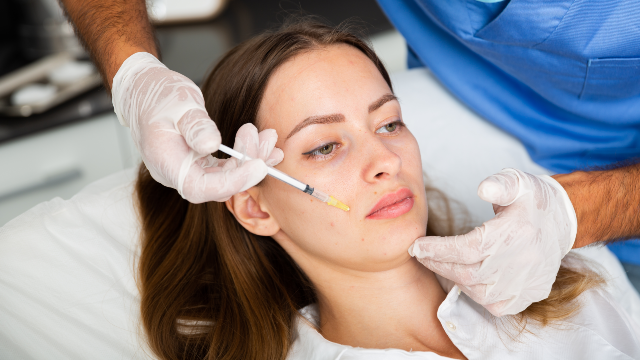
Fat grafting is a three-stage process, and understanding each stage helps set realistic expectations. First comes harvesting: a small amount of fat is gently removed by liposuction from a donor area such as the abdomen, flanks, or thighs, where most people have some to spare. This part of the procedure is also why fat grafting doubles as a very modest contouring of the donor site.
The second stage is processing. The harvested fat is purified to separate healthy fat cells from blood, fluid, and damaged tissue, so that what is reinjected is as viable as possible. Techniques vary between surgeons, and finer preparations are often described as micro-fat, which uses smaller, more refined fat parcels suited to delicate areas of the face.
The third stage is placement. The purified fat is injected in small amounts through fine cannulas into the areas that need volume, layered carefully so that each parcel of fat sits close to a blood supply that can keep it alive. This careful, gradual placement is central to how much of the graft ultimately survives. At Goodline Plastic Surgery, the process may be supported with highly concentrated vitamin C intended to support wound healing.
Why the Result Looks Natural but Is Not Fully Predictable
The appeal of fat grafting is that it uses living tissue from your own body, so when it settles well it blends seamlessly with the surrounding face. The trade-off is that not all of the transferred fat survives. After grafting, a portion of the fat resorbs, meaning the body reabsorbs it over the first weeks to months. How much survives varies from person to person and even between areas of the same face, and it cannot be predicted precisely in advance.
Because of this partial and variable resorption, surgeons cannot guarantee an exact final volume, and the amount placed at surgery is intentionally more than the amount expected to remain. It also means that a touch-up or second session is sometimes needed to reach the desired fullness. This is a normal and expected part of fat grafting for some patients rather than a sign that something went wrong. Anyone promising a precise, guaranteed outcome is overstating what the technique can deliver, because results vary.
Fat Grafting Versus Fillers
Facial fat grafting and hyaluronic acid fillers are often compared, and they suit different situations. Fillers are off-the-shelf gels injected in a quick office visit with little downtime, and many are reversible with an enzyme if needed. However, fillers are temporary and are gradually broken down by the body, so they require repeat treatments to maintain their effect.
Fat grafting is a surgical procedure involving liposuction and a longer recovery, but the fat that survives becomes living tissue that can persist for a long time. It also allows larger areas of volume loss to be addressed in one plan and improves donor-site contour slightly as a byproduct. The trade-offs are the longer recovery, the unpredictability of how much fat survives, and the possible need for a touch-up.
Neither option is universally better; the right choice depends on how much volume you need, how much downtime you can accept, and your goals. A surgeon who examines you can explain which approach, or which combination, fits your face. There is no single answer that applies to everyone, and results vary in both cases.
How Long Does Facial Fat Grafting Last?
One of the most common questions is about longevity, and the honest answer has two parts. The fat that does not survive is resorbed within the first several months, and once the graft has stabilized, the fat cells that remain are living tissue that can last for years. In that sense, the surviving portion is durable in a way that temporary filler is not.
However, "long-lasting" is not the same as permanent, and no responsible clinic should call it permanent. Your face continues to age, gain and lose weight, and change over time, and grafted fat is affected by those changes just like the rest of your facial fat. Significant weight fluctuation in particular can alter the result, because grafted fat responds to weight change much as the donor-area fat would have. Realistic expectations recognize durability without expecting a fixed, unchanging result forever.
Honest Risks and Complications
Fat grafting is generally well tolerated, but like all procedures it carries risks, and being informed about them is part of consenting properly. Because two areas are involved, both the donor site and the recipient face have their own considerations.
Recipient-site risks include lumps or bumps if fat is not distributed smoothly, contour irregularity, and over- or under-correction, since the final volume is not fully predictable. Less commonly, grafted fat can undergo fat necrosis, in which some fat does not survive and forms firm areas or oil cysts that may need evaluation or treatment. As with any injection or surgery, there is a risk of infection, bleeding, and swelling. A rare but serious risk shared by all facial injections is inadvertent injection into a blood vessel, which is why fat grafting should be performed only by a qualified surgeon using careful technique.
Donor-site risks are usually minor and include bruising, temporary numbness, and small contour changes where the fat was taken. Your surgeon should review all of these risks with you in the context of your own health and goals before you decide.
Recovery and What to Expect
Recovery from facial fat grafting is driven mostly by swelling and bruising, at both the donor site and the face. Swelling in the face is often more pronounced than people expect in the first days, partly because extra fat is placed to allow for resorption, so the face can look fuller than the intended final result at first. This settles gradually over the following weeks.
Bruising at the donor site and the face is common and fades over one to a few weeks. You may be advised to wear a compression garment on the donor area and to avoid pressure, heat, and strenuous activity on the treated regions while the graft establishes its blood supply. Protecting the grafted areas from firm pressure in the early period is important, because the fresh graft is delicate until it settles.
The final result becomes clearer over several months as swelling resolves and the surviving fat stabilizes. Because the amount of fat that takes is individual, this is also the window in which a decision about a possible touch-up is usually made. Specific recovery timelines vary from person to person, so follow the instructions from your own surgeon rather than a generic schedule, and attend your follow-up visits.
Candidacy Is Decided by Examination
Whether facial fat grafting is right for you can only be determined by an in-person examination, not by an article or an online quiz. The surgeon assesses where you have lost volume, the quality and elasticity of your skin, and whether you have enough donor fat to harvest, since very lean patients may have limited fat available. Your overall health, medications, bleeding tendencies, and history of prior facial procedures all factor into the plan.
In general, suitable candidates are in good health, do not smoke or are willing to stop around the time of surgery, and hold realistic expectations about the natural but variable nature of the result. Pregnancy and breastfeeding are usually reasons to postpone elective procedures. A thorough consultation should cover alternatives such as fillers, the likelihood that a touch-up may be needed, and the recovery involved. You can begin that conversation through the Goodline Plastic Surgery contact page.
About Goodline Plastic Surgery
Goodline Plastic Surgery is located in the Apgujeong district of Gangnam-gu, Seoul, near Apgujeong Station Exit 4, and has been in operation since 2001. The clinic organizes its work across specialty centers, including facial contouring and anti-aging, and is a Registered Medical Institution for Attracting Foreign Patients under Korea's Ministry of Health and Welfare, an official designation for clinics serving international patients.
For visitors from abroad, the clinic offers basic English support and online consultation through its contact page. If you are considering facial fat grafting to restore volume, you can learn more about the clinic on the Goodline Plastic Surgery website or reach out to ask about an evaluation. The most useful next step is always a personalized examination rather than a decision made from general reading, since the right approach depends on your individual anatomy and goals.
Frequently Asked Questions
Where does the fat come from in facial fat grafting?
The fat is your own, harvested by gentle liposuction from a donor area such as the abdomen, flanks, or thighs. It is then purified to separate healthy fat cells from fluid and debris before being reinjected into the face. Because the material is autologous, meaning from your own body, it integrates naturally when it survives.
How long will facial fat grafting results last?
The fat that survives becomes living tissue and can last for years, which is longer than temporary fillers. However, some of the transferred fat resorbs in the first months, and the result is not permanent because the face continues to age and respond to weight changes. Your surgeon can explain what to expect for your situation.
Will I need more than one session?
Sometimes. Because the amount of fat that survives varies from person to person and cannot be predicted precisely, a touch-up session is occasionally needed to reach the desired fullness. This is a normal, expected possibility with fat grafting rather than a sign that anything went wrong, and it is usually decided a few months after the first procedure.
How is fat grafting different from filler?
Filler is an off-the-shelf gel with little downtime that is temporary and requires repeat treatments, and many types are reversible. Fat grafting is a surgical procedure with a longer recovery, but the surviving fat becomes lasting living tissue and can address larger areas of volume loss. The best choice depends on your goals, downtime, and anatomy.
What are the main risks?
Risks include lumps, contour irregularity, and over- or under-correction because final volume is not fully predictable, as well as rare fat necrosis or oil cysts. As with any procedure, infection, bleeding, and swelling are possible, and any facial injection carries a rare risk of injection into a blood vessel. This is why the procedure should be done by a qualified surgeon.
How much downtime should I plan for?
Expect noticeable swelling and bruising at both the donor site and the face in the first days, with the face initially looking fuller than the intended result. Bruising typically fades over one to a few weeks, while the final result becomes clear over several months. Timelines are individual, so follow your own surgeon's instructions and attend follow-ups.
The Bottom Line
- Facial fat grafting uses your own harvested, purified fat to restore lost volume, which is why the result can look and feel natural when it settles well.
- Grafted fat resorbs partially and unpredictably, so final volume is not guaranteed and a touch-up session is sometimes needed; results vary between individuals.
- Compared with temporary fillers, the surviving fat can last for years, but it is not permanent and is affected by aging and weight change.
- Honest risks include lumps, irregularity, over- or under-correction, and rare fat necrosis or oil cysts, alongside general surgical risks; a qualified surgeon reduces these.
- Candidacy, technique, and recovery are determined by an in-person examination at a clinic such as Goodline Plastic Surgery in Apgujeong, Seoul.
This article is for general education only and is not a self-diagnosis tool. It does not replace a personalized consultation, examination, or medical advice from a qualified physician. Decisions about any procedure should be made with a licensed surgeon who has examined you and reviewed your medical history. If you notice spreading redness, fever, severe pain, or other signs of a complication after surgery, seek prompt medical care locally.
References
- Fat Transfer / Fat Grafting – American Society of Plastic Surgeons
- Autologous Fat Grafting – StatPearls, NCBI Bookshelf
- Facial Fat Grafting: Principles and Techniques – PMC
- Autologous Fat Grafting in Facial Rejuvenation – PMC
More Articles
Continue reading our clinical guides.

Revision Rhinoplasty in Seoul: What US Patients Should Know
Revision rhinoplasty in Seoul for US patients: why secondary nose surgery is harder, what recovery looks like, honest expectations, and Goodline's plan.
Learn More
Rejuran vs RE20 vs Juvelook Volume: Skin Boosters Compared
Three injectables that look alike on a clinic menu and solve three unrelated problems. Hydration, repair and volume differ in timeline and in results.
Learn More

Primary vs Revision Rhinoplasty: The Differences That Matter
A second nose operation is not the first one repeated. Scar tissue, longer operating time and a result that takes a year change what you should expect.
Learn More