Natural-Looking Face & Neck Lift Surgery and Personalized Anti-Aging Care in Apgujeong, Gangnam, Seoul
4.1 ★ Google · Board-Certified Plastic Surgeon
en-US

Medical Guide
Filler Rhinoplasty vs Surgical Rhinoplasty: Pros and Cons
Thirty minutes against three hours, and a trade that runs the wrong way: the quicker option carries the rarer but more frightening complication. Here is why.
Schedule a Consultation
Filler Rhinoplasty vs Surgical Rhinoplasty: Pros and Cons
Medically reviewed by Dr. Choi Deokho, Representative Director, Goodline Plastic Surgery
Most comparisons between these two run along a single axis: one is bigger, slower and lasting, the other is smaller, faster and temporary. Choose according to how much change you want and how much disruption you can absorb.
That axis is real. It is also incomplete, and the part it leaves out is the part that should influence the decision most, because the quicker option carries a rare complication that the longer one does not.
The obvious comparison first
Goodline Plastic Surgery describes non-surgical filler rhinoplasty as a relatively quick outpatient procedure, often taking around fifteen to thirty minutes depending on the treatment plan. Local or topical numbing is commonly used, and the clinic says general anesthesia is generally unnecessary. Because it is non-surgical, an overnight stay is generally not required.
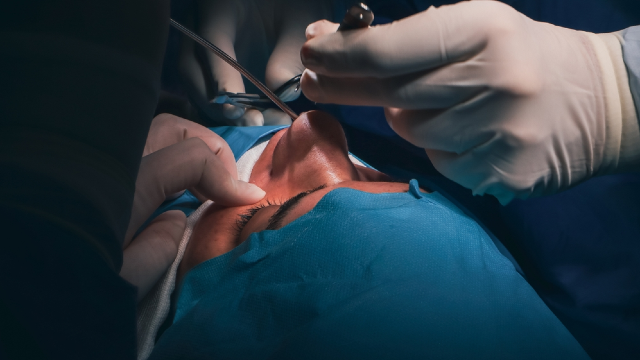
It describes rhinoplasty as commonly taking around one to three hours depending on the surgical plan, performed under local anesthesia with sedation or general anesthesia according to technique, extent and the patient's condition — and asks international patients to plan approximately seven to ten days in Korea so the surgeon can perform early postoperative checks and address the initial swelling or other concerns.
Half an hour against up to three. No stay against a week and a half. Those numbers are accurate and they are what the choice looks like from the outside.
What each one can actually change
Here the descriptions stop being parallel.
For filler, the clinic describes candidates as adults seeking a temporary improvement in nasal shape, such as adding definition or creating the appearance of a straighter profile. Read that carefully: adding, and creating the appearance of. Filler is placed; it occupies space; it can fill a dip above a bump so that the line reads straight, or add height where there is little.
For surgery, the clinic describes candidates as people dissatisfied with the height, bridge, shape, projection, or tip of the nose, in good overall health, with realistic expectations.
Projection and tip are on the surgical list and not the filler one, and that is not an oversight. Reducing anything — narrowing, lowering, refining a tip — is not something a material added to the nose can do. A nose that someone wants smaller is a surgical question. A nose that someone wants straighter in profile may not be.
This is the single most useful filter available before a consultation. Add or reduce. If the honest answer is reduce, the fast option is not a cheaper version of the slow one; it is a different procedure that does not address the complaint.
The risk lists do not scale with the size of the procedure
This is the part that the usual framing omits.
The clinic's risk list for surgical rhinoplasty names infection, bleeding, prolonged swelling, scarring, asymmetry, changes in sensation, difficulty breathing, dissatisfaction with the shape, implant-related complications where an implant is used, and the possibility of revision surgery. Serious, familiar, and mostly things that unfold over days and are managed.
The clinic's risk list for filler rhinoplasty names uncommon but potentially serious risks including infection, vascular occlusion, skin injury, and, in rare cases, vision loss.
Vascular occlusion means filler obstructing a blood vessel. The nose sits in a region where vessels connect toward the eye, which is why loss of vision appears on the list at all. The clinic describes these as uncommon, and they are. But the shape of the risk is different from anything on the surgical list: it is immediate rather than gradual, and it is an emergency rather than a disappointment.
The US Food and Drug Administration's page on soft tissue fillers sets out this category of event, and its consumer guidance on filler dos and don'ts is written for exactly the reader who is about to treat an injectable as a lunchtime errand. The American Academy of Dermatology's overview of injectable fillers covers the same ground from a clinical direction.
None of this makes filler rhinoplasty unreasonable. It makes "it is only filler" an unreasonable thing to think while choosing who injects it.
What the clinic says it does about that
Goodline Plastic Surgery describes risk reduction for filler rhinoplasty as involving appropriate patient assessment, knowledge of nasal anatomy, sterile technique, careful injection technique, and having a plan for managing complications.
Four of those five are true of any injection anywhere. The fourth and fifth are specific to this one. Knowledge of nasal anatomy is named because the vessels in question are in a particular place, and having a plan for managing complications is named because the complication that matters is time-critical.
That phrase is the one worth repeating back at a consultation. Ask what the plan is. A clinic that can describe it has thought about it.
Recovery, and the different meanings of "quick"
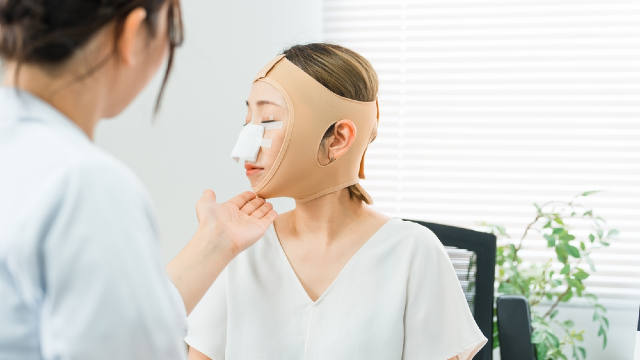
After filler the clinic describes most people resuming normal activities quickly, with swelling, redness and tenderness commonly improving over several days, and says there is usually no surgical recovery period. A change in nasal appearance is generally visible immediately, although early swelling can temporarily affect the appearance, and the result is usually easier to assess once initial swelling settles, commonly within about one to two weeks.
After surgery it describes initial swelling and bruising most noticeable during the first several days and improving over the following weeks, external splints or dressings commonly removed within about a week, light daily activities within roughly one to two weeks, and swelling continuing to settle for several months. The general shape becomes increasingly visible as swelling decreases, often within the first few weeks, but early appearance should not be taken as the final result. The final result is typically assessed once the nose has substantially healed, which may take six to twelve months, with the tip taking longer.
The honest summary: filler gives you an answer in two weeks, surgery gives you an answer in a year. For someone deciding whether they even like a different nose shape, that difference is more interesting than the downtime.
Flying home
The clinic does not treat filler as having no travel implications. It says there is usually no surgical recovery period, but that flying immediately after treatment should be discussed with the treating clinician, particularly if significant swelling or complications occur.
For surgery it describes flying home often around seven to ten days after the initial postoperative evaluation, with the exact timing approved by the surgeon, and warns specifically against arranging an early flight before confirming that recovery is progressing appropriately.
The practical point for a short trip: an injectable given on the last afternoon leaves nobody available to look at it. If the plan for managing complications exists, being on another continent is a poor way to use it.
Enquiries are handled through contact, and published cases are collected in the before-and-after gallery.
Preparation differs more than you would guess
For surgery the clinic asks for disclosure of medical history, allergies, medications, previous nasal procedures and relevant health conditions, with instructions on fasting, medications, smoking, alcohol, makeup and transportation, and a detailed consultation to establish bridge height, shape, tip projection and overall facial balance.
For filler it asks the clinician be told about medications, allergies, previous fillers, medical conditions, and previous nasal procedures — and asks whether you should temporarily avoid medicines or supplements that can increase bruising, while saying plainly not to stop prescribed medication without medical advice.
Previous fillers is the item people forget, and it is the one that matters most. What was injected, where, and when changes both the plan and the risk, and a nose that has had material placed before is not an untouched nose even though no incision was made.
Previous nasal surgery appears on both lists. A nose that has been operated on has altered vessels and altered tissue planes, and that is relevant whether the next thing is a needle or a knife.
Who should hear "neither, yet"
Both descriptions contain the same unglamorous condition.
Filler should generally be postponed with active infection, significant skin inflammation, or where the person is not medically suitable for filler treatment. Surgery may need to be postponed for active infection, uncontrolled medical conditions, significant healing problems, or other issues that could increase surgical risk, and the clinic asks that current medications, allergies, smoking and previous nasal surgery be discussed first.
Infection is on both, first on both. It is the least interesting sentence in either description and the one most often waved past by somebody who has already booked a flight.
Skin inflammation sits alongside it on the filler side, and it is worth separating from infection because people treat the two as the same warning. A patch of irritated skin over the bridge after a strong exfoliant, a flare of rosacea, a reaction to a new product, sunburn from the first warm week — none of those is an infection, and all of them are inflammation, and all of them are reasons the clinic gives for waiting. The waiting involved is usually short. Being told to come back in a fortnight by someone who has flown in for five days is the part that stings, which is why skincare in the weeks before a trip is a decision rather than an afterthought.
The surgical equivalent is the phrase significant healing problems, which covers more ground than it appears to: a condition or medication that slows wound healing is relevant whether or not it has anything to do with your nose. The clinic also names smoking in the same breath as medications and allergies for surgical patients, which is the usual reason — tissue healing depends on blood supply, and nicotine does not help it.
Frequently Asked Questions
Can filler make my nose smaller?
No. The clinic describes filler rhinoplasty as adding definition or creating the appearance of a straighter profile — adding material, not removing it. Reduction of height, width or tip projection appears on the surgical side.
How long does filler rhinoplasty last?
The clinic describes it as a temporary improvement in nasal shape without stating a duration. The useful consequence is that it is reversible by simply ending it, which is the main thing a temporary result buys you.
Is filler safer than surgery?
Not in the straightforward way the question assumes. The clinic lists uncommon but potentially serious risks for filler including vascular occlusion, skin injury and, in rare cases, vision loss. The surgical risks are more numerous and mostly less abrupt.
What is vascular occlusion?
Filler obstructing a blood vessel. It is named on the clinic's risk list along with skin injury and, rarely, vision loss, and it is the reason knowledge of nasal anatomy and a plan for managing complications are named as risk-reduction measures.
How soon can I see the result from each?
A change from filler is generally visible immediately, with the result easier to assess once swelling settles, commonly within one to two weeks. After surgery, the shape becomes visible over the first few weeks, but the clinic describes the final result as six to twelve months away, longer at the tip.
Can I have filler and then surgery later?
That is an assessment question, and the relevant fact is that previous fillers are something the clinic asks to be disclosed before either procedure. Material placed before changes what the surgeon or injector is working with.
Do I need to stay in Korea for filler?
The clinic says an overnight stay is generally not required because the treatment is non-surgical, but adds that flying immediately afterwards should be discussed with the treating clinician, particularly if there is significant swelling or any complication.
Which should I choose if I am unsure I want a different nose at all?
The temporary one answers that question in about two weeks, which the surgical route cannot do. Whether it can produce the change you have in mind depends on whether that change is additive.
The Bottom Line
- The useful filter is additive versus reductive: filler is described as adding definition or creating the appearance of a straighter profile, while projection and tip changes appear on the surgical candidate list.
- The scale of the procedures is not the scale of the risk. The clinic's filler risk list names vascular occlusion, skin injury and, in rare cases, vision loss; the surgical list is longer but mostly gradual and manageable.
- Risk reduction for filler is described as resting on knowledge of nasal anatomy and a plan for managing complications, which is worth asking about directly.
- Timelines differ by an order of magnitude: filler is assessable in one to two weeks, surgery in six to twelve months, with the tip slower still.
- An overnight stay is generally not required for filler, but the clinic still asks that immediate flying be discussed, which matters on a short trip with no one left to review you.
This article is for general informational purposes and does not constitute individualized medical advice. It is not a self-diagnosis tool. Nothing here can establish whether your nose is suited to an injectable, to surgery, or to neither. Only a qualified plastic surgeon who has examined you can determine that, and severe pain, blanching or discoloration of the skin, or any change in vision after a facial injection should be treated as an emergency where you are.
References
- US Food and Drug Administration — Dermal Fillers (Soft Tissue Fillers)
- US Food and Drug Administration — Dermal Filler Dos and Don'ts
- American Academy of Dermatology — Injectable Fillers Overview
- American Academy of Dermatology — Filler FAQs
- American Academy of Dermatology — Needle-Free Filler Risks
- MedlinePlus — Nose Injuries and Disorders
- MedlinePlus — Plastic and Cosmetic Surgery
- MedlinePlus — Anesthesia
- MedlinePlus — Wounds and Injuries
More Articles
Continue reading our clinical guides.

Revision Rhinoplasty in Seoul: What US Patients Should Know
Revision rhinoplasty in Seoul for US patients: why secondary nose surgery is harder, what recovery looks like, honest expectations, and Goodline's plan.
Learn More
Rejuran vs RE20 vs Juvelook Volume: Skin Boosters Compared
Three injectables that look alike on a clinic menu and solve three unrelated problems. Hydration, repair and volume differ in timeline and in results.
Learn More

Primary vs Revision Rhinoplasty: The Differences That Matter
A second nose operation is not the first one repeated. Scar tissue, longer operating time and a result that takes a year change what you should expect.
Learn More