Natural-Looking Face & Neck Lift Surgery and Personalized Anti-Aging Care in Apgujeong, Gangnam, Seoul
4.1 ★ Google · Board-Certified Plastic Surgeon
en-US

Medical Guide
Forehead Contouring in Korea: Reshaping the Upper Face
Forehead contouring in Korea at Goodline Plastic Surgery reshapes the upper face with implants, fat grafting, or bone contouring. Candidacy and recovery.
Schedule a Consultation
Forehead Contouring in Korea: Reshaping the Upper Face
Medically reviewed by Dr. Choi Deokho, Board-Certified Plastic Surgeon, Representative Director, Goodline Plastic Surgery
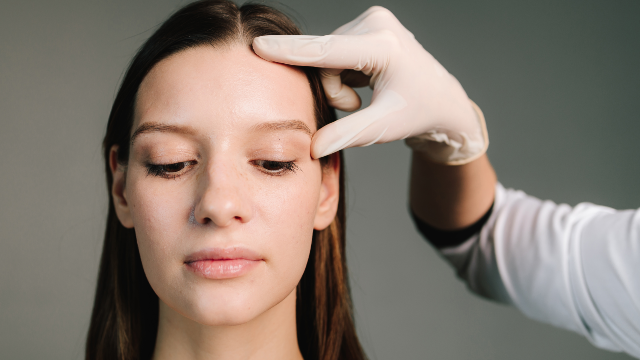
The forehead occupies the upper third of the face, and its shape quietly influences how balanced a profile appears. A forehead that looks flat, uneven, overly prominent, or asymmetric can affect the way light falls across the face and how the eyes and brows are framed. Forehead contouring is the general term for procedures that reshape this region to bring the upper face into better proportion with the middle and lower thirds. It is not a single operation but a family of approaches, and the right one depends entirely on your anatomy and your goals.
This article explains how forehead contouring works, the main techniques used, who tends to be a candidate, and what recovery honestly involves. It describes the service offered at Goodline Plastic Surgery in Seoul in general terms and is intended to help you ask better questions before any consultation. It is educational information, not a substitute for an in-person examination.
Why the Upper Face Matters to Facial Balance
Facial aesthetics are often discussed in terms of thirds: the upper third from the hairline to the brow, the middle third from the brow to the base of the nose, and the lower third from the nose to the chin. When one third looks out of step with the others, the whole face can read as unbalanced even when each individual feature is perfectly normal.
The forehead sets the stage for the upper third. Some people have a forehead that appears very flat in profile, so the face looks less rounded and soft than they would like. Others feel their forehead is too prominent, bossed, or heavy over the brow. Some notice dents, ridges, or side-to-side asymmetry, often present since childhood or following an old injury. Contouring aims to smooth, augment, or reduce these contours so the upper face transitions more gently into the brows and temples.
It is worth saying plainly at the start that "ideal" proportions vary widely across individuals and cultures, and there is no universal target shape. A good plan starts from your own face and your own preferences rather than from a fixed formula. Results vary from person to person, and no ethical surgeon can promise a specific outcome.
Main Approaches to Forehead Contouring
Forehead contouring is best understood as a toolbox rather than a single procedure. The three broad categories below are often discussed, and in some cases they are combined. Which one suits you is a decision that can only be made after a physical examination, often with imaging, because the underlying issue may be soft tissue, bone, or both.
Augmentation with an Implant
When the goal is to add smooth, rounded projection to a flat or slightly uneven forehead, a shaped implant can be used. Solid silicone and custom implants are established categories in facial surgery, and a custom implant can be designed to follow the specific curve a person wants. The implant is placed through an incision, commonly within or behind the hairline, to keep scars less visible.
Implants provide a stable, long-lasting change to contour, but they are not without trade-offs. Any implant carries a risk of infection, shifting or malposition, visible or palpable edges, fluid collection, and, less commonly, the need for removal or revision. An implant is a foreign material placed in the body, and no implant should be described as a permanent, trouble-free device. These risks are uncommon in experienced hands but must be weighed honestly.
Volume Restoration with Fat Grafting
For softer, more subtle correction, autologous fat grafting is another option. Here, a small amount of your own fat is harvested from elsewhere on the body by liposuction, purified, and reinjected into the forehead to fill dents, smooth irregularities, or add gentle volume. Because it uses your own tissue, fat grafting avoids the concept of a foreign implant and can feel very natural.
The key limitation is that grafted fat resorbs partially and unpredictably. Some of the transferred fat does not survive, and the amount that remains varies between individuals. This means a touch-up session is sometimes needed to reach the desired result, and the change is not as precisely controllable as a solid implant. Fat grafting also carries its own risks, including lumps or contour irregularity, over- or under-correction, and, rarely, fat necrosis or oil cysts. It is generally better suited to smoothing and modest volume than to creating large, defined projection.
Bone Contouring and Reduction
When the concern is a forehead or brow bone that projects too strongly, or a bossing that creates a heavy appearance, contouring of the underlying bone may be discussed. This is a more involved surgical approach that reshapes or reduces bone through a concealed incision, and it belongs to the more complex end of facial surgery. Because it is a larger operation, it carries correspondingly greater considerations for recovery, swelling, and risk, and it is only appropriate for specific anatomical situations.
Not everyone needs or should have bone work. Many people who dislike their forehead shape are better served by augmentation or fat grafting. The purpose of a thorough examination is to determine which layer, soft tissue or bone, is actually driving the appearance you want to change.
Candidacy Is Decided by Examination
There is no online checklist that can tell you whether forehead contouring is right for you. Candidacy is determined in person, because the surgeon needs to assess your skin thickness, the shape and symmetry of the underlying bone, your hairline, your brow position, and how your forehead relates to the rest of your face. Photographs and, where appropriate, imaging help clarify whether the issue is contour, volume, bone, or a combination.
In general, suitable candidates are in good overall health, do not smoke or are willing to stop around the time of surgery, and have realistic, clearly discussed expectations. Certain medical conditions, bleeding tendencies, and medications may affect suitability or timing. Pregnancy and breastfeeding are typically reasons to postpone elective procedures. If you have had previous forehead surgery, trauma, or existing implants, that history matters and should be shared fully.
A responsible consultation should include a frank conversation about what a given technique can and cannot achieve for your face, the alternatives, and the recovery involved. If any provider promises a flawless or guaranteed result, treat that as a warning sign rather than reassurance. You can begin a conversation with Goodline Plastic Surgery through the clinic's contact page to arrange an assessment.
What Recovery Honestly Involves
Recovery depends heavily on which approach is used, and it is one of the areas where honesty matters most. Fat grafting to the forehead is generally the least disruptive: expect swelling and possible bruising, some of which can spread downward toward the eyes over the first days because of gravity. Implant placement involves an incision, a dressing, and a more structured healing period. Bone contouring is the most involved and carries the longest and most demanding recovery.
Across the approaches, common early experiences include swelling, bruising, tightness, temporary numbness of the scalp or forehead skin, and discomfort managed with prescribed measures. Swelling settles gradually over weeks, but the final refined result can take several months to appear as tissues soften and, in the case of fat grafting, as the surviving graft stabilizes. It is normal for the two sides to look slightly different during healing before symmetry improves.
Because every technique that involves an incision leaves a scar, no forehead procedure is scar-free. Surgeons place incisions in or behind the hairline where possible to keep them discreet, but a scar exists and its appearance varies with individual healing, genetics, and aftercare. Following your surgeon's instructions on activity, wound care, sun protection, and follow-up visits gives scars and contour the best chance to settle well.
Specific recovery timelines are individual and should be discussed with your surgeon rather than assumed from an article. Any procedure recovery time you read online is a rough average, not a promise for your case.
Risks and Realistic Expectations

All surgery carries risk, and forehead contouring is no exception. General surgical risks include bleeding, infection, adverse reaction to anesthesia, and unfavorable scarring. Approach-specific risks include implant infection, movement, palpability, or the need for removal; graft resorption, lumps, irregularity, and rare fat necrosis or oil cysts with fat grafting; and the greater swelling and healing demands of bone work. Temporary or, uncommonly, longer-lasting numbness of the forehead can occur because sensory nerves run through the area.
Managing expectations is as important as managing risk. Contouring aims for improvement and better balance, not perfection, and asymmetry that existed before surgery is often improved rather than completely erased. Revision or touch-up procedures are sometimes part of achieving a satisfying result, particularly with fat grafting. A realistic outlook, combined with a surgeon who explains the limits candidly, is the foundation of a good experience.
About Goodline Plastic Surgery
Goodline Plastic Surgery is located in the Apgujeong district of Gangnam-gu, Seoul, near Apgujeong Station Exit 4, and has operated since 2001. The clinic organizes its work across specialty centers, including a Facial Contouring Center, and is a Registered Medical Institution for Attracting Foreign Patients under Korea's Ministry of Health and Welfare, an official designation for clinics that serve international patients.
For visitors from abroad, the clinic offers basic English support and online consultation through its contact page. If you are considering forehead contouring or want to understand which approach might fit your face, you can learn more about the clinic on the Goodline Plastic Surgery website or reach out directly to ask about an evaluation. As with any elective procedure, the most useful next step is a personalized examination rather than a decision made from general reading.
Frequently Asked Questions
Is forehead contouring one specific operation?
No. Forehead contouring is a general term covering several approaches, including implant augmentation, autologous fat grafting, and bone contouring or reduction. The right technique depends on whether your concern is contour, volume, bone shape, or a combination, which is why an in-person examination is essential before any plan is made.
Will a forehead implant last forever?
An implant can provide a long-lasting contour change, but no implant should be described as permanent or trouble-free. Implants are foreign materials and carry risks such as infection, shifting, visible edges, or the eventual need for removal or revision. Your surgeon can explain these considerations in relation to your anatomy and goals.
How is fat grafting different from an implant for the forehead?
Fat grafting uses your own purified fat to add gentle volume and smooth irregularities, which can look and feel very natural. However, grafted fat resorbs partially and unpredictably, so a touch-up may be needed and the result is less precisely controllable than a solid implant. Fat grafting suits subtle correction more than large, defined projection.
Are there visible scars after forehead surgery?
Any procedure that requires an incision leaves a scar, so forehead surgery is not scar-free. Surgeons typically place incisions within or behind the hairline to keep them discreet, but a scar still exists and its appearance depends on individual healing and aftercare. Careful wound care and sun protection help scars settle over time.
How do I know if I am a candidate?
Candidacy is decided through an in-person examination, not an online quiz. The surgeon assesses your skin, bone shape and symmetry, hairline, brow position, and overall facial proportions, sometimes with imaging. Good general health, not smoking, and realistic expectations all support suitability, while some medical conditions or medications may affect timing.
When will I see my final result?
Swelling and bruising settle over weeks, but the refined final contour can take several months to appear as tissues soften. With fat grafting, the result also depends on how much grafted fat survives, which stabilizes over the first months. Timelines are individual, so discuss what to expect for your specific plan with your surgeon.
The Bottom Line
- Forehead contouring is a family of techniques, including implants, fat grafting, and bone contouring, aimed at bringing the upper face into better balance rather than a single fixed operation.
- Each approach has distinct trade-offs: implants offer stable contour with foreign-material risks, fat grafting is natural but partially resorbs and may need touch-ups, and bone work is the most involved.
- No forehead procedure is scar-free, and results vary from person to person; improvement and better proportion, not perfection, are the realistic goals.
- Candidacy, technique, and recovery can only be determined by an in-person examination, ideally with imaging, and honest discussion of risks.
- Goodline Plastic Surgery in Apgujeong, Seoul, evaluates forehead concerns through its Facial Contouring Center and offers basic English support for international patients.
This article is for general education only and is not a self-diagnosis tool. It does not replace a personalized consultation, examination, or medical advice from a qualified physician. Decisions about any procedure should be made with a licensed surgeon who has examined you and reviewed your medical history. If you experience severe pain, spreading redness, fever, or other signs of a complication after surgery, seek prompt medical care locally.
References
- Facial Implants – American Society of Plastic Surgeons
- Fat Transfer Breast Augmentation and Facial Fat Grafting – American Society of Plastic Surgeons
- Autologous Fat Grafting – StatPearls, NCBI Bookshelf
- Craniofacial Reconstruction and Forehead Contouring – PMC
More Articles
Continue reading our clinical guides.

Revision Rhinoplasty in Seoul: What US Patients Should Know
Revision rhinoplasty in Seoul for US patients: why secondary nose surgery is harder, what recovery looks like, honest expectations, and Goodline's plan.
Learn More
Rejuran vs RE20 vs Juvelook Volume: Skin Boosters Compared
Three injectables that look alike on a clinic menu and solve three unrelated problems. Hydration, repair and volume differ in timeline and in results.
Learn More

Primary vs Revision Rhinoplasty: The Differences That Matter
A second nose operation is not the first one repeated. Scar tissue, longer operating time and a result that takes a year change what you should expect.
Learn More