Natural-Looking Face & Neck Lift Surgery and Personalized Anti-Aging Care in Apgujeong, Gangnam, Seoul
4.1 ★ Google · Board-Certified Plastic Surgeon
en-US

Medical Guide
Goodline PCL Thread Lifting: How It Works and Who It's For
Goodline Thread Lifting uses absorbable PCL threads for a minimally invasive, temporary facial lift in Seoul. See how it works, the risks, and candidacy.
Schedule a Consultation
Goodline PCL Thread Lifting: How It Works and Who It's For
Medically reviewed by Dr. Choi Deokho, Board-Certified Plastic Surgeon, Representative Director, Goodline Plastic Surgery
Thread lifting has become one of the most talked-about ways to address early facial sagging without committing to surgery. At Goodline Plastic Surgery in Apgujeong, Seoul, the procedure is offered as Goodline Thread Lifting, a minimally invasive lift performed with medical lifting threads under local anesthesia. It appeals to people who notice mild jowling, softening of the jawline, or drooping around the mid-face but who are not ready for, or do not need, an operation.
This guide explains how thread lifting works, what the PCL (polycaprolactone) thread system and other threads involve, who tends to be a reasonable candidate, and — just as importantly — what a thread lift cannot do. Threads are absorbable, results are temporary, and a thread lift is not a substitute for a surgical facelift. Understanding those limits up front is the best way to decide whether the procedure fits your goals.
What Goodline Thread Lifting is
Goodline Thread Lifting is a soft-tissue suspension procedure. Fine, specialized threads are inserted under the skin through tiny entry points and used to gently reposition and support lax tissue, producing a firmer, slightly lifted contour. Because the threads are placed with needles or cannulas rather than open incisions, the treatment is classed as minimally invasive and is usually performed under local anesthesia.

The clinic reports a typical procedure time of roughly 30 to 60 minutes, depending on how many threads are used and which areas are treated. That short, in-office format is a big part of the appeal: many patients walk in and out the same day. It is worth being cautious with the popular nickname "lunchtime lift," however. While the appointment itself is brief, you should still expect some swelling, tenderness, and a short adjustment period afterward, and results and recovery vary from person to person.
Goodline describes its thread work around a PCL Lifting system built on polycaprolactone threads, alongside other thread types the clinic references such as Blue Rose and Tess & Ribbon. Which threads are appropriate — and whether thread lifting is the right approach at all — is something to confirm during an in-person consultation rather than assume from a webpage.
How thread lifting works
There are two mechanisms behind a thread lift, and reputable descriptions in the medical literature emphasize both.
Mechanical lift. Many lifting threads are barbed or cogged along their length. Once positioned in the subcutaneous tissue, those barbs grip the soft tissue so that the thread can be drawn slightly, physically repositioning sagging skin and fat into a more elevated position. This gives the immediate, visible change that patients notice right after the appointment.
Collagen stimulation. The presence of the thread also triggers a mild, controlled healing response along its path. Over the following weeks, this can stimulate the body to lay down new collagen around the thread, which may contribute to firmer-feeling skin over time. This biostimulatory effect is one reason thread lifts are marketed for early skin laxity as much as for lifting.
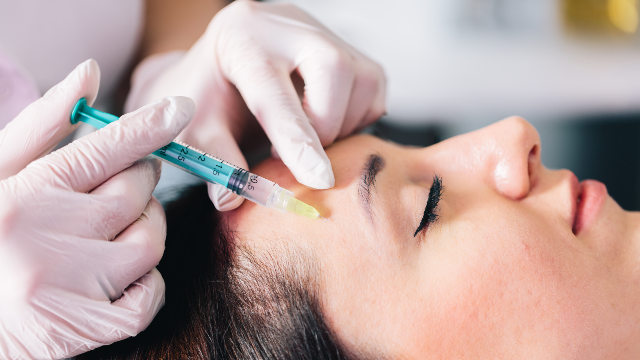
Both effects are real, but both are modest and finite. The mechanical lift is limited by how much the threads can hold, and the collagen response is gradual and variable. Neither mechanism removes excess skin, and neither reshapes deeper structural layers the way surgery does.
About PCL and absorbable threads
A key honest point: the threads used in these procedures are absorbable. They are made from materials the body gradually breaks down and reabsorbs over months, so the physical thread does not stay in place indefinitely.
Polycaprolactone (PCL) is one such absorbable polymer. Compared with some other common absorbable threads — for example polydioxanone (PDO) — PCL is generally described as slower to degrade, which is part of why clinics highlight it for lifting. Even so, "slower to absorb" is not the same as lasting. PCL threads are still temporary, and as they are reabsorbed the mechanical support they provide fades. The collagen laid down along the thread may persist somewhat longer than the thread itself, but that too softens with continued aging.
We deliberately avoid making regulatory claims about any specific thread brand here. Device approval and clearance status differ by country and by product, so questions about the exact threads used, their material, and their regulatory status are best answered directly by the clinical team at your consultation.
What to expect during the procedure
A thread lift session generally follows a predictable sequence:
- Consultation and mapping. The surgeon examines your facial anatomy, skin quality, and degree of sagging, then marks entry points and planned thread vectors.
- Local anesthesia. The treatment areas are numbed so the procedure can be tolerated while you remain awake.
- Thread placement. Using a fine needle or cannula, threads are introduced beneath the skin along the mapped lines. The surgeon adjusts tension to reposition the tissue, then trims any external thread ends.
- Immediate check. You can often see a change in contour right away, though some of it reflects temporary swelling.
The whole appointment commonly runs about 30 to 60 minutes. Because you are awake and no large incisions are made, most people are able to leave shortly afterward. That convenience does not eliminate the need for aftercare, which is covered below.
Thread lift versus surgical facelift
This distinction matters, and it should not be blurred. A thread lift is not a surgical facelift and does not replace one.
A facelift (rhytidectomy) is an operation. In a facelift, a surgeon makes incisions, lifts and repositions the deeper SMAS layer, and removes excess skin. It addresses more advanced sagging and typically produces a more substantial, longer-lasting change — but it involves surgery, anesthesia, real downtime, and permanent incisions that heal into scars. Professional guidance from bodies such as the American Society of Plastic Surgeons is explicit that minimally invasive rejuvenation cannot achieve the same result as a surgical facelift, though it may complement surgery or delay the point at which surgery becomes appropriate.
A thread lift, by contrast, is best understood as a lighter, temporary intervention for early or mild laxity. It offers less lift, works on a smaller scale, and its effects fade as the threads absorb. If your sagging is significant, jowls are heavy, or there is a lot of loose skin, a thread lift is likely to underdeliver, and a surgical option may be discussed instead. The right comparison is not "which is better" but "which matches your anatomy and goals" — a decision made together with your surgeon.
Who is a candidate
Thread lifting tends to suit people who:
- Have mild to moderate early sagging of the mid-face, jawline, or brow rather than advanced, heavy laxity.
- Still have reasonable skin elasticity and quality for the threads to grip and support.
- Want a minimally invasive option with limited downtime and are comfortable with temporary results.
- Understand that maintenance sessions may be needed to sustain an effect over time.
It tends to suit people less well when there is substantial excess skin, pronounced jowling, or very thin or heavily sun-damaged skin, where the mechanical hold is weaker and a surgical approach may be more realistic. Active skin infection in the treatment area, certain bleeding tendencies, and some medical conditions can also make thread lifting inappropriate.
Candidacy cannot be judged from photographs alone or from an online form. It requires an in-person examination of your skin and facial structure. Results vary between individuals, and no ethical clinic can promise a specific outcome in advance.
Recovery and aftercare
Recovery from a thread lift is usually shorter and milder than from surgery, but it is not nothing. Common, expected experiences in the first days to weeks include:
- Swelling and bruising around the entry points and along the thread lines.
- Tenderness, tightness, or a pulling sensation when moving the face.
- Small dimples or puckering at insertion points that typically settle as swelling resolves.
- Temporary mild asymmetry while the tissues relax into position.
Surgeons commonly advise avoiding vigorous facial movement, wide mouth opening, sleeping face-down, strenuous exercise, and facial massage for a period after the procedure, so the threads can settle without being disturbed. Your specific aftercare instructions should come from your treating team, and any unusual pain, spreading redness, discharge, or fever should be reported promptly.
Risks and limitations
Thread lifting is generally considered lower-risk than surgery, but it is a medical procedure with genuine possible complications, including:
- Dimpling or skin irregularity where a thread pulls unevenly.
- Asymmetry between the two sides.
- Thread migration or extrusion, where a thread shifts or a thread end becomes visible or works its way to the surface.
- Infection at an entry point or along a thread path.
- Bruising, swelling, and discomfort, and occasionally palpable threads under the skin.
- Under-correction or short-lived results, since the effect is temporary and modest by nature.
Some of these settle on their own; others may need the surgeon to reposition, remove, or replace a thread, or to treat an infection. Because the threads absorb, the lift is not a one-time solution — sustaining a result generally means repeating treatment periodically. None of this should be framed as a flaw; it is simply the honest profile of what an absorbable thread lift is and is not.
Longevity: how long results last
Patients most want to know how long the lift will last, and the honest answer is: it varies, and it is temporary. Because the threads are absorbable, the mechanical lift diminishes over months as the material is reabsorbed, and the collagen-related firmness softens gradually thereafter. PCL threads are often chosen partly because the material degrades comparatively slowly, but individual results still depend on your skin, your age, how much sagging you started with, the number and placement of threads, and your ongoing aging.
Rather than fixating on a single number, it is more useful to plan around the idea of a temporary lift that may be maintained with repeat sessions if you like the effect. Your surgeon can give you a realistic range based on your examination, and can explain how thread lifting might fit alongside other treatments or, if appropriate, surgery over the longer term.
Frequently Asked Questions
Is a thread lift the same as a facelift?
No. A thread lift is a minimally invasive, temporary procedure for early sagging, while a facelift is an operation that repositions deeper tissue and removes excess skin for a more substantial, longer-lasting change. A thread lift does not replace a surgical facelift and generally addresses milder laxity. Your surgeon can explain which approach suits your anatomy.
How long does Goodline Thread Lifting take?
The clinic reports a typical procedure time of about 30 to 60 minutes, performed under local anesthesia in the clinic. The exact time depends on how many threads are used and which areas are treated. You will also need time for consultation, marking, and a short post-procedure check.
Do the threads dissolve, and will results fade?
Yes. The threads are absorbable and are gradually broken down by the body over months, so the lift is temporary and fades as the material is reabsorbed. PCL is a slower-absorbing material than some alternatives, but it is still not a permanent implant. Maintenance sessions may be needed to sustain an effect.
Does a thread lift hurt?
The procedure is done under local anesthesia, so the treatment areas are numbed during placement. Afterward it is normal to feel tenderness, tightness, or a pulling sensation for a period, along with swelling or bruising. Discomfort levels differ between individuals, and your team can advise on managing it.
What are the main risks?
Possible complications include dimpling, asymmetry, thread migration or extrusion, infection, bruising, swelling, and results that are shorter-lived or more modest than hoped. Some issues resolve on their own, while others may require the surgeon to adjust, remove, or replace a thread. A thorough consultation helps set realistic expectations.
Am I a good candidate?
Thread lifting tends to suit people with mild to moderate early sagging and reasonable skin quality who accept temporary results. It is less suitable for advanced laxity or heavy excess skin, where surgery may be more appropriate. Candidacy can only be confirmed by an in-person examination, and results vary.
Can I combine a thread lift with other treatments?
Depending on your goals and anatomy, thread lifting is sometimes discussed alongside other rejuvenation approaches, and in some cases surgery may be the better fit. What is appropriate for you should be decided with your surgeon after an examination. You can raise this during a consultation.
The Bottom Line
- Goodline Thread Lifting is a minimally invasive, in-clinic procedure using medical lifting threads (including a PCL/polycaprolactone system) under local anesthesia, typically taking about 30 to 60 minutes.
- The threads are absorbable and results are temporary; the lift fades over months as the material is reabsorbed, and maintenance sessions may be needed.
- A thread lift is not a surgical facelift and does not replace one — it is best suited to mild, early sagging rather than advanced laxity.
- Real risks exist, including dimpling, asymmetry, thread migration or extrusion, and infection, and results vary between individuals.
- Only an in-person examination can determine whether thread lifting, surgery, or another option fits your goals; contact the clinic to arrange a consultation.
This article is for general education only and is not a self-diagnosis tool. It does not replace a personalized evaluation by a qualified physician, and it does not guarantee any specific result. Any decision about thread lifting or other procedures should be made with a licensed surgeon after an in-person assessment of your individual anatomy and health.
References
- Thread Lift — American Society of Plastic Surgeons
- Facelift Surgery — American Society of Plastic Surgeons
- Facial thread lifting with suture suspension — PMC
- Cervicofacial Rhytidectomy — StatPearls, NCBI Bookshelf
More Articles
Continue reading our clinical guides.

Revision Rhinoplasty in Seoul: What US Patients Should Know
Revision rhinoplasty in Seoul for US patients: why secondary nose surgery is harder, what recovery looks like, honest expectations, and Goodline's plan.
Learn More
Rejuran vs RE20 vs Juvelook Volume: Skin Boosters Compared
Three injectables that look alike on a clinic menu and solve three unrelated problems. Hydration, repair and volume differ in timeline and in results.
Learn More

Primary vs Revision Rhinoplasty: The Differences That Matter
A second nose operation is not the first one repeated. Scar tissue, longer operating time and a result that takes a year change what you should expect.
Learn More