Natural-Looking Face & Neck Lift Surgery and Personalized Anti-Aging Care in Apgujeong, Gangnam, Seoul
4.1 ★ Google · Board-Certified Plastic Surgeon
en-US

Medical Guide
Hand Fat Grafting: Restoring Youthful-Looking Hands
Curious about hand fat grafting in Seoul, Korea? Learn how fat transfer softens veiny, aging hands at Goodline Plastic Surgery, plus risks and recovery.
Schedule a Consultation
Hand Fat Grafting: Restoring Youthful-Looking Hands
Medically reviewed by Dr. Choi Deokho, Board-Certified Plastic Surgeon, Representative Director, Goodline Plastic Surgery
People often invest a great deal of attention in their face while the hands quietly tell a different story. The backs of the hands are constantly exposed to sun and everyday wear, and they tend to lose their soft, padded appearance earlier than we expect. When the cushioning layer beneath the skin thins, the tendons and veins that were always there become more visible, and the hand can start to look older than the person feels. Hand fat grafting is one approach to softening that appearance by restoring some of the lost volume.
This guide explains what hand fat grafting is, how it works, how it compares with filler, and what recovery honestly involves. It also lays out the trade-offs plainly, because this is a real procedure with real limits: a portion of the grafted fat is reabsorbed, more than one session may be needed, and results vary from person to person. As always, whether it suits you is a matter for an in-person examination, not a promise made in advance.

Why Hands Show Age
The back of the hand, known medically as the dorsum, ages in a recognizable pattern. The skin becomes thinner and less elastic, sun exposure over the years produces pigmentation and roughness, and the soft-tissue layer that once padded the area gradually atrophies. As that padding shrinks, the structures underneath, the extensor tendons that fan toward the fingers and the network of veins, are no longer softened by overlying volume and so appear more prominent.
Medical reviews of hand aging describe exactly this combination: dyschromia (uneven color), soft-tissue atrophy, and volume loss that together produce wrinkling and visible deep structures. It is worth noting that the veins and tendons are not new; they were always present. What changes is the loss of the cushioning that used to conceal them. This is why adding volume is a logical strategy for the visible-tendon and prominent-vein appearance, while pigmentation and skin texture are separate concerns that volume alone does not address.
Recognizing that hand aging has more than one component matters for setting expectations. Fat grafting targets the volume-loss element. Someone whose main concern is age spots or skin quality may find that restoring volume helps the overall look but does not change the pigment, and those aspects would need to be discussed separately.
What Is Hand Fat Grafting?
Fat grafting, also called fat transfer, is a technique in which fat is harvested from one part of your body, processed, and reinjected somewhere it is wanted. Because the fat is your own tissue (autologous), it is biocompatible and tends to feel soft and natural when it survives. It is a well-established method in plastic surgery, and hand rejuvenation is one of its recognized applications.
Applied to the hand, the goal is to replace some of the lost cushioning on the dorsum so that the skin sits over a fuller base, softening the appearance of prominent tendons and veins. Systematic reviews of autologous fat transfer for hand rejuvenation report that it has been used for this purpose across hundreds of patients, with autologous fat regarded as an attractive filler material because it is the patient's own tissue and is durable when it takes. Fat is generally placed in the layer beneath the skin, spread in small amounts to create a smooth, even result rather than a single lump.
Because the fat is living tissue rather than a manufactured product, its behavior after placement is not fully predictable. This is a defining feature of fat grafting anywhere in the body, and it is central to understanding both the appeal and the limitations of the technique on the hands.
How the Procedure Is Approached at Goodline
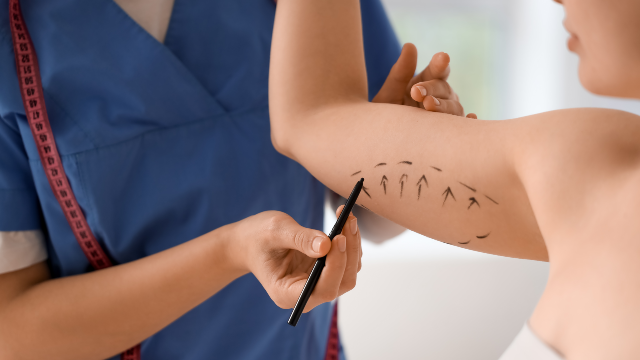
Every plan is individual, but hand fat grafting generally follows a recognizable sequence.
Consultation and examination. Dr. Choi Deokho and the team examine the backs of the hands, assess how much of the appearance is due to volume loss versus skin quality and pigmentation, and discuss what specifically bothers you. This assessment determines whether fat grafting is appropriate and whether you are a candidate.
Harvest. Fat is collected from a donor site such as the abdomen or thigh using gentle liposuction. Only a modest amount is needed for the hands, so the donor harvest is limited.
Processing. The harvested fat is processed and refined before it is reinjected. Careful handling influences how the graft behaves afterward.
Placement. Using fine cannulas, the surgeon deposits small amounts of fat in the plane beneath the skin, distributing it evenly across the dorsum to soften the contour over the tendons and veins. Spreading the fat in measured passes, rather than placing a single bolus, is the approach described in the literature for achieving a smooth result and giving the graft a better chance of surviving.
The specific technique is tailored to your hands, and we deliberately avoid quoting fixed injection volumes, because the right amount is an individual clinical judgment rather than a standard number.
Hand Filler Versus Fat Transfer: A Neutral Comparison
Fat is not the only way to add volume to the back of the hand. Hyaluronic acid and other dermal fillers are also used, and neither approach is simply superior; they involve different trade-offs.
Dermal fillers are placed in a clinic setting, produce a visible result relatively quickly, and avoid the need to harvest tissue from elsewhere. Their effect is temporary, so maintenance treatments are needed to sustain it over time, and a practical advantage of hyaluronic acid products is that they can generally be dissolved with an enzyme if placement is not ideal. The result is predictable in the sense that you place a known quantity of product.
Autologous fat, by contrast, is your own tissue, harvested from a donor site and intended to last longer. The trade-offs are that fat grafting requires a harvesting step, the survival of the graft is variable, and a portion of the injected fat is reabsorbed in the weeks afterward, so the final volume is often less than what was placed. Because of this, more than one session may be needed to reach the desired fullness, and fat is not as easy to reverse as hyaluronic acid filler. Which option fits you depends on your priorities and your anatomy, and that is part of what a consultation is for.
Recovery and What to Expect
Recovery after hand fat grafting involves both the hands and the small donor site. On the hands, swelling is very common in the early period; reviews of the procedure note that some degree of postoperative swelling is present in nearly all patients, and bruising can occur as well. The hands are used constantly in daily life, so a period of relative rest and elevation is typically advised to help the swelling settle and to protect the freshly placed graft.
We prefer to be transparent rather than promise a fixed timeline: the precise day-by-day recovery varies with the extent of the work, your anatomy, and how you heal. In general terms, early swelling and possible bruising are expected, the donor site may feel tender for a short period, and the contour continues to settle over the following weeks as some of the grafted fat is reabsorbed. Because of this settling, the appearance in the first weeks does not represent the final result.
For this reason, judging the outcome too early can be misleading. Follow-up visits are the appropriate place to see how the graft has taken and to discuss whether an additional session is worth considering. We avoid quoting a guaranteed "return to normal" date, because that would overstate what can honestly be predicted for any individual.
Risks and Realistic Limits
Hand fat grafting is a procedure with genuine risks and limits that deserve an honest discussion. Possible risks and limitations include:
- Swelling and bruising, which are expected early and, in the case of swelling, very common after hand grafting.
- Partial resorption and under-correction, because not all grafted fat survives, so the result may be more modest than hoped and a repeat session may be needed.
- Contour irregularity or lumps, since fat survival is variable and healing differs between people.
- Over-correction, where too much volume is present, which is not simple to reverse with fat.
- Donor-site effects such as bruising, tenderness, or minor contour change where the fat was harvested.
- Infection, bleeding, or delayed healing, as with any procedure involving small incisions or injections.
Results vary from person to person, and no specific outcome can be promised. There are also honest limits to what the procedure achieves: fat grafting restores volume and softens the look of tendons and veins, but it does not remove age spots, it does not resurface or tighten sun-damaged skin, and it does not stop the natural aging process. Concerns about pigmentation or skin texture are separate matters. A realistic conversation about what fat grafting can and cannot do is part of responsible planning.
Are You a Candidate?
The people most likely to benefit from hand fat grafting are generally those whose main concern is loss of volume on the back of the hands, with prominent tendons or veins that they would like softened, and who understand that fat survival is variable and that more than one session may be needed. People whose main complaint is pigmentation, sun damage, or skin texture may find that volume restoration helps only part of the picture, and those issues would need to be addressed differently.
Candidacy also depends on general health and on realistic expectations. There is no reliable way to judge suitability from a photograph. A hands-on examination of the skin and soft tissue, together with an honest discussion of goals, is the only dependable way to know whether this treatment fits your situation. If you are exploring aging-hands treatment options, a consultation is the sensible first step.
About Goodline Plastic Surgery
Goodline Plastic Surgery is a plastic surgery clinic in the Apgujeong area of Gangnam, Seoul, near Apgujeong Station Exit 4. The clinic was established in 2001 and is a Registered Medical Institution for Attracting Foreign Patients, certified by Korea's Ministry of Health and Welfare.
Fat grafting is among the areas the clinic works in. For international patients, Goodline provides basic English-language support along with online consultation through its contact page. You can learn more at the Goodline Plastic Surgery website, or use the contact page to ask about arranging a consultation.
Frequently Asked Questions
What does hand fat grafting actually treat?
It restores lost volume on the back of the hands, which softens the appearance of prominent tendons and veins that become more visible as the cushioning layer beneath the skin thins with age. It does not remove age spots or resurface sun-damaged skin, which are separate concerns. Whether it is right for you depends on an in-person examination.
How is fat transfer different from hand filler?
Both add volume, but fat is your own tissue harvested from elsewhere and intended to last longer, while dermal filler is a manufactured product placed directly, with a temporary effect that needs maintenance. Filler can usually be dissolved if placement is not ideal, whereas fat partly resorbs and is harder to reverse. Neither is simply better; the choice depends on your goals and anatomy.
Will I need more than one session?
Possibly. Because not all of the grafted fat survives and a portion is reabsorbed in the weeks after the procedure, the result can be more modest than hoped, and a repeat session is sometimes needed to reach the desired fullness. This is a normal feature of fat grafting rather than a sign that something went wrong. Your surgeon discusses this possibility during planning.
What is recovery like?
Swelling is very common on the hands early on and bruising can occur, so rest and elevation are typically advised, and the donor site may feel tender for a short time. The contour continues to settle over the following weeks as some fat resorbs. The exact timeline varies between people, so we prefer to discuss it at consultation rather than promise a fixed schedule.
Are the results permanent?
Fat grafting aims for a longer-lasting result than temporary filler, but not all of the injected fat survives, and no procedure stops the natural aging process. The volume that does take can be durable, though the hands continue to age over time. Results vary from person to person, which is why expectations are discussed honestly in advance.
What are the main risks?
The most common issues are early swelling and bruising, partial resorption leading to a modest result, and occasional contour irregularity or lumps. Over-correction, donor-site tenderness, and, less commonly, infection or delayed healing are also possible. A thorough consultation reviews these risks in the context of your individual case.
Who is not a good candidate?
People whose primary concern is pigmentation, sun damage, or skin texture rather than volume loss may find that fat grafting addresses only part of the appearance, and certain health conditions may make the procedure unsuitable. Candidacy cannot be judged from a photo. A hands-on examination is the only reliable way to know whether the treatment fits you.
The Bottom Line
- Hand fat grafting restores lost volume on the back of the hands, softening the look of prominent tendons and veins by rebuilding the cushioning layer beneath the skin.
- It uses your own processed fat and is one recognized approach to hand rejuvenation, but it does not address age spots or skin texture, which are separate concerns.
- A portion of the grafted fat is reabsorbed, so results are variable and more than one session may be needed to reach the desired fullness.
- Compared with temporary hand filler, fat is intended to last longer but requires a harvesting step and is harder to reverse; neither approach is simply superior.
- Honest risks include swelling, bruising, partial resorption, contour irregularity, and donor-site effects; results vary, and candidacy is confirmed only by an in-person examination.
This article is for general educational purposes only and is not a substitute for professional medical advice, diagnosis, or treatment. It is not a self-diagnosis tool. Always consult a qualified healthcare provider about your individual situation before making any decision about a cosmetic procedure. Results vary from person to person, and no specific outcome is promised or guaranteed.
References
- Autologous Fat Grafting for Facial Rejuvenation (StatPearls, NCBI Bookshelf)
- Autologous Fat Transfer for Hand Rejuvenation: A Systematic Review on Technique and Outcome (PMC)
- Liposuction (StatPearls, NCBI Bookshelf)
- For Younger-Looking Hands, New Fat Grafting Technique Gives Good Results (American Society of Plastic Surgeons)
- Fat Transfer / Fat Grafting (American Society of Plastic Surgeons)
More Articles
Continue reading our clinical guides.

Revision Rhinoplasty in Seoul: What US Patients Should Know
Revision rhinoplasty in Seoul for US patients: why secondary nose surgery is harder, what recovery looks like, honest expectations, and Goodline's plan.
Learn More
Rejuran vs RE20 vs Juvelook Volume: Skin Boosters Compared
Three injectables that look alike on a clinic menu and solve three unrelated problems. Hydration, repair and volume differ in timeline and in results.
Learn More

Primary vs Revision Rhinoplasty: The Differences That Matter
A second nose operation is not the first one repeated. Scar tissue, longer operating time and a result that takes a year change what you should expect.
Learn More