Natural-Looking Face & Neck Lift Surgery and Personalized Anti-Aging Care in Apgujeong, Gangnam, Seoul
4.1 ★ Google · Board-Certified Plastic Surgeon
en-US

Medical Guide
Incisional vs Non-Incisional Eyelid Surgery: Which Lasts
Incisional vs non-incisional eyelid surgery: how each creates a crease, what makes a fold loosen, and how Goodline selects between them for your anatomy.
Schedule a Consultation
Incisional vs Non-Incisional Double Eyelid Surgery: Which Lasts Longer?
Medically reviewed by Dr. Choi Deokho, Board-Certified Plastic Surgeon, Representative Director, Goodline Plastic Surgery
The choice between incisional and non-incisional eyelid surgery is usually framed as a trade-off between durability and downtime, and that framing is only half right. Both techniques create an upper-eyelid crease, but they hold it in place differently, and the technique that lasts longer for one person is not the one that lasts longer for another. What actually determines durability is how well the method matches your eyelid's skin, fat, and structure. This article explains that relationship, using what Goodline Plastic Surgery in Gangnam, Seoul, documents about its own approach alongside general medical background.
How Each Technique Creates the Crease

A double eyelid crease exists because the skin of the upper lid is tethered to the deeper tissue that lifts the eyelid. Surgery creates that attachment where it is absent or poorly defined. The two main routes to it differ in how the attachment is made.
Non-incisional (suture) surgery. Goodline describes making several small openings along the planned crease line and passing sutures beneath the skin to connect the skin and muscle. There is no conventional skin incision. The clinic states this approach has a shorter surgery time than the incision method and generally faster recovery.
Incisional surgery. The planned line is marked, an incision is made along the eyelid, and the surgeon adjusts the relevant eyelid tissues before forming the crease. Goodline documents this as providing direct access to eyelid tissues, and as the choice when a more extensive correction is required.
Partial-incision surgery. Goodline documents a third option that sits between the two. A small incision is made to access accumulated eyelid fat, the relevant fat is removed, and the crease is then created using the non-incisional method. The clinic describes this as combining features of both approaches.
That third option matters for the durability question, and we return to it below.
The Honest Answer on Longevity
Neither technique should be described as permanent. Goodline's documentation states that eyelid surgery results are generally long-lasting, but that natural aging can change the eyelid over time. That applies to both methods.
Where the two differ is in the failure mode. Among the documented risks of double eyelid surgery, Goodline lists recurrence or loosening of the crease alongside infection, bleeding, scarring, asymmetry, an undesired crease, dry-eye symptoms, and the possibility of revision surgery. Loosening is the specific outcome that patients mean when they ask which technique "lasts."
The most directly relevant fact in the clinic's documentation is this: Goodline describes the partial-incision approach as particularly appropriate when there is some eyelid fat, or a concern that a double eyelid may loosen. In other words, the clinic's own answer to the durability question is not "always choose incisional." It is to address the anatomical reason a fold would loosen — usually excess fat or heavier tissue — and then form the crease.
What the clinic does not publish is comparative longevity data, such as an average number of years each technique holds. Any specific figure you encounter attributed to one technique should be treated with caution unless it comes with a source. The useful question at consultation is not "how many years will this last" but "what about my eyelid would make this fold loosen, and does your plan address it."
Which Eyelid Suits Which Technique
Goodline documents specific selection criteria, and they are anatomical rather than preferential.
- Non-incisional is described for patients with small or normal eyes, relatively low eyelid fat, and elastic skin.
- Incisional is described as generally considered when the eyelid requires more direct tissue adjustment, or when its characteristics are less suitable for a suture-only method. It is more suitable for thicker or fattier eyelids, or loose and excess skin, and allows more direct tissue adjustment.
- Partial-incision is described for eyelids where accumulated fat needs to be addressed while keeping the incision limited.
The clinic states that the technique should be selected according to eyelid characteristics including skin elasticity, eyelid fat, and existing eyelid shape, and that it differentiates its methods on those features rather than presenting one technique as suitable for everyone. It also documents that patients with significant eyelid fat, or eyelid characteristics unsuitable for a suture-only technique, may need a different approach than standard non-incisional surgery.
This is the central point. A suture technique used on an eyelid with substantial fat is being asked to hold an attachment through tissue that works against it. The technique did not fail; the match did.
Recovery: Where the Real Difference Shows
Recovery is the dimension where the two techniques differ most visibly in the short term.
Goodline states that the non-incisional method has faster recovery than the incisional method, and that swelling is reduced to some degree after approximately two to three days. The clinic does not publish a complete recovery schedule for incisional surgery. As general guidance, eyelid swelling and bruising commonly improve during the first one to two weeks, although complete healing takes longer, and individual healing varies.
The clinic also documents that swelling and bruising are usually most noticeable during the early recovery period and gradually improve, that incisional surgery generally requires a longer recovery than non-incisional surgery, and that the new crease can generally be seen soon after surgery, though early swelling can temporarily affect how it looks.
Common temporary effects documented for both techniques include swelling, bruising, tightness, mild discomfort, dryness or irritation, and temporary asymmetry. Postoperative swelling can temporarily affect eyelid size and appearance, which is why the early result is not the final one.
Scarring, Anesthesia, and Other Practical Differences
Scarring. Goodline states that the non-incisional approach avoids a conventional skin incision and therefore has no conventional incision scar. Incisional surgery places its scar within the crease line, where it is generally concealed when the eye is open, but it is a scar and healing varies between individuals.
Anesthesia. Local anesthesia is commonly used for eyelid surgery, with sedation or another approach considered depending on the procedure and the patient. Goodline documents that the exact method should be confirmed with the surgeon, and that whether a dedicated in-house anesthesiologist is on staff requires clinic confirmation. That is a fair question to ask directly.
Procedure time. Goodline states that the non-incisional method has a shorter surgery time than the incisional method, but it does not publish exact procedure times or a required number of visits. General upper-eyelid surgery may take around 45 to 60 minutes depending on what is done, but that general figure should not be presented as the clinic's own procedure time.
Combination procedures. Goodline documents that double eyelid surgery can be performed together with eye-wrinkle removal surgery when a patient needs both. The clinic describes upper-eyelid wrinkle surgery as removing excess or drooping skin, and indicates that crease creation may be performed at the same time. For an eyelid with genuine excess skin, that combination is often more relevant than the incisional-versus-non-incisional question on its own.
Who Should Wait or Reconsider
Goodline documents that surgery may need to be postponed for people with uncontrolled medical conditions, active eye or skin infections, significant untreated eye problems, or situations that increase surgical or anesthesia risk. A surgeon should assess individual suitability before treatment.
A suitable candidate is generally a healthy adult who wants to create or improve a defined upper-eyelid crease and holds realistic expectations. The appropriate technique depends on eyelid skin, fat, muscle, crease characteristics, and the result you are aiming for.
Documented risk-reduction measures are appropriate patient assessment, choosing the correct surgical technique, sterile surgical practice, careful postoperative monitoring, and following aftercare instructions. Note that the first two are decisions made before the operation starts. This is another reason the consultation matters more than the technique label.
Preparing for Surgery
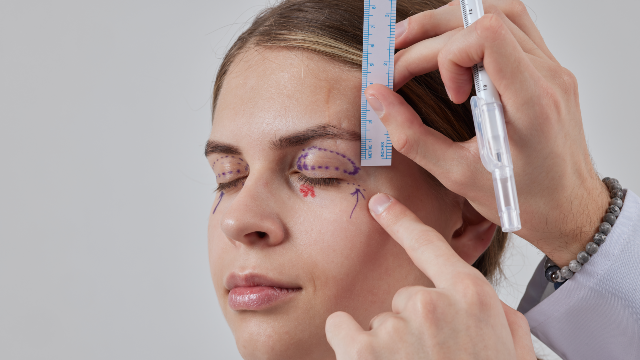
Goodline documents that patients should follow the surgeon's instructions on medications, supplements, smoking, alcohol, food, and eye products, and should provide a complete medical and medication history including any previous eyelid or eye surgery. Blood-thinning medicines and supplements should be discussed with a doctor, and smoking and excessive alcohol avoided, because they can affect healing or bleeding risk. Prescribed medication should never be changed or stopped without medical advice.
Documented aftercare may include cold compresses during early recovery, prescribed eye ointment or medication when indicated, activity restrictions, and follow-up with the surgeon.
If You Are Travelling From the US for Eyelid Surgery
Two practical points apply. First, Goodline's documentation does not specify a required length of stay in Korea after double eyelid surgery, or a point at which flying home is cleared. Settle that with the clinic before booking travel rather than assuming a timeline from another procedure. The CDC notes that surgery and air travel each independently raise the risk of blood clots and that travelling after surgery increases that risk further.
Second, verify the clinic rather than relying on general reputation. Goodline's documentation states it is a registered medical institution for attracting foreign patients under Korea's Medical Overseas Expansion and Foreign Patients Attraction Act. Korea has run that registration system since 2009, and only registered institutions may lawfully treat international patients; the register is searchable through the Korea Health Industry Development Institute's Medical Korea service. It is a Korean regulatory registration, not a quality accreditation and not a US accreditation. The clinic also documents that it is staffed by board-certified plastic surgeons under the Korean specialist system, a Korean national certification rather than American board certification. Reviewing the clinic's before and after gallery and arranging a consultation are reasonable next steps before committing to travel.
The Bottom Line
- Neither technique is permanent: Goodline documents that eyelid surgery results are generally long-lasting but that natural aging changes the eyelid over time.
- Loosening or recurrence of the crease is a documented risk, and the clinic describes partial-incision surgery as particularly suited to cases with eyelid fat or a concern that the fold may loosen.
- Non-incisional surgery uses sutures through small openings with no conventional incision scar, a shorter surgery time, and faster recovery, with swelling reduced to some degree after about two to three days.
- Incisional surgery gives direct access to eyelid tissues and suits thicker or fattier eyelids and loose or excess skin, and generally requires a longer recovery.
- Technique selection is anatomical, based on skin elasticity, eyelid fat, and existing eyelid shape, so the durable choice is the one matched to your eyelid rather than the one with the stronger reputation.
Frequently Asked Questions
Does incisional double eyelid surgery always last longer than non-incisional?
Not automatically. Goodline documents that eyelid surgery results are generally long-lasting while natural aging still changes the eyelid, and it does not publish comparative longevity figures for the two techniques. Durability depends on whether the method suits your eyelid's skin elasticity, fat volume, and structure, which is why the clinic selects between methods on those characteristics.
What makes a double eyelid crease loosen?
Loosening or recurrence of the crease is listed among the documented risks of the procedure. Goodline's documentation points to eyelid fat as a relevant factor, describing its partial-incision method as particularly suitable when there is accumulated eyelid fat or a concern that the fold may loosen. Addressing that underlying anatomy is treated as part of the solution rather than a separate issue.
Who is a good candidate for the non-incisional method?
Goodline describes non-incisional surgery for patients with small or normal eyes, relatively low eyelid fat, and elastic skin. Patients with significant eyelid fat, or eyelid characteristics unsuitable for a suture-only technique, may need a different approach. Final suitability should be determined during consultation.
Will I have a visible scar?
Goodline states that its non-incisional technique uses small openings and sutures rather than a conventional skin incision, so there is no conventional incision scar. Incisional surgery does create a scar, positioned within the crease line where it is generally concealed when the eye is open. Scarring is also listed among the documented risks, and healing varies between individuals.
How much faster is recovery with the non-incisional method?
Goodline states that the non-incisional method recovers faster than the incisional method and that swelling reduces to some degree after approximately two to three days. The clinic does not publish a complete recovery schedule for incisional surgery. As general guidance, eyelid swelling and bruising commonly improve over the first one to two weeks, with complete healing taking longer.
What is the partial-incision method, and when is it used?
It is an approach Goodline documents as combining features of the incisional and non-incisional methods. A small incision is made to access and remove accumulated eyelid fat, and the crease is then created using the non-incisional technique. The clinic describes it as suited to eyelids where fat needs addressing while keeping the incision limited.
Can double eyelid surgery be combined with other eyelid procedures?
Yes. Goodline specifically documents that double eyelid surgery can be performed together with eye-wrinkle removal surgery when a patient requires both. The clinic describes upper-eyelid wrinkle surgery as removing excess or drooping skin, and indicates that crease creation may be carried out at the same time.
What are the main risks I should ask about?
Documented risks include infection, bleeding, scarring, asymmetry, an undesired crease, recurrence or loosening of the crease, dry-eye symptoms, and the possible need for revision surgery. Serious eye complications are uncommon but require prompt medical attention. Temporary swelling, bruising, tightness, dryness, and asymmetry are common during early recovery.
This article is for general informational purposes and does not constitute individualized medical advice, and it is not a self-diagnosis tool. Surgical candidacy, technique, and expected outcomes can only be determined through a consultation and examination with a qualified surgeon. Results vary between individuals and are not guaranteed.
References
- Eyelid Surgery — American Academy of Ophthalmology
- Blepharoplasty — StatPearls, NCBI Bookshelf
- Eyelid Surgery — American Society of Plastic Surgeons
- Asian Upper Blepharoplasty: A Comprehensive Approach — PubMed
- Medical Tourism — CDC Yellow Book
- Registration System for Medical Institutions — Medical Korea (KHIDI)
More Articles
Continue reading our clinical guides.

Revision Rhinoplasty in Seoul: What US Patients Should Know
Revision rhinoplasty in Seoul for US patients: why secondary nose surgery is harder, what recovery looks like, honest expectations, and Goodline's plan.
Learn More
Rejuran vs RE20 vs Juvelook Volume: Skin Boosters Compared
Three injectables that look alike on a clinic menu and solve three unrelated problems. Hydration, repair and volume differ in timeline and in results.
Learn More

Primary vs Revision Rhinoplasty: The Differences That Matter
A second nose operation is not the first one repeated. Scar tissue, longer operating time and a result that takes a year change what you should expect.
Learn More