Natural-Looking Face & Neck Lift Surgery and Personalized Anti-Aging Care in Apgujeong, Gangnam, Seoul
4.1 ★ Google · Board-Certified Plastic Surgeon
en-US

Medical Guide
Medications to Discuss Before Traveling for Plastic Surgery
The instruction is almost never stop this. It is discuss this, and never stop anything prescribed on your own — an asymmetry worth knowing before you fly.
Schedule a Consultation
Medications to Discuss Before Traveling for Plastic Surgery
Medically reviewed by Dr. Choi Deokho, Representative Director, Goodline Plastic Surgery
Read enough clinic preparation guidance and one sentence appears so often it stops registering. It is the most important sentence in all of it.
Do not stop prescribed medication without medical advice.
That instruction appears, in one form or another, in Goodline Plastic Surgery's preparation guidance for eyelid surgery, revision eyelid surgery, ptosis correction, under-eye fat repositioning, upper and lower blepharoplasty, rhinoplasty, filler rhinoplasty, chin augmentation, forehead contouring, neck surgery, fat grafting, body-to-face fat transfer, thread lifting, fat-dissolving injection, liposuction, the Y-Zone procedure and breast augmentation. It is not a disclaimer. It is the rule the rest of this article is organized around.

The asymmetry
Patients expect a list of things to stop. What they get is a list of things to raise, and a firm instruction not to act on it alone.
The reason is that the two risks are not symmetrical. Continuing a blood-thinning medication through surgery is a bleeding risk that the surgical team can plan for, because they know about it. Stopping an anticoagulant unsupervised before a flight is a clotting risk that nobody is managing, because nobody has been told. One of those failure modes has a professional watching it; the other does not.
The clinic's guidance for thread lifting puts this in its sharpest form, advising against taking or stopping medications such as aspirin or anticoagulants unless specifically instructed by your prescribing doctor. Both directions, same sentence. Your prescriber — the one who started the medication, at home — is named as the authority, not the clinic performing the treatment.
That is the practical division of labor. The surgeon tells you what they need. Your prescriber decides what is safe to change. Neither of them can do the other's half, and only you can start the conversation between them.
What the clinic asks you to raise
Four categories recur, with the emphasis shifting by procedure.
Blood thinning. Named across the clinic's surgical guidance as aspirin, anticoagulants, blood-thinning medicines, NSAIDs or anti-inflammatory drugs, and supplements that may increase bleeding. For abdominal liposuction the clinic asks that these not be taken unless specifically approved by your medical team; for rhinoplasty, unless your doctor has specifically advised it; for lower blepharoplasty, unless specifically instructed by your doctor. MedlinePlus's overview of blood thinners is a reasonable orientation, and its page on pain relievers covers why an over-the-counter anti-inflammatory belongs in this conversation at all.
Supplements. Treated throughout as belonging to the same category as medication rather than as a separate, gentler one. The phrase used repeatedly is supplements that may increase bleeding or bruising.
Smoking and nicotine. Named across the surgical guidance, with the reason stated in places: the clinic's eyelid surgery guidance says smoking and excessive alcohol may affect healing, and its hand fat grafting guidance says to avoid smoking or nicotine because it can interfere with healing. The guidance for revision rhinoplasty names smoking or nicotine use among what to avoid, and the breast augmentation preparation guidance names stopping smoking as part of preparation. MedlinePlus has practical material on quitting smoking.
Alcohol. Named as excessive or unnecessary alcohol across most of the surgical guidance, and alongside sun exposure for some of the skin treatments.
For breast augmentation the clinic additionally names recreational drugs among what patients may be advised to avoid. That is the only place the category appears, and it is worth noting that disclosure here follows the same logic as everything else: the team plans around what it knows.
The risk changes as the procedure gets smaller
This is the pattern that makes the guidance easier to remember.
For surgery, the concern named is bleeding. The vocabulary is anticoagulants, aspirin, NSAIDs, blood-thinning medicines.
For injectables, the concern named shifts to bruising. The clinic's filler rhinoplasty guidance asks whether you should temporarily avoid medicines or supplements that can increase bruising. Its injectable contouring guidance asks you to avoid products and activities that may increase bruising or irritate the treatment area. Its fat-dissolving injection guidance asks you to tell the clinic about blood-thinning medicines, supplements, allergies, previous injections, and any active skin problem in the treatment area.
For energy-based skin treatments, the restricted list stops being about medication almost entirely. For Thermage and for radiofrequency microneedling the clinic asks you to avoid excessive sun exposure, tanning and irritating skin treatments, and for microneedling specifically to follow instructions about retinoids, acids and other active products. MedlinePlus covers the background on sun exposure; the practical point is that for these treatments, your skincare routine is the thing under discussion rather than your prescriptions.
So the question to ask is not what do I stop. It is what matters for this treatment — bleeding, bruising, or skin preparation — and the answer tells you which conversation to have and with whom.
Timing, and why you should start early
The conversation with your prescriber cannot be had the week of the flight.
Changing an anticoagulant regime, if it is to be changed at all, may involve a plan rather than a date. Adjusting other medication may need a review. And the clinic's own preparation guidance for breast augmentation mentions a medical examination and blood tests, which is a reminder that some of the preparation is appointments rather than decisions.
A workable sequence: get the clinic's procedure-specific instructions as soon as the procedure is settled; take those instructions to your own prescriber; let your prescriber decide what changes and when; and bring the agreed plan back in writing. That written plan is also what you present if anything has to be reassessed on the day.
Two things specific to traveling
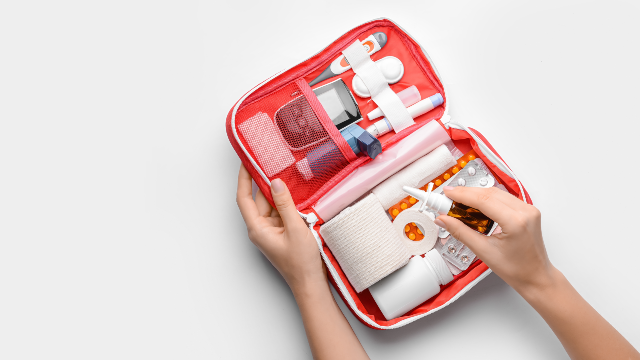
Your pills are now luggage. Bring enough for the trip plus a margin for a return date that moves, since the clinic's own stay estimates are planning figures subject to the surgeon's clearance. Keep medication in original labeled packaging with the prescription details, and carry it rather than checking it. The CDC's guidance on travel health kits covers the general version of this.
Time zones break dosing schedules. A medication taken every morning is taken on a clock, and the clock has moved. For most medication this is a minor adjustment; for some it is not. Ask your prescriber how to handle the shift before you leave, rather than improvising at three in the morning in a hotel.
If a fasting instruction is involved, the interaction between fasting and morning medication is a separate question and it has a specific answer: some medication is taken with a sip of water despite fasting, and some is held. That answer comes from the clinic, in advance, and not from a guess on the day.
Appointments and the online consultation route start from contact; documented cases the clinic has published are in the before-and-after gallery.
What postpones a procedure
Worth including here because it overlaps with the medication conversation and is often discovered too late.
The clinic's lower blepharoplasty guidance says to avoid scheduling surgery during an active eye infection or other acute illness. Its injectable contouring guidance says not to undergo treatment with an active infection. Postponement lists across its procedures name active infection first, along with uncontrolled medical conditions.
An ordinary illness in the days before travel is therefore not a minor inconvenience to push through. Tell the clinic as soon as it happens, because the decision about whether to proceed is better made two days before than on the morning.
A short script for your prescriber
If the conversation feels awkward to start, it is three sentences.
I am having a procedure on a given date in another country. Here is the written preparation guidance I have been given about medications and supplements. Can you tell me what, if anything, should change, when, and can I have that in writing.
That is the whole conversation. It takes one appointment, it produces a document, and it moves the decision to the person qualified to make it.
If your prescriber is reluctant without more detail, the detail they want is usually the procedure, the anesthesia and the expected duration — all of which the clinic can supply in a sentence if asked. Requesting it is not an unusual thing to ask a clinic for, and a clinic that treats international patients will have supplied it before.
Frequently Asked Questions
Should I stop my aspirin before surgery?
Not on your own. The clinic's guidance across procedures asks that aspirin, anticoagulants and similar medicines not be taken unless specifically approved or instructed by your doctor, and separately says not to stop prescribed medication without medical advice. Your prescriber decides.
Do supplements count?
Yes. They appear alongside medications throughout the clinic's preparation guidance, with the recurring phrase being supplements that may increase bleeding or bruising.
Why is smoking mentioned so often?
Because of healing. The clinic's eyelid guidance says smoking and excessive alcohol may affect healing, and its hand fat grafting guidance says nicotine can interfere with healing. Stopping smoking appears as part of preparation for breast augmentation.
Is the advice different for injectables?
The emphasis shifts from bleeding to bruising. For filler rhinoplasty the clinic asks whether you should temporarily avoid medicines or supplements that can increase bruising, rather than naming anticoagulants.
What about skin and laser treatments?
There the restricted list is largely not medication. The clinic asks you to avoid excessive sun exposure, tanning and irritating skin treatments, and for radiofrequency microneedling to follow instructions on retinoids, acids and other active products.
How early should I start this conversation?
As soon as the procedure is settled. Medication changes may need a plan rather than a date, and the clinic's breast augmentation guidance mentions a medical examination and blood tests as part of preparation.
What do I do about my morning medication if I have to fast?
Ask the clinic in advance. Some medication is taken with a sip of water despite fasting and some is held, and this is not a decision to make on the morning.
What if I get ill just before the trip?
Tell the clinic immediately. Active infection appears first on the postponement lists, and the guidance for lower blepharoplasty says explicitly to avoid scheduling surgery during an active eye infection or other acute illness.
The Bottom Line
- The instruction that recurs across almost every procedure is not to stop prescribed medication without medical advice; for thread lifting the clinic warns against taking or stopping such medicines unless your prescribing doctor instructs it.
- The surgeon tells you what they need; your own prescriber decides what is safe to change. Neither can do the other's part.
- Four categories recur: blood-thinning medicines including aspirin and NSAIDs, supplements, smoking and nicotine, and alcohol — with recreational drugs named for breast augmentation.
- The named risk shifts with the size of the procedure, from bleeding for surgery, to bruising for injectables, to sun and skincare actives for energy-based treatments.
- Start early, get the plan in writing, bring medication in original packaging with a margin for a moved return date, and ask how a time-zone shift affects your dosing.
This article is for general informational purposes and does not constitute individualized medical advice. It is not a self-diagnosis tool. Nothing here can tell you whether to change, pause or continue any medication you are taking. Only a qualified plastic surgeon together with your own prescribing doctor can determine that, and you should never stop prescribed medication on the basis of an article.
References
- MedlinePlus — Blood Thinners
- MedlinePlus — Pain Relievers
- MedlinePlus — Dietary Supplements
- MedlinePlus — Over-the-Counter Medicines
- MedlinePlus — Drug Safety
- MedlinePlus — Quitting Smoking
- MedlinePlus — Bleeding
- MedlinePlus — Bruises
- MedlinePlus — Sun Exposure
- CDC Yellow Book — Travel Health Kits
More Articles
Continue reading our clinical guides.

Revision Rhinoplasty in Seoul: What US Patients Should Know
Revision rhinoplasty in Seoul for US patients: why secondary nose surgery is harder, what recovery looks like, honest expectations, and Goodline's plan.
Learn More
Rejuran vs RE20 vs Juvelook Volume: Skin Boosters Compared
Three injectables that look alike on a clinic menu and solve three unrelated problems. Hydration, repair and volume differ in timeline and in results.
Learn More

Primary vs Revision Rhinoplasty: The Differences That Matter
A second nose operation is not the first one repeated. Scar tissue, longer operating time and a result that takes a year change what you should expect.
Learn More