Natural-Looking Face & Neck Lift Surgery and Personalized Anti-Aging Care in Apgujeong, Gangnam, Seoul
4.1 ★ Google · Board-Certified Plastic Surgeon
en-US

Medical Guide
Nasolabial Fold Contouring: Softening Your Smile Lines
Nasolabial fold contouring softens smile lines with filler, fat grafting, or lifting surgery. Learn the options, limits, and recovery at Goodline Seoul.
Schedule a Consultation
Nasolabial Fold Contouring: Softening Your Smile Lines
Medically reviewed by Dr. Choi Deokho, Board-Certified Plastic Surgeon, Representative Director, Goodline Plastic Surgery
The nasolabial folds — the lines that run from the sides of the nose down to the corners of the mouth — are among the first facial features people notice changing as they age. They are often called "smile lines," which is fitting, because they are partly created by the very muscles that let us smile. Softening them is one of the most common aesthetic requests, but it is also one of the most misunderstood, because these folds are not simply "wrinkles" to be erased. They are the visible result of deeper changes in the face, which is why realistic expectations matter so much. This guide explains what actually causes nasolabial folds, the main options for softening them — HA filler, fat grafting, and midface or lifting approaches — the honest limits of each, and why "long-term" is not the same as "permanent." As with any aesthetic procedure, the right plan for you is decided at an in-person examination, not from an article.
What Causes Nasolabial Folds
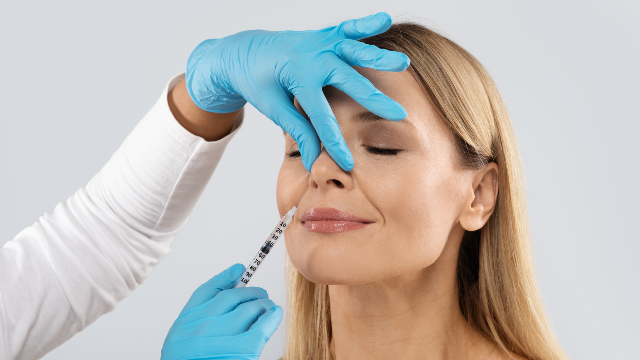
To treat smile lines sensibly, it helps to understand why they form. The nasolabial fold is a natural crease that exists in almost everyone; what changes with age is how deep and prominent it becomes. Several things contribute at once.
First, the face loses volume. The cheeks contain fat compartments that gradually shrink and descend over time, and the underlying bone also remodels. As the midface flattens and drops, tissue accumulates above the fold and the crease deepens. Second, skin quality declines — collagen and elastin diminish, so the skin becomes thinner and less able to hold its position. Third, the folds are dynamic: every smile creases the same line thousands of times, and over years these repeated movements etch the crease more permanently. StatPearls describes this combination of soft-tissue descent, volume loss (lipoatrophy), and bony change as central to the aging midface, with pronounced nasolabial folds a characteristic result.
This matters for treatment. Because a deep nasolabial fold is usually a symptom of volume loss and tissue descent rather than a problem confined to the crease itself, the most natural-looking results often come from restoring volume or repositioning tissue in the surrounding area — not just filling the line. It also explains why folds can and do recur: the underlying aging process continues after any treatment.
Option One: Hyaluronic-Acid Filler
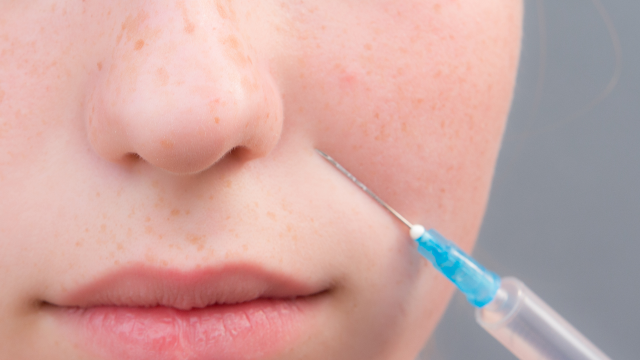
The most common non-surgical approach to smile lines is hyaluronic-acid (HA) filler. Hyaluronic acid is a substance found naturally in the body, and HA gels are injected to add volume and smooth the appearance of folds. The FDA notes that absorbable dermal fillers are approved specifically for moderate to severe facial folds such as the nasolabial folds, which makes this a well-established use.
Filler works either by placing volume directly along the fold to soften the crease, or — often more naturally — by restoring volume higher in the cheek to lift and support the area so the fold is less pronounced. It is quick, involves little downtime beyond possible short-lived swelling or bruising, and shows an immediate change. A practical advantage is that HA is, to a meaningful degree, reversible: an enzyme called hyaluronidase can dissolve HA gel if needed.
The key honest point is that filler is temporary. HA is gradually absorbed by the body, so the effect fades over months and must be repeated to be maintained. Filler also carries risks the FDA describes clearly — bruising, swelling, redness, tenderness, and lumps or nodules — and, uncommonly, the serious risk of unintentional injection into a blood vessel, which can cause tissue damage. This is why injections belong only in the hands of a qualified medical professional who understands facial anatomy, an area that is particularly important near the nasolabial region.
Option Two: Fat Grafting
Autologous fat grafting uses your own fat to restore lost volume. Fat is harvested from another area of the body (such as the abdomen or thighs) through gentle liposuction, purified, and then reinjected into the midface and around the folds. Because it replaces the very volume that aging depletes, StatPearls describes autologous fat as a widely used material for facial rejuvenation, valued for producing a soft, natural result using the body's own tissue.
The honest limitation of fat grafting is variable, partial resorption. Not all transferred fat survives — a portion is naturally reabsorbed in the months after the procedure, and how much survives varies between individuals and cannot be precisely predicted. This means results are not fully predictable and that a touch-up or repeat session is sometimes needed to reach or maintain the desired volume. Fat grafting can also cause over- or under-correction, lumps or contour irregularities, and, less commonly, fat necrosis or oil cysts. A systematic review of facial fat grafting in the medical literature confirms that while it is broadly used and generally well tolerated, complications and the need for repeat procedures are recognized parts of the picture.
Fat grafting is more involved than filler — it requires a harvest site and a longer recovery — but it uses your own tissue and, for the fat that survives, provides a durable volume restoration. It is often discussed for people who want a more substantial or longer-lasting volume change than filler provides. Even so, it is neither permanent nor guaranteed, because the face keeps aging.
Option Three: Midface and Lifting Approaches
When nasolabial folds are driven mainly by sagging rather than volume loss — that is, when descended cheek tissue is piling up above the fold — adding volume alone may not be the answer, and can even look heavy if overdone. In these cases surgeons consider repositioning the tissue through a midface or facelift-type approach, which lifts and re-supports the descended structures so the fold softens as a consequence.
It is important to be realistic here: no surgical lift, and no facelift, completely erases the nasolabial fold. The crease is a normal facial feature, and pulling on it aggressively looks unnatural. What a well-planned lift can do is reduce the excess overhang and improve the overall contour of the midface, which makes the fold less prominent as part of a broader rejuvenation. A lift is real surgery with real recovery and real risk, so it is generally reserved for people whose concern is genuinely about descent and laxity, not those with an isolated, modest crease. Which approach — if any — fits your anatomy is exactly what an examination is for.
Nasolabial Fold Filler vs Surgery
The honest framing of nasolabial fold filler vs surgery is that they address different underlying problems, so they are not interchangeable.
HA filler is non-surgical, immediate, reversible, and low-downtime, but temporary and best for softening folds driven by volume loss. Fat grafting restores volume with your own tissue for a potentially longer-lasting result, but involves a harvest, variable resorption, and possible touch-ups. Midface or lifting surgery addresses folds caused by sagging tissue, offering the most substantial change to contour, at the cost of a real operation and recovery — and even then it softens rather than erases the fold.
There is no single best option in the abstract. The right choice depends on whether your folds are driven mainly by lost volume, by descended tissue, or by both; on how long you want the effect to last; and on how much intervention and downtime you will accept. Cost is not part of this discussion; the clinical fit is what a consultation determines. For many people, a combination — for example, restoring volume while addressing laxity — is more effective than any one treatment alone.
Realistic Expectations: Long-Term Is Not Permanent
The single most important thing to understand about deep smile lines treatment is that softening a nasolabial fold is not the same as removing it forever. Aging is an ongoing process: volume continues to be lost, skin continues to thin, and the folds continue to be creased every time you smile. Whatever the treatment, the folds can recur over time.
That is why it is fair to describe good outcomes as "long-term" but never as "permanent," "guaranteed," or "perfect." Filler fades and needs repeating. Fat grafting partially resorbs and may need touch-ups. Surgery softens the fold but does not erase it and does not stop aging. An ethical plan sets this out clearly in advance, so you can choose the option whose maintenance, downtime, and durability match what you actually want — rather than expecting a result no treatment can deliver. Results vary between individuals.
Nasolabial Surgery Recovery
Nasolabial surgery recovery depends entirely on which option is chosen, and the following is a general orientation rather than a fixed schedule.
After filler, most people have little to no true downtime; some swelling, tenderness, or minor bruising can occur and usually settles within days. After fat grafting, expect swelling and bruising both at the facial injection sites and at the harvest area, with the more obvious swelling settling over a couple of weeks and the final volume — reflecting how much fat survives — becoming clear over the following months. After a midface or lifting procedure, recovery is more involved, with swelling, bruising, and tightness in the first weeks and a gradual settling over several weeks to months, along with the general risks of facial surgery such as bleeding, infection, scarring, temporary altered sensation, and asymmetry.
Because Goodline sets recovery and travel windows individually, international patients should confirm their own timeline and plan a realistic stay that allows for appropriate follow-up before flying home. Any acute problem — spreading redness, severe or unusual pain, vision changes, or signs of infection — warrants prompt medical attention, and locally first if you are traveling.
Planning Your Consultation
Goodline Plastic Surgery is located in the Apgujeong area of Gangnam, Seoul, near Apgujeong Station Exit 4, and has operated since 2001. It is a Registered Medical Institution for Attracting Foreign Patients certified by the Korean Ministry of Health and Welfare (MOHW) and offers basic English-language support, with online consultation available through its contact page. Reviewing surgeon Dr. Choi Deokho is a board-certified plastic surgeon (성형외과전문의) under the Korean plastic-surgery specialty certification, with a documented focus that includes facial contouring and fat grafting.
If you are considering smile line correction in Korea, the most useful next step is a consultation where the true cause of your folds — volume loss, tissue descent, or both — can be assessed and a suitable option discussed candidly, including the honest possibility that a lighter treatment is enough. You can begin with an online consultation and share your history and photographs first. Learn more at the Goodline Plastic Surgery website or get in touch through the contact page.
Frequently Asked Questions
Can nasolabial folds be removed completely?
No treatment fully erases nasolabial folds, and it is not desirable to try — the crease is a normal facial feature, and over-treating it looks unnatural. Filler, fat grafting, and lifting surgery can soften and reduce the folds, but they do not remove them permanently. Honest expectations are part of a good plan.
How long does filler for smile lines last?
Hyaluronic-acid filler is temporary because the body gradually absorbs it, so the effect fades over months and needs repeating to be maintained. The exact duration depends on the specific material and the individual. Your provider can give you a realistic sense of maintenance for your situation.
Is fat grafting better than filler for nasolabial folds?
They are different tools. Filler is quick, reversible, and low-downtime but temporary, while fat grafting uses your own tissue for a potentially longer-lasting result but involves a harvest, variable partial resorption, and possible touch-ups. Which suits you depends on your anatomy, goals, and how much downtime you accept — an examination decides.
Why do my smile lines come back after treatment?
Because aging continues after any treatment. Volume keeps being lost, skin keeps thinning, and the folds are re-creased every time you smile, so the underlying cause is never switched off. This is why good results are described as long-term rather than permanent, and why maintenance is often part of the plan.
Do I need surgery, or is a non-surgical option enough?
It depends on what is driving your folds. If the main issue is lost volume, filler or fat grafting may be enough; if it is significant sagging of the cheek tissue, a midface or lifting approach may be more appropriate. Only an in-person examination can determine which, and sometimes a combination works best.
What are the risks of treating nasolabial folds?
For filler, risks include bruising, swelling, nodules, and, uncommonly, injection into a blood vessel causing tissue damage. For fat grafting, risks include partial resorption, lumps, over- or under-correction, and rarely fat necrosis. For surgery, risks include bleeding, infection, scarring, altered sensation, and asymmetry. Results vary, and none can be guaranteed.
How long is recovery after fat grafting for smile lines?
Recovery varies by individual. Swelling and bruising occur at both the facial and harvest sites, with the more obvious swelling easing over a couple of weeks and the final volume becoming clear over the following months as it becomes apparent how much fat survives. Confirm your own timeline with the clinic, since recovery is set individually.
The Bottom Line
- Nasolabial folds are driven by volume loss, tissue descent, and repeated smiling — not by the crease alone — so the best treatment targets the cause.
- HA filler softens folds temporarily with little downtime and is largely reversible; it fades and needs repeating.
- Fat grafting restores volume with your own tissue for a potentially longer-lasting result, but a portion resorbs and touch-ups may be needed.
- Midface or lifting surgery addresses folds caused by sagging and offers the most contour change, but softens rather than erases the fold and involves real recovery.
- Folds can recur because aging continues; results are long-term at best, never permanent or guaranteed, and candidacy is decided by examination.
This article is for general education and is not a self-diagnosis tool. It does not replace a personal consultation with a qualified plastic surgeon, and it does not establish a doctor-patient relationship. Decisions about nasolabial fold treatment, candidacy, and technique should be made with a licensed surgeon after an in-person examination. Individual results vary.
References
- Autologous Fat Grafting for Facial Rejuvenation — StatPearls, NCBI Bookshelf
- Hyaluronic Acid — StatPearls, NCBI Bookshelf
- Dermal Fillers (Soft Tissue Fillers) — U.S. Food and Drug Administration
- Dermal Fillers — American Society of Plastic Surgeons
- A Systematic Review of the Effectiveness and Complications of Fat Grafting in the Facial Region — PMC
More Articles
Continue reading our clinical guides.

Revision Rhinoplasty in Seoul: What US Patients Should Know
Revision rhinoplasty in Seoul for US patients: why secondary nose surgery is harder, what recovery looks like, honest expectations, and Goodline's plan.
Learn More
Rejuran vs RE20 vs Juvelook Volume: Skin Boosters Compared
Three injectables that look alike on a clinic menu and solve three unrelated problems. Hydration, repair and volume differ in timeline and in results.
Learn More

Primary vs Revision Rhinoplasty: The Differences That Matter
A second nose operation is not the first one repeated. Scar tissue, longer operating time and a result that takes a year change what you should expect.
Learn More