Natural-Looking Face & Neck Lift Surgery and Personalized Anti-Aging Care in Apgujeong, Gangnam, Seoul
4.1 ★ Google · Board-Certified Plastic Surgeon
en-US

Medical Guide
Neck Wrinkle Removal Surgery: A Patient's Guide in Seoul
A patient's guide to neck wrinkle removal surgery and neck lift options in Seoul, covering neck aging, candidacy, recovery, scarring, and honest results.
Schedule a Consultation
Neck Wrinkle Removal Surgery: A Patient's Guide in Seoul

Medically reviewed by Dr. Choi Deokho, Board-Certified Plastic Surgeon, Representative Director, Goodline Plastic Surgery
The neck is often one of the first areas to show age, and it can be one of the most stubborn to improve. Loose skin, horizontal creases, vertical cords running down the front of the neck, a fuller area under the chin, and a softened jawline can all appear even when the face itself still looks relatively youthful. For many people, that mismatch is what prompts them to look into neck rejuvenation.
Goodline Plastic Surgery in Apgujeong, Seoul, lists neck lift procedures and neck wrinkle removal surgery among its offerings. This guide is written as general patient education about how the neck ages and what neck surgery aims to do. It is not a description of a specific named technique performed at the clinic — the precise surgical plan, and whether surgery is even the right choice for you, are decided during an in-person consultation. Throughout, the emphasis is on honest expectations: real recovery, real scars, and results that vary from person to person.
Why the neck ages the way it does
Understanding neck aging makes the surgical options far easier to follow. Several distinct changes tend to happen, often at the same time:
- Skin laxity. Skin loosens and thins with age, gravity, and sun exposure, producing sagging and horizontal wrinkles.
- Fat changes. Fat can accumulate beneath the chin (the submental area), blurring the once-crisp angle between the chin and neck.
- Muscle changes. A broad, thin muscle called the platysma sheets across the front of the neck. With age, its inner edges can separate and drift, creating the vertical lines many people call "neck bands" or "cords."
- Underlying structure. The position of the jaw and of a small bone in the neck called the hyoid influences how sharp or blunt the neck contour looks, and these are set largely by individual anatomy.
Clinicians often describe the aging neck using a staged classification, from simple skin laxity at one end through fat accumulation and platysmal banding to more structural factors at the other. Each successive change is generally harder to correct, which is one reason a careful examination matters so much: the right treatment depends on which of these changes are actually driving your concern.
What neck wrinkle removal surgery aims to do

"Neck wrinkle removal surgery" and "neck lift" are broad terms rather than a single fixed operation. Depending on what is found on examination, a neck-focused procedure may aim to:
- Remove or redrape excess, loose skin.
- Reduce excess fat under the chin and along the neck.
- Address the platysma muscle to soften vertical banding and support a firmer contour.
- Improve the definition of the jawline and the chin-to-neck angle.
In educational terms, tightening or repositioning the platysma is a well-recognized part of neck rejuvenation, because reapproximating the muscle's inner edges can reduce the appearance of vertical bands and help support a more youthful neck angle. This general concept — sometimes referred to under the umbrella of platysma surgery — is standard background knowledge in facial plastic surgery. Which specific combination of skin, fat, and muscle work is appropriate for a given patient is exactly what a surgeon determines at consultation; it is not something to assume in advance.
It is also worth knowing that neck changes and lower-face changes frequently travel together. In many patients the neck is closely tied to the jawline and lower face, and surgeons commonly discuss where a neck-focused procedure ends and a broader facelift begins. That boundary is individual, and part of the value of a consultation is clarifying which approach matches your anatomy and goals.
Surgical versus non-surgical options
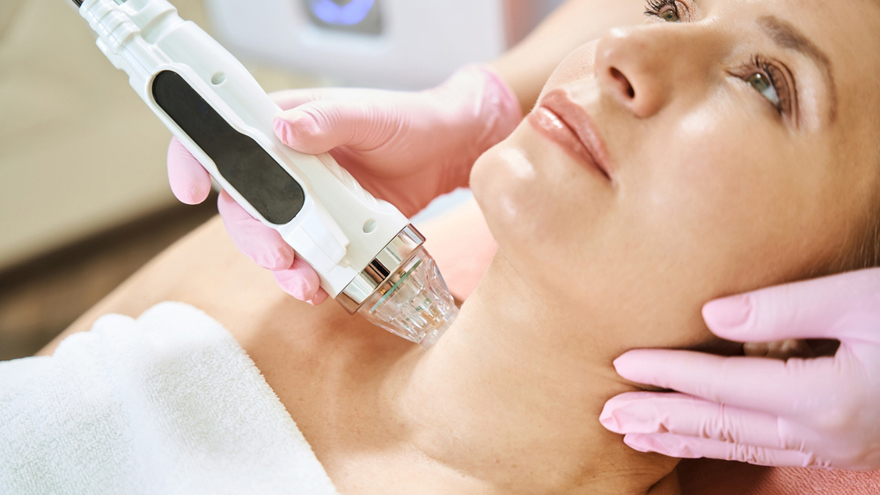
Not everyone who dislikes their neck needs surgery, and it is honest to say so. Milder concerns are sometimes managed with non-surgical measures. For example, botulinum toxin injections can relax prominent platysmal bands, energy-based devices and skin-resurfacing treatments can improve skin texture, and various methods exist to reduce modest submental fat.
However, these non-surgical options have real limits. Professional guidance is clear that non-surgical treatments cannot achieve the same result as surgery when there is significant loose skin or muscle laxity — they may improve texture or delay the point at which surgery becomes appropriate, but they do not remove excess skin. When laxity is more advanced, a surgical neck lift is generally the approach that can meaningfully change the contour. The trade-off is that surgery involves anesthesia, incisions, recovery, and scars. Weighing that trade-off honestly is central to a good decision, and it is best done with a surgeon rather than from marketing material.
Who is a candidate
Neck rejuvenation surgery tends to be considered for people who:
- Have visible loose skin, banding, or excess fat in the neck that bothers them.
- Are in generally good health and can safely undergo the planned anesthesia.
- Do not smoke, or are willing to stop well before and after surgery, since smoking impairs healing.
- Hold realistic expectations, understanding that surgery improves rather than perfects and cannot stop future aging.
Certain factors make surgery riskier or less advisable, including bleeding disorders or ongoing blood-thinning therapy, poorly controlled diabetes, a history of poor wound healing or problematic scarring, and recent smoking — all of which can raise the chance of complications such as bleeding, delayed healing, or skin problems. Underlying anatomy, such as jaw position, also affects what surgery can realistically achieve.
None of this can be judged online. Candidacy is confirmed only by an in-person examination and medical review, and results differ between individuals. You can arrange an assessment through the clinic's contact page.
Recovery: an honest overview
Because the exact procedure varies, recovery timelines vary too, and any specific promise about "days to normal" should be treated with caution. That said, some general realities apply to neck surgery:
- Swelling and bruising around the neck and jaw are expected in the early days and settle gradually over weeks.
- A dressing or compression garment is often used to support the area and manage swelling in the initial period.
- Tightness, numbness, and altered sensation in the neck skin are common early on and usually improve over time, though numbness can linger.
- Activity is restricted at first — strenuous exercise, heavy lifting, and anything that strains the neck are typically avoided for a period set by your surgeon.
- Final results take time, as residual swelling resolves and tissues settle over months rather than days.
Your surgeon and care team will give you specific aftercare instructions, and it is important to follow them and to attend follow-up visits. Any signs of a problem — spreading redness, increasing pain, a rapidly enlarging area of swelling, fever, or unusual discharge — should be reported without delay.
Scars and risks
Honesty about scars matters. A surgical neck lift requires incisions, and incisions heal into scars. Surgeons place them as discreetly as possible — commonly around the ears and sometimes in a small crease under the chin — so that they are easier to conceal, but they are permanent and their final appearance depends on your skin and healing. No surgery is scar-free.
Neck surgery also carries genuine risks that should be discussed in detail beforehand, including:
- Bleeding and hematoma (a collection of blood), which is among the more common early complications and sometimes needs treatment.
- Nerve injury, which can be temporary or lasting. The great auricular nerve and the marginal mandibular branch of the facial nerve are among those at risk; injury may cause altered ear sensation or an asymmetric smile.
- Infection, poor wound healing, or skin problems, more likely in smokers and certain medical conditions.
- Asymmetry, contour irregularities, or the need for revision surgery, since banding and laxity can partly recur over time.
- Scarring that heals less favorably than hoped.
These risks are not meant to alarm but to inform. A meticulous surgical technique and thorough preoperative counseling reduce, but do not eliminate, the possibility of complications, and results cannot be guaranteed.
Setting realistic expectations
A neck procedure is a restorative operation, not a way to change your fundamental appearance or halt aging. It can improve visible signs of aging in the neck and jawline, but the aging process continues afterward, and some laxity or banding may gradually return. Two people having similar surgery can heal differently and see different results.
The most useful mindset is to focus on improvement rather than perfection, and to build your plan around your own anatomy and priorities. That is why an unhurried consultation — where you can discuss your goals, understand the likely trade-offs, and hear an honest assessment of what surgery can and cannot do for your neck specifically — is the single most valuable step.
Frequently Asked Questions
What is neck wrinkle removal surgery?
It is a broad term for surgery that improves visible aging in the neck, which may involve removing loose skin, reducing fat, and addressing the platysma muscle to soften vertical bands and support the neck contour. The exact plan depends on your anatomy and is decided at consultation. It is not a single fixed operation.
Is a neck lift the same as a facelift?
Not exactly. A neck lift focuses on the neck and jawline, while a facelift addresses the mid and lower face; the two overlap and are sometimes combined. Where a neck-focused procedure ends and a facelift begins is individual and depends on your anatomy. A surgeon can explain which approach matches your goals.
Will I have visible scars?
A surgical neck lift requires incisions, so there will be scars, commonly placed around the ears and sometimes under the chin to keep them discreet. Surgeons work to minimize and conceal them, but scars are permanent and no procedure is scar-free. How a scar matures depends on your skin and healing.
How long is recovery?
Recovery varies with the specific procedure, but swelling and bruising typically settle over weeks, while final results emerge over months as tissues settle. Activity is usually restricted at first, and a support dressing or garment may be used early on. Your surgeon will provide a timeline suited to your case.
What are the main risks of neck surgery?
Possible complications include bleeding or hematoma, temporary or lasting nerve injury, infection, poor healing, asymmetry, contour irregularities, unfavorable scarring, and the possible need for revision. Risks are higher in smokers and certain medical conditions. A detailed consultation helps you understand your individual risk.
Am I a candidate for surgery, or would non-surgical options work?
Milder concerns may respond to non-surgical treatments, but these cannot remove excess skin the way surgery can. More advanced loose skin, banding, or fat generally calls for a surgical approach. Only an in-person examination can determine which option, if any, fits you, and results vary.
Can neck concerns be addressed at Goodline Plastic Surgery?
Goodline Plastic Surgery lists neck lift procedures and neck wrinkle removal surgery among its offerings in Apgujeong, Seoul. The specific options appropriate for you are confirmed during a consultation and physical examination. You can reach the clinic through its contact page.
The Bottom Line
- Neck aging combines several changes — loose skin, fat accumulation, platysmal banding, and structural factors — and the right treatment depends on which are present.
- "Neck wrinkle removal surgery" and "neck lift" are broad terms; the exact procedure and whether surgery is appropriate are decided at an in-person consultation, not from a webpage.
- Surgery can meaningfully improve neck contour when laxity is advanced, but it involves anesthesia, incisions, permanent scars, and a real recovery period.
- Genuine risks exist, including bleeding, nerve injury, infection, asymmetry, and the possibility of revision, and results vary between individuals.
- Neck surgery improves rather than perfects, does not stop aging, and cannot be guaranteed; candidacy and expectations should be confirmed with a qualified surgeon.
This article is for general education only and is not a self-diagnosis tool. It does not replace a personalized evaluation by a qualified physician, and it does not guarantee any specific result. Any decision about neck surgery should be made with a licensed surgeon after an in-person assessment of your individual anatomy and health.
References
- Neck Rejuvenation — StatPearls, NCBI Bookshelf
- Cervicofacial Rhytidectomy — StatPearls, NCBI Bookshelf
- Neck Lift — American Society of Plastic Surgeons
- Facelift Surgery — American Society of Plastic Surgeons
More Articles
Continue reading our clinical guides.

Revision Rhinoplasty in Seoul: What US Patients Should Know
Revision rhinoplasty in Seoul for US patients: why secondary nose surgery is harder, what recovery looks like, honest expectations, and Goodline's plan.
Learn More
Rejuran vs RE20 vs Juvelook Volume: Skin Boosters Compared
Three injectables that look alike on a clinic menu and solve three unrelated problems. Hydration, repair and volume differ in timeline and in results.
Learn More

Primary vs Revision Rhinoplasty: The Differences That Matter
A second nose operation is not the first one repeated. Scar tissue, longer operating time and a result that takes a year change what you should expect.
Learn More