Natural-Looking Face & Neck Lift Surgery and Personalized Anti-Aging Care in Apgujeong, Gangnam, Seoul
4.1 ★ Google · Board-Certified Plastic Surgeon
en-US

Medical Guide
Rhinoplasty Cost: Seoul vs Major US Cities Compared
Rhinoplasty cost in Korea vs the US: what published ASPS surgeon fees cover, which travel costs get left out, and how to compare Seoul quotes honestly.
Schedule a Consultation
How Much Does Rhinoplasty Cost in Seoul Compared With Major US Cities?
Medically reviewed by Dr. Choi Deokho, Board-Certified Plastic Surgeon, Representative Director, Goodline Plastic Surgery
Rhinoplasty cost in Korea is usually quoted as a single surgical package, while a US quote is typically split into a surgeon's fee, an anesthesia fee, and a facility fee. That difference alone makes a straight number-to-number comparison misleading. This article explains what each side of the comparison actually contains, which published figures you can verify, and which costs only show up once travel is part of the plan.
One point belongs at the top. Goodline Plastic Surgery, a clinic in the Apgujeong area of Gangnam, Seoul, does not publish a price for rhinoplasty, and this article does not estimate one. The clinic's own documentation states that prices are confirmed at consultation, after an examination establishes what the operation would involve. What follows is a framework for comparing costs responsibly, not a quote.

What a Rhinoplasty Price Tag Actually Covers
A rhinoplasty price is a bundle of separate charges, and clinics in different countries bundle them differently. Understanding the components is what makes two quotes comparable.
- Surgeon's fee — payment for the operating surgeon's time and expertise. In the United States this is the figure most often published.
- Anesthesia fee — the anesthesiologist's charge, which varies with whether the case uses local anesthesia with sedation or general anesthesia.
- Facility fee — use of the operating room, nursing staff, and recovery area.
- Materials — implants, grafts, splints, and dressings, which differ depending on the surgical plan.
- Follow-up care — postoperative visits, splint removal, and later reviews.
- Revision policy — what happens, and what it costs, if a second operation is later considered.
The American Society of Plastic Surgeons (ASPS) is explicit that the fees it publishes are surgeon or physician fees only. Anesthesia, operating room facilities, and other related expenses are not included. A US quote that looks lower than a Korean package price may simply be a narrower quote.
What Published Data Says About US Rhinoplasty Prices
The most reliable public figure for the US side is the ASPS annual procedural statistics release. For 2024, ASPS reported an average surgeon or physician fee for nose reshaping (rhinoplasty) of $7,500 to $12,500.
That range is itself informative. ASPS changed its presentation in 2024 from a single national average to a projected range, stating that a range more accurately reflects real-world conditions given the diverse geographic locations and practice settings of its member surgeons. In other words, the organisation collecting the data is telling you directly that where you have surgery moves the number.
This is why "rhinoplasty cost in Los Angeles" and "rhinoplasty cost in New York" return different answers from the same procedure. Metropolitan markets with higher overheads and higher demand sit toward the upper part of a national range, while smaller markets sit lower. A single published average would have hidden that spread. When you compare a Seoul quote against a US quote, you are really comparing it against one point inside that range, not against a fixed national price.
Two cautions apply to the ASPS figure. It reflects procedures performed by ASPS member surgeons only, so it is not a census of every rhinoplasty performed in the United States. And because it excludes anesthesia and facility charges, the amount a US patient actually pays is higher than the published surgeon fee.
Why Seoul and US Prices Differ
Price differences between countries come from structural factors rather than from any single clinic's decision. Several are well documented.
Healthcare labour costs, facility overheads, commercial rents, and medical liability insurance all differ substantially between South Korea and major US metropolitan areas. Aesthetic surgery is also highly concentrated in Seoul's Gangnam district, where a dense cluster of clinics operates in a competitive market. High procedure volume in a concentrated market tends to compress prices in a way that a dispersed market does not.
None of this tells you anything about the quality of an individual surgeon or clinic. A lower price is a consequence of the market a clinic operates in, not evidence about the operation you would receive. That distinction matters more in rhinoplasty than in many procedures, because nasal surgery is technically demanding and revision work is significantly harder than primary surgery.
What Goodline States About Cost — and What It Does Not
Goodline's US-market documentation lists a cost advantage of 30 to 70 percent compared with the United States among the reasons American patients choose the clinic. This is the clinic's own stated market positioning, and it should be read as exactly that: a positioning statement, not a quotation and not an independently audited figure.
What the clinic's documentation does not contain is a published price range for rhinoplasty. That field is recorded as requiring clinic confirmation. The clinic's approved disclaimer wording for this market states plainly that prices are confirmed at consultation. Any figure you see attributed to the clinic that did not come from a consultation should be treated with caution.
This is not evasive. Rhinoplasty pricing depends on what the operation involves. Goodline's documented approach evaluates the nose together with the forehead, philtrum, facial shape, and proportions before selecting a surgical method and implant material. A case built around cartilage grafting to raise a low bridge is a different operation from an alar base reduction, and the two do not cost the same. A clinic that quotes a firm price before examining you is quoting a procedure it has not yet planned. You can request a consultation to obtain a case-specific figure.
The Costs That Only Appear When You Travel
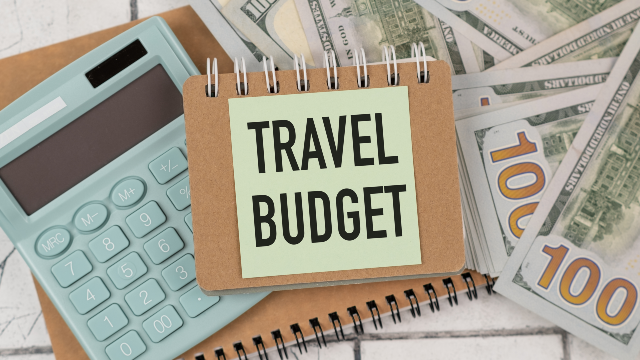
A Seoul-versus-US comparison is incomplete unless the travel side is priced in. These items are real and are routinely underestimated.
- Airfare for the patient, and for a companion if one travels.
- Accommodation in Seoul for the full recommended stay, not just the surgical days.
- Local transport, including transfers on the day of surgery and to follow-up appointments.
- Interpretation support, if it is needed beyond what the clinic provides.
- Time away from work, which is a genuine financial cost even when it is not an invoice.
- Travel health insurance, which the CDC recommends should cover medical evacuation back to the United States.
Length of stay is the item that moves the total the most. Goodline's documentation advises international rhinoplasty patients to plan on staying in Korea roughly 7 to 10 days after surgery so the surgeon can carry out early postoperative checks. The clinic also documents follow-up visits at one week, one month, and six months after surgery. Only the first of those falls inside a typical trip, so the later reviews have to be planned remotely or as a return visit.
There is also a cost that does not appear on any estimate: elective cosmetic surgery performed abroad is generally not covered by US health insurance, and complications treated after you return home may be handled as new, unrelated care. Goodline's own market research lists insurance coverage for elective surgery abroad, remote follow-up, and medical liability as recurring concerns among American patients. Those are the right questions to ask before price becomes the deciding factor.
Comparing Two Quotes Without Being Misled
A useful comparison puts both quotes on the same footing. The following questions do that work.
- Does this figure include anesthesia and facility charges, or is it a surgeon's fee only?
- Which specific techniques and materials does the plan use, and what changes the price?
- How many follow-up visits are included, and over what period?
- What is the policy if revision surgery is later considered, and who bears the cost?
- Who performs the operation, and will that person be present for the whole procedure?
- What happens if a complication develops after I have flown home?
Question five carries particular weight for international patients. Ask for the operating surgeon by name and confirm it in writing.
Verifying a Seoul Clinic Before Price Enters the Decision
Cost should be the last filter you apply, not the first. Two verification steps are practical from abroad.
First, confirm the clinic's legal status for treating international patients. Since 2009 South Korea's Ministry of Health and Welfare has operated a registration system for medical institutions that attract foreign patients, and only registered institutions may lawfully treat them. Registration is administered through the Korea Health Industry Development Institute's Medical Korea service, where the register can be searched. Goodline's documentation states that it is a registered medical institution for attracting foreign patients under the Medical Overseas Expansion and Foreign Patients Attraction Act. It is worth understanding what this is: a Korean regulatory registration confirming the clinic may legally treat foreign patients. It is not a quality accreditation and not equivalent to a US hospital accreditation.
Second, confirm surgeon credentials and be precise about what they mean. Goodline documents that it is staffed by board-certified plastic surgeons under the Korean specialist system (성형외과전문의), which is a Korean national specialty certification rather than certification by an American board. Dr. Choi Deokho, the clinic's Representative Director, is documented as a full member of the Korean Society of Plastic and Reconstructive Surgeons, the Korean Society for Microsurgery, the Korean Cleft Palate-Craniofacial Association, the Japan Society of Aesthetic Plastic Surgery, the American Society of Aesthetic Plastic Surgery, and the International Society of Aesthetic Plastic Surgery. The clinic was established in 2001, giving roughly 25 years of operating history, and rhinoplasty and revision rhinoplasty are documented as his stated focus. You can review the clinic's background and structure and its before and after gallery as part of that check.
The American College of Surgeons recommends that patients travelling for care use internationally accredited facilities and seek surgeons certified in their specialty through a process equivalent to that of the American Board of Medical Specialties member boards. Applying that standard means asking specific questions rather than accepting a general claim.
What the Price Does Not Tell You
Rhinoplasty outcomes depend on anatomy, skin thickness, healing, and surgical planning, and results vary between individuals. No price, in Seoul or in the United States, changes that. Goodline's documentation describes the objective of its rhinoplasty as a natural-looking nose with appropriate height, shape, and size that harmonises with the face, and it discusses correction of problems such as a crooked bridge, unsatisfactory height, implant movement, implant exposure, and changes in nasal tip colour. Those are the realities a surgical plan has to account for, and they are the reason a considered quote takes an examination.
Practical timing facts are worth holding alongside the money. The clinic documents that surgery generally takes one to three hours depending on complexity, that patients typically stay at the clinic for one day, that initial swelling and bruising peak within about 48 hours and subside substantially over two weeks, that most people return to work within seven to ten days, and that subtle refinement continues over six to twelve months, with the result stabilising after about a year. A cheaper operation that requires a second trip is not cheaper.
The Bottom Line
- ASPS reported a 2024 average surgeon or physician fee of $7,500 to $12,500 for rhinoplasty in the United States, and states that this covers the surgeon's fee only, excluding anesthesia and facility charges.
- ASPS moved to publishing a range rather than a single average specifically because geography and practice setting change the figure, which is why US city-level prices differ from each other.
- Goodline does not publish a rhinoplasty price; its documentation records that prices are confirmed at consultation, and its stated 30 to 70 percent cost advantage over the US is clinic positioning rather than a quote.
- Travel costs, a recommended stay of roughly 7 to 10 days after surgery, follow-up visits at one week, one month, and six months, and the absence of US insurance coverage for elective surgery abroad all belong in the total.
- Verify registration and surgeon credentials before comparing prices, and understand that Korean specialty certification and Korean foreign-patient registration are Korean regulatory facts, not US accreditations.
Frequently Asked Questions
Is rhinoplasty genuinely cheaper in Korea than in the United States?
Published US data gives a verifiable reference point: ASPS reported a 2024 surgeon fee range of $7,500 to $12,500 for rhinoplasty, excluding anesthesia and facility costs. Goodline's own market documentation cites a 30 to 70 percent cost advantage compared with the US, but that is the clinic's positioning rather than an audited figure, and the clinic does not publish a price. A meaningful comparison requires a case-specific quote from a consultation plus your full travel costs.
Why does Goodline not publish a rhinoplasty price?
The clinic's documented process evaluates the nose in relation to the forehead, philtrum, facial shape, and proportions before selecting a technique and implant material, so the operation is planned individually. The clinic's approved wording for this market states that prices are confirmed at consultation. A firm price offered before an examination describes a procedure that has not yet been planned.
How long do I need to stay in Korea, and how does that affect the cost?
Goodline advises international rhinoplasty patients to plan on approximately 7 to 10 days in Korea after surgery so early postoperative checks can be carried out. Accommodation, local transport, and time away from work across that period are part of the real total. Documented follow-up visits at one month and six months fall outside a typical trip and need a remote or return-visit plan.
Does US health insurance cover cosmetic surgery performed in Korea?
Elective cosmetic surgery abroad is generally not covered by US health insurance, and Goodline's own market research lists this as a recurring concern among American patients. The CDC recommends obtaining travel health insurance that covers medical evacuation back to the United States. Confirm the specifics with your own insurer before you travel.
What does the clinic's Ministry of Health and Welfare registration actually mean?
It means Goodline is registered under South Korea's system for medical institutions that attract foreign patients, which since 2009 has been required before an institution may lawfully treat international patients. The register is searchable through the Korea Health Industry Development Institute's Medical Korea service. It is a Korean regulatory registration, not a quality accreditation and not a US accreditation.
Are the surgeons board-certified in the way a US patient would understand?
Goodline documents that it is staffed by board-certified plastic surgeons under the Korean specialist system, which is a Korean national specialty certification rather than American board certification. Dr. Choi Deokho is documented as a full member of several national and international societies, including the American Society of Aesthetic Plastic Surgery and the International Society of Aesthetic Plastic Surgery. Ask any clinic to confirm in writing who will perform your operation.
What should I ask so that two quotes are actually comparable?
Ask whether the figure includes anesthesia and facility charges or is a surgeon's fee only, which techniques and materials the plan uses, how many follow-up visits are included, what the revision policy is and who pays for it, and what happens if a complication develops after you fly home. Putting both quotes on the same footing usually matters more than the headline difference between them.
This article is for general informational purposes and does not constitute individualized medical advice, and it is not a self-diagnosis tool. Surgical candidacy, technique, and expected outcomes can only be determined through a consultation and examination with a qualified surgeon. Results vary between individuals and are not guaranteed. Prices are confirmed at consultation.
References
- 2024 Average Surgeon Fees — American Society of Plastic Surgeons
- Plastic Surgery Statistics — American Society of Plastic Surgeons
- Rhinoplasty — American Society of Plastic Surgeons
- Medical Tourism — CDC Yellow Book
- Medical Tourism: Travel to Another Country for Medical Care — CDC
- Registration System for Medical Institutions — Medical Korea (KHIDI)
- Rhinoplasty — StatPearls, NCBI Bookshelf
More Articles
Continue reading our clinical guides.

Revision Rhinoplasty in Seoul: What US Patients Should Know
Revision rhinoplasty in Seoul for US patients: why secondary nose surgery is harder, what recovery looks like, honest expectations, and Goodline's plan.
Learn More
Rejuran vs RE20 vs Juvelook Volume: Skin Boosters Compared
Three injectables that look alike on a clinic menu and solve three unrelated problems. Hydration, repair and volume differ in timeline and in results.
Learn More

Primary vs Revision Rhinoplasty: The Differences That Matter
A second nose operation is not the first one repeated. Scar tissue, longer operating time and a result that takes a year change what you should expect.
Learn More