Natural-Looking Face & Neck Lift Surgery and Personalized Anti-Aging Care in Apgujeong, Gangnam, Seoul
4.1 ★ Google · Board-Certified Plastic Surgeon
en-US

Medical Guide
Rhinoplasty in Korea: A Complete Guide for US Patients
Rhinoplasty in Korea for US patients: nose types, silicone and cartilage options, recovery timeline, honest risks, and how Goodline plans surgical care.
Schedule a Consultation
Rhinoplasty in Korea: A Complete Guide for US Patients

Medically reviewed by Dr. Choi Deokho, Board-Certified Plastic Surgeon, Representative Director, Goodline Plastic Surgery
Rhinoplasty is one of the most detailed operations in facial plastic surgery, because a small change in the bridge or tip can shift the balance of the whole face. For many patients in the United States, traveling to Seoul for nose surgery is worth understanding in depth: how the procedure is planned, what materials are used, how long recovery really takes, and what the honest risks are. This guide is written to give you a clear, realistic picture so that you can ask better questions and make a decision that fits your anatomy and your goals.
At Goodline Plastic Surgery in the Apgujeong area of Gangnam, Seoul, rhinoplasty is one of the clinic's primary focus areas. This article explains the techniques and timelines that are documented for the clinic, alongside general medical background, so that you can weigh the trade-offs before you ever book a consultation.
What Rhinoplasty Actually Does
Rhinoplasty, sometimes called a "nose job," reshapes the bones, cartilage, and soft tissue of the nose to change its size, profile, or proportions, and in some cases to improve breathing through the nasal airway. It is not a single standardized operation. The same word covers everything from a subtle refinement of the tip to a structural rebuild of a low or crooked bridge. Because the nose sits at the center of the face, results are judged not only on the nose itself but on how it harmonizes with the forehead, cheeks, and chin.
A key point for US patients to understand is that there is no such thing as a universal "ideal nose." Every face is asymmetric to some degree, and the goal of surgery is balance and proportion rather than a copied template. Results vary from person to person, and no ethical surgeon can promise a specific outcome in advance. The plan should be built around your existing anatomy, your skin thickness, and what you want to change.
A Nose-Type Approach: Why Customization Matters
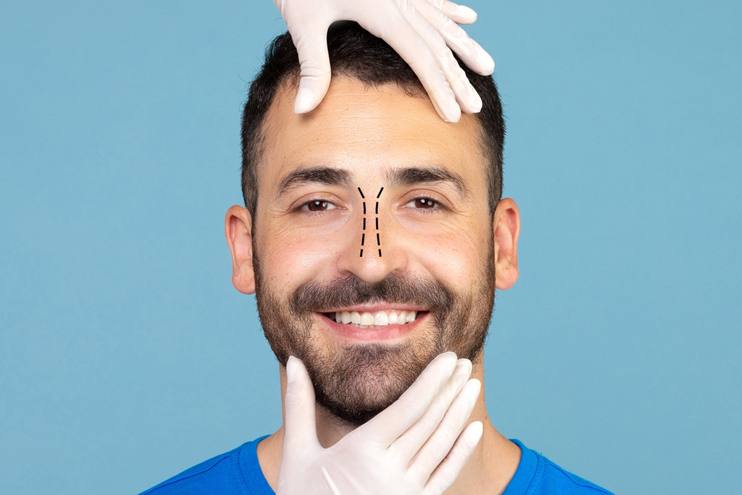
Rather than applying one method to everyone, rhinoplasty at Goodline is customized by nose type. Different concerns call different techniques, and often several are combined in a single operation. Documented approaches include:
- Alar (nostril) reduction for nostrils that are wide or flared, where the goal is to narrow the base of the nose.
- Low-nose correction using cartilage grafts to add height and definition to a bridge that sits low or flat, a common concern among many Asian and some Western patients.
- Structural rhinoplasty using rib (costal) cartilage for cases that need a stronger framework, such as significant augmentation or rebuilding.
- Tip refinement, which reshapes cartilage at the end of the nose to change how bulbous, drooping, or upturned the tip appears.
The reason customization matters is that skin thickness, cartilage strength, and the height of the existing bridge all influence what is realistically achievable. Thicker skin, for example, may soften fine definition, while thin skin can show underlying edges more readily. These factors can only be assessed properly during an in-person examination, which is why candidacy is always confirmed at consultation rather than promised online.
Materials Used in the Nose: Implants Versus Your Own Tissue
One of the most important decisions in rhinoplasty is what material is used to build or augment the nose. There are two broad categories, and each has genuine advantages and genuine downsides.
Synthetic implants
Medical-grade silicone and Gore-Tex (ePTFE) implants are widely used in Korea, particularly for augmenting the bridge. They are convenient, avoid a second surgical site, and give the surgeon predictable shaping material. However, implants are foreign devices, and honesty about their risks is essential:
- Infection can occur, sometimes months or years later, and may require removal of the implant.
- Extrusion, where an implant works its way toward the skin or nasal lining, is a recognized complication.
- Migration or shifting of the implant can change the shape over time.
- Implants are not lifetime devices. They may need to be removed or replaced in the future, and no implant should be described as permanent.
Autologous (your own) tissue
The alternative is to use your own tissue, most commonly cartilage (from the nasal septum, ear, or rib) or dermal-fat grafts. Because the material comes from your body, the risk of rejection and long-term implant-related problems is generally lower, and in the US many surgeons favor autologous cartilage for structural work. But this approach has its own trade-offs:
- It requires a donor site, such as the ear or rib, which means an additional incision, its own recovery, and a small scar.
- Rib cartilage can warp over time, changing the shape, and grafts can partially resorb (reabsorb), which may affect the long-term result.
Neither option is universally "better." The right choice depends on how much augmentation you need, your tissue quality, whether this is a first operation or a revision, and your own tolerance for the different risks. A balanced surgeon will walk you through both rather than defaulting to one.
How the Procedure Is Performed
Rhinoplasty at Goodline typically takes about one to three hours, depending on how much work is involved. A simple tip refinement sits at the shorter end; a structural rebuild with rib cartilage takes longer. Anesthesia may be local (sometimes with sedation) or general, and the choice depends on the complexity of the case and on your health and preferences, decided together with the surgical team.
Surgeons generally work through either a "closed" approach, with incisions hidden inside the nostrils, or an "open" approach, which adds a small incision across the columella (the strip of skin between the nostrils) to give fuller access for structural work. The technique is matched to the goals of the operation. Throughout, the aim is natural-looking reshaping that suits your face, not an exaggerated change.
The Rhinoplasty Recovery Timeline
Understanding the recovery timeline is especially important if you are traveling from the US, because it affects how long you should plan to stay and when you can fly home or return to work. The documented pattern for Goodline is as follows:
- Hospital stay: approximately one day, with follow-up visits scheduled at 1 week, 1 month, and 6 months.
- Splint removal: the external splint typically comes off around 5 to 7 days after surgery.
- Return to work: most people return to desk-type work in about 7 to 10 days, once the splint is off and the most visible swelling has settled.
- Final result: the nose continues to refine for a long time, and the final shape typically settles around one year after surgery as residual swelling fully resolves.
In the first days you can expect swelling and bruising, particularly around the eyes, and some congestion because of internal swelling. These are normal parts of healing, not complications. Because a good portion of swelling can linger for months, especially at the tip, patience is part of the process. If you are planning travel, it is wise to build in time for at least the early follow-up and splint removal before returning home, and to arrange the later follow-ups in a way that works for your situation.
Planning Your Trip From the US
Goodline Plastic Surgery is located in Apgujeong, Gangnam, Seoul, near Apgujeong Station Exit 4, and is a Registered Medical Institution for Attracting Foreign Patients certified by the Korean Ministry of Health and Welfare. The clinic was established in 2001 and offers basic English-language support, with online consultation available through its contact page.
For international patients, it helps to think in two phases: the surgical phase and the healing phase. Many patients plan their stay so that they are present for surgery, the early days of recovery, and splint removal, and then coordinate later follow-ups by return visit or remote check-in as appropriate. Because everyone heals differently, treat any timeline as a guide rather than a fixed promise, and confirm the details for your own case with the clinic.
Honest Risks and Realistic Expectations
Every surgery carries risk, and rhinoplasty is no exception. General risks include swelling, bruising, bleeding, infection, and reactions to anesthesia. Nose-specific concerns include asymmetry, changes in breathing, visible or palpable irregularities, and the possibility that you are not fully satisfied with the shape. When implants are used, infection, extrusion, and migration are specific risks to keep in mind, and implants may eventually need removal or replacement. When your own cartilage is used, the trade-offs are the donor site and the possibility of warping or partial resorption.
It is also important to be realistic about symmetry and outcome. Faces are naturally uneven, and results cannot be guaranteed to be perfectly symmetrical. Some patients ultimately consider revision surgery, whether because of a complication, a change in the shape over time, or a difference between their expectation and the result. Understanding this possibility in advance is part of making an informed decision, and it is one reason experienced surgeons emphasize conservative, structurally sound planning over dramatic promises.
Frequently Asked Questions
Is rhinoplasty in Korea suitable for Americans with different nose shapes?
Yes, rhinoplasty is customized to the individual regardless of background, and techniques are chosen to suit your specific anatomy and goals. Skin thickness, cartilage strength, and bridge height all influence the plan. The only way to know what is realistic for you is an in-person examination, so candidacy is confirmed at consultation rather than online.
How long should I stay in Seoul for nose surgery?
The documented pattern includes roughly a one-day stay for the procedure, with the splint removed around 5 to 7 days later and follow-ups at 1 week, 1 month, and 6 months. Many patients plan to be present through splint removal before traveling home. Because healing varies, confirm a timeline that fits your case directly with the clinic.
What is the difference between silicone implants and using my own cartilage?
Silicone or Gore-Tex implants avoid a second surgical site but carry risks such as infection, extrusion, and migration, and they are not lifetime devices. Your own cartilage lowers implant-related risks but requires a donor site and can warp or partially resorb over time. Neither is universally better; the right choice depends on your anatomy and goals.
When will I see my final rhinoplasty result?
Most visible swelling settles within the first few weeks, but the nose continues to refine for many months. The final shape typically settles around one year after surgery, particularly at the tip where swelling lingers longest. Patience is genuinely part of the process, and results vary from person to person.
Are the results of rhinoplasty permanent?
No result should be described as permanent or guaranteed. The nose can change subtly over time, implants are not lifetime devices, and grafts can shift or partially resorb. Some patients eventually consider revision surgery. Realistic expectations and sound structural planning matter more than promises of a fixed outcome.
Can rhinoplasty also improve my breathing?
Sometimes. When a structural issue such as a deviated septum contributes to breathing difficulty, it can be addressed as part of nasal surgery. However, cosmetic reshaping and functional correction are distinct goals that must be evaluated individually. Your surgeon will assess your airway during the examination and explain what is appropriate for you.
The Bottom Line
- Rhinoplasty is highly individualized: it is customized by nose type, and can combine alar reduction, low-nose correction with cartilage grafts, and structural work with rib cartilage.
- Both synthetic implants (silicone, Gore-Tex) and your own tissue (cartilage, dermal-fat grafts) are used, and each has honest trade-offs; implants are not lifetime devices.
- Plan for surgery of roughly one to three hours, splint removal at 5 to 7 days, a return to work around 7 to 10 days, and a final result that settles around one year.
- Risks such as infection, asymmetry, implant extrusion or migration, and the possibility of revision are real; results vary and cannot be guaranteed.
- Candidacy and the right technique for you can only be determined by an in-person examination with a qualified surgeon.
Disclaimer: This article is for general educational purposes only and is not a self-diagnosis tool. It does not replace a personal consultation with a qualified physician. Only an in-person examination can determine whether a specific procedure is appropriate for you, and individual results vary. If you have concerns about your health or a planned procedure, seek advice from a licensed medical professional.
References
- Rhinoplasty — American Society of Plastic Surgeons
- Rhinoplasty — StatPearls, NCBI Bookshelf
- Anatomy, Head and Neck, Nose — StatPearls, NCBI Bookshelf
- Septoplasty — American Society of Plastic Surgeons
More Articles
Continue reading our clinical guides.

Revision Rhinoplasty in Seoul: What US Patients Should Know
Revision rhinoplasty in Seoul for US patients: why secondary nose surgery is harder, what recovery looks like, honest expectations, and Goodline's plan.
Learn More
Rejuran vs RE20 vs Juvelook Volume: Skin Boosters Compared
Three injectables that look alike on a clinic menu and solve three unrelated problems. Hydration, repair and volume differ in timeline and in results.
Learn More

Primary vs Revision Rhinoplasty: The Differences That Matter
A second nose operation is not the first one repeated. Scar tissue, longer operating time and a result that takes a year change what you should expect.
Learn More