Natural-Looking Face & Neck Lift Surgery and Personalized Anti-Aging Care in Apgujeong, Gangnam, Seoul
4.1 ★ Google · Board-Certified Plastic Surgeon
en-US

Medical Guide
SMAS Facelift in Korea: Technique, Recovery, Timeline
A SMAS facelift lifts and repositions deeper facial tissue, not just skin. Learn how the technique works, its recovery, and candidacy at Goodline Seoul.
Schedule a Consultation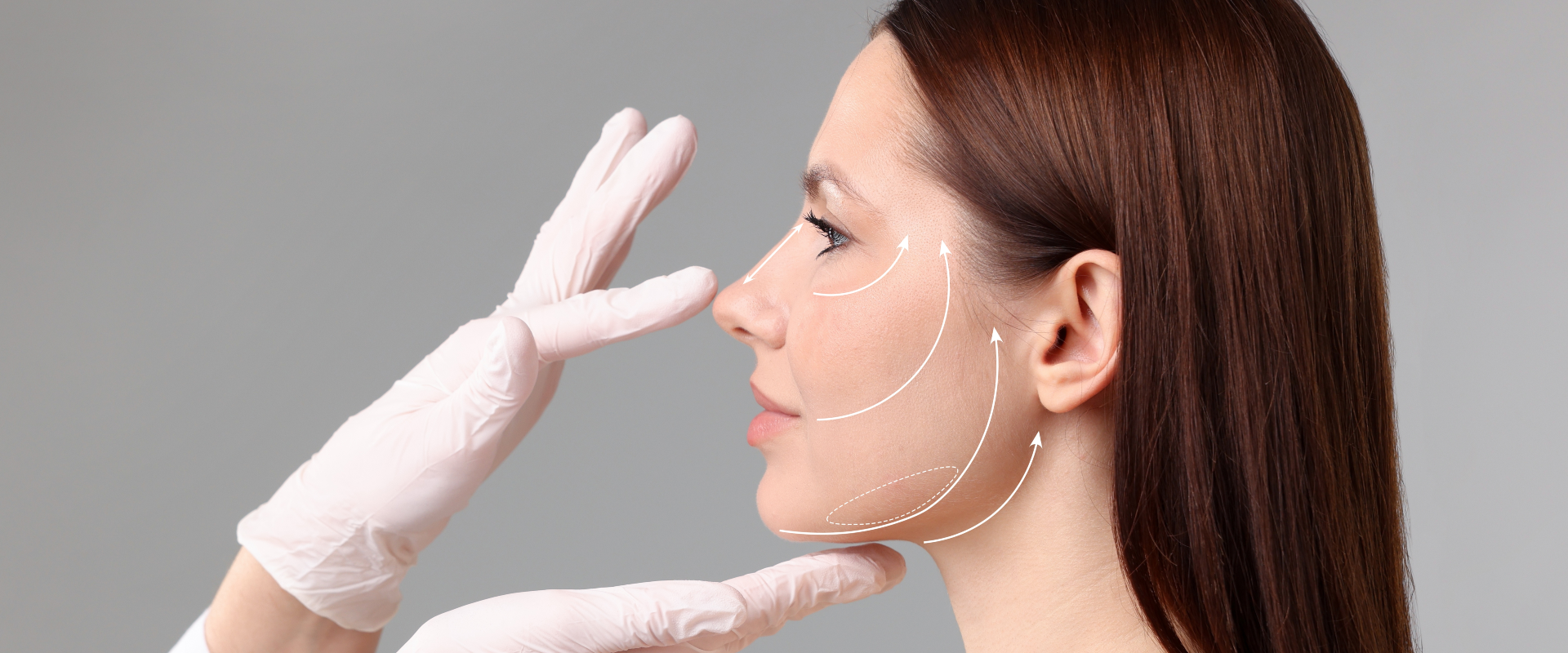
SMAS Facelift in Korea: Technique, Recovery, and Timeline
Medically reviewed by Dr. Choi Deokho, Board-Certified Plastic Surgeon, Representative Director, Goodline Plastic Surgery
A facelift is one of the most recognizable procedures in aesthetic surgery, but the word covers several different techniques. The version most closely associated with lasting, natural-looking rejuvenation is the SMAS facelift — an operation that works below the skin, on the deeper support layer of the face, rather than simply pulling the skin tighter. This guide explains what the SMAS is, how the surgery works, who tends to be a candidate, how it compares with a thread lift, and what recovery generally involves. As with any surgery, the details that matter most for you personally are settled at an in-person examination, not from an article.
What Is the SMAS?
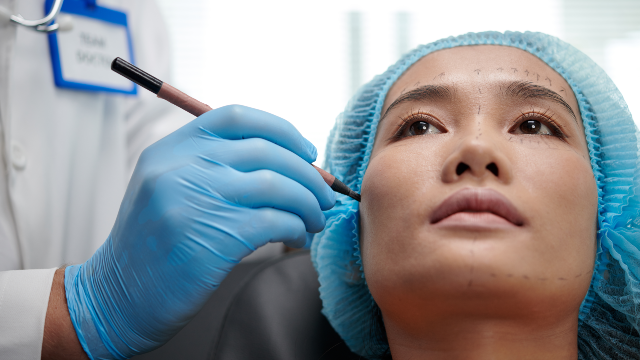
To understand a SMAS facelift, it helps to know what the SMAS actually is. SMAS stands for the superficial musculoaponeurotic system — a continuous, fibrofatty layer of tissue that sits beneath the skin and fat of the face and connects to the muscles of facial expression. Think of it as a supportive sheet that gives the mid and lower face much of its structure.
As the face ages, this layer loosens and descends along with the skin and fat above it. That downward drift is a major reason why jowls form along the jawline, why the folds between the nose and mouth deepen, and why the neckline softens. Because the SMAS is a driver of these changes, addressing it — rather than only tightening the skin on the surface — is central to modern facelift surgery.
This is an important distinction. A "skin-only" tightening pulls the outer layer taut but leaves the deeper structure sagging, which tends to look pulled and to relax again relatively quickly. A SMAS facelift repositions the deeper support layer and then re-drapes the skin over it without tension. The result generally looks more natural and tends to hold better, precisely because the surgery corrects the layer where much of the aging happens.
How a SMAS Facelift Works at Goodline
At Goodline Plastic Surgery, the facelift approach lifts and repositions the SMAS layer along with the overlying skin. In practical terms, the surgeon makes incisions typically placed around the ear and hairline where healing scars are least conspicuous, gains access to the SMAS, then tightens or repositions that layer to restore support to the cheeks, jawline, and lower face. Excess skin is then trimmed conservatively and re-draped, avoiding the over-tightened look that comes from relying on skin tension alone.
A SMAS facelift can be performed under local anesthesia with sedation or under general anesthesia, depending on the extent of the plan and individual factors, and it commonly takes several hours to complete. The exact time varies with how much of the face and neck is being addressed and whether any procedures are combined.
It is worth being precise about terminology, because facelift categories are often blurred in marketing. Within the broader field there are different technical approaches to the SMAS — for example, plication and imbrication techniques, extended SMAS dissections, and the deep-plane facelift, which releases and lifts tissue at a deeper level. These exist as general surgical categories, and you may encounter them while researching. Goodline's documented offering is a SMAS facelift, and this article describes that. The specific technique, the extent of dissection, and every detail of your plan are determined by your surgeon at examination — so if you have read about a particular named variation, that is a good thing to discuss directly during consultation rather than to assume in advance.
Facelift Candidacy: Is Age the Deciding Factor?
People often ask about a "right age" for a facelift, but facelift candidacy depends far more on the tissues than on the number on a birthday card. The typical candidate has noticeable laxity of the mid or lower face — jowls, a softened jawline, deepening folds, or a loose neckline — that has progressed beyond what non-surgical treatments can meaningfully address.
Good candidates are generally in good overall health, do not smoke or are willing to stop around the surgical period (smoking meaningfully impairs healing and raises complication risk), and hold realistic expectations. Skin quality, bone structure, the degree of descent, and general health all weigh into whether surgery is appropriate and what technique makes sense. Some people in their forties have enough laxity to benefit, while others are better served by waiting or by less invasive options; conversely, healthy candidates well into later decades can be suitable. There is no single facelift candidacy age that applies to everyone.
A facelift also does not do everything. It repositions sagging tissue, but it does not by itself improve skin texture, fine surface lines, pigmentation, or lost volume. For those concerns, surgeons often discuss complementary treatments. And a facelift does not stop aging — it improves a starting point, after which the face continues to change over time. An honest consultation will make clear what surgery can and cannot achieve for you.
Facelift vs Thread Lift: An Honest Comparison
One of the most common questions is facelift vs thread lift — and the honest answer is that they are different tools for different situations, not interchangeable versions of the same thing.
A thread lift is a minimally invasive procedure. Fine absorbable threads are placed under the skin, usually under local anesthesia, to provide a modest lift and to encourage some tissue response. It involves no significant incisions, downtime is generally short, and it appeals to people who want a subtle change with less recovery. But its effects are limited and temporary: the threads are absorbed over time, and the lift gradually relaxes over months. A thread lift is not a surgical facelift and does not replace one. It cannot reposition the SMAS or remove excess skin, so it is best suited to earlier or milder laxity, or as a lighter-touch option for people who are not seeking surgery.
A SMAS facelift is, by contrast, an operation. It addresses the deeper support layer, allows redundant skin to be removed, and generally produces a more substantial and longer-lasting change — at the cost of a real surgery, real anesthesia, real recovery, and real surgical risk. Neither option is "better" in the abstract. The right choice depends on how much laxity you have, what change you want, and how much downtime and intervention you are prepared to accept. For significant jowling and neck laxity, a thread lift will usually underdeliver; for mild early changes, a facelift may be more than is needed. A surgeon who examines you can explain which category actually fits.
Whatever the option, results vary between individuals and are never guaranteed or permanent.
Honest Risks of a SMAS Facelift
A facelift is major surgery, and informed consent means understanding the risks. General surgical risks include bleeding and hematoma (collection of blood under the skin, one of the more common early complications, sometimes requiring a return to theatre), infection, poor or widened scarring, and delayed wound healing — the last markedly more likely in smokers.
Facelift-specific risks deserve emphasis. Nerve injury is a recognized possibility: temporary weakness of facial-expression muscles can occur if a branch of the facial nerve is affected, and while this is usually temporary, permanent injury is rare but possible; altered skin sensation, especially around the ears, is also common early on and usually improves. Asymmetry between the two sides can occur, because faces are not symmetrical to begin with and heal individually — a perfectly symmetrical result cannot be promised. Other possibilities include skin-edge healing problems (again, more likely with smoking), hair loss near incisions, prolonged swelling, and the potential need for revision. Over the longer term, aging continues and tissues gradually relax again, so a facelift does not freeze the face permanently.
No ethical surgeon promises a specific, permanent, or flawless outcome. Results vary, and a candid discussion of these risks is part of deciding whether surgery is right for you.
SMAS Facelift Recovery and Timeline

SMAS facelift recovery varies considerably from person to person, so the following is a general orientation rather than a fixed schedule. Because Goodline's specific recovery and travel windows are set individually, confirm your own timeline at consultation.
In the first days to a week, expect swelling and bruising, some tightness, and possibly a dressing or supportive garment as directed. Keeping the head elevated and following aftercare instructions help manage swelling. Discomfort is usually manageable with prescribed measures. Drains, if used, and sutures are attended to on a schedule your surgeon defines.
Over the first couple of weeks, bruising fades and the more obvious swelling settles, although the face can still feel tight or numb in places. Many people begin returning to lighter routines during this window, while avoiding strenuous activity, bending, and heavy lifting for a period defined by your surgeon.
From several weeks to a few months, residual swelling continues to resolve and the tissues soften and settle into their new position; scars mature and fade gradually, and this can take months. Sun protection supports scar healing. The final appearance emerges gradually rather than all at once.
Because a facelift is more involved than a minor procedure, international patients should plan a realistic stay that allows for early follow-up before traveling home, and should build in flexibility. Rather than relying on generic figures, discuss a personalized recovery and travel plan with the clinic.
Planning Your Consultation
Goodline Plastic Surgery is located in the Apgujeong area of Gangnam, Seoul, near Apgujeong Station Exit 4, and has operated since 2001. It is a Registered Medical Institution for Attracting Foreign Patients certified by the Korean Ministry of Health and Welfare (MOHW) and offers basic English-language support, with online consultation available through its contact page. Reviewing surgeon Dr. Choi Deokho is a board-certified plastic surgeon (성형외과전문의) under the Korean plastic-surgery specialty certification, with a focus that includes anti-aging and lifting procedures.
If you are considering Korean facelift surgery, the most useful next step is a consultation where your facial anatomy, skin, health, and goals can be assessed and a suitable technique — or a non-surgical alternative — discussed candidly. You can begin with an online consultation and share your history and photographs before deciding on anything. Learn more at the Goodline Plastic Surgery website or get in touch through the contact page.
Frequently Asked Questions
How long does a SMAS facelift take?
A SMAS facelift commonly takes several hours, depending on how much of the face and neck is being addressed and whether other procedures are combined. It can be performed under local anesthesia with sedation or under general anesthesia. The precise plan, including anesthesia, is decided with your surgeon before surgery.
Is a SMAS facelift better than a thread lift?
They are different tools rather than better-or-worse versions of one procedure. A thread lift is minimally invasive with short downtime but a limited, temporary effect, suited to milder laxity. A SMAS facelift is surgery that repositions the deeper support layer for a more substantial, longer-lasting change, at the cost of real recovery and surgical risk.
What is the best age for a facelift?
There is no single best age. Candidacy depends on the degree of facial laxity, skin quality, general health, and your goals far more than on your exact age. Some people benefit earlier and others later, which is why an examination, not a birthday, decides suitability.
How long is recovery after a SMAS facelift?
Recovery varies by individual. Swelling and bruising are usually most noticeable in the first week, then ease over the following couple of weeks, while residual swelling and scar maturation continue over several weeks to a few months. Because Goodline sets recovery and travel windows individually, confirm your own timeline at consultation.
What are the main risks of a facelift?
Risks include bleeding and hematoma, infection, poor or widened scarring, temporary or rarely permanent nerve injury, altered sensation, asymmetry, healing problems (especially in smokers), and the possible need for revision. Serious complications are uncommon but not zero. A candid discussion of these risks is part of deciding whether surgery is right for you.
Are facelift results permanent?
No. A facelift improves your starting point, but aging continues and the tissues gradually relax again over the years that follow. Results vary between individuals and cannot be described as permanent or guaranteed.
Does a facelift improve skin texture or dark spots?
Not on its own. A facelift repositions sagging tissue but does not by itself treat fine surface lines, pigmentation, or lost volume. Surgeons often discuss complementary treatments for those concerns, tailored to what you actually need.
The Bottom Line
- A SMAS facelift works on the deeper support layer of the face, not just the skin, which is why it tends to look natural and hold better than skin-only tightening.
- At Goodline the procedure lifts and repositions the SMAS and skin, under local sedation or general anesthesia, commonly over several hours.
- Candidacy depends on facial laxity, skin, and health rather than a specific age; a thread lift is a lighter, temporary, non-surgical alternative, not a replacement.
- Honest risks include hematoma, nerve injury, scarring, asymmetry, and possible revision; results vary and are not permanent.
- Only an in-person examination can determine the right technique — or whether surgery is appropriate at all — for you.
This article is for general education and is not a self-diagnosis tool. It does not replace a personal consultation with a qualified plastic surgeon, and it does not establish a doctor-patient relationship. Decisions about facelift surgery, candidacy, and technique should be made with a licensed surgeon after an in-person examination. Individual results vary.
References
- Cervicofacial Rhytidectomy — StatPearls, NCBI Bookshelf
- Anatomy, Skin, Superficial Musculoaponeurotic System (SMAS) Fascia — StatPearls, NCBI Bookshelf
- Extended SMAS Facelift — StatPearls, NCBI Bookshelf
- Facelift (Rhytidectomy) — American Society of Plastic Surgeons
- Thread Lift — American Society of Plastic Surgeons
More Articles
Continue reading our clinical guides.

Revision Rhinoplasty in Seoul: What US Patients Should Know
Revision rhinoplasty in Seoul for US patients: why secondary nose surgery is harder, what recovery looks like, honest expectations, and Goodline's plan.
Learn More
Rejuran vs RE20 vs Juvelook Volume: Skin Boosters Compared
Three injectables that look alike on a clinic menu and solve three unrelated problems. Hydration, repair and volume differ in timeline and in results.
Learn More

Primary vs Revision Rhinoplasty: The Differences That Matter
A second nose operation is not the first one repeated. Scar tissue, longer operating time and a result that takes a year change what you should expect.
Learn More