Natural-Looking Face & Neck Lift Surgery and Personalized Anti-Aging Care in Apgujeong, Gangnam, Seoul
4.1 ★ Google · Board-Certified Plastic Surgeon
en-US

Medical Guide
Stem Cell Breast Augmentation in Korea: An Honest Look
So-called stem cell breast augmentation is fat transfer to the breast. Learn what is proven, what is investigational, and Goodline Seoul's approach here.
Schedule a Consultation
Stem Cell Breast Augmentation in Korea: An Honest Look
Medically reviewed by Dr. Choi Deokho, Board-Certified Plastic Surgeon, Representative Director, Goodline Plastic Surgery
"Stem cell breast augmentation" is a phrase that promises a lot: natural enlargement using your own cells, no implants, no synthetic material. It is an appealing idea, and it is marketed widely. But the term hides more than it explains, and anyone considering it deserves a clear, honest account of what it actually is, what part of it is scientifically established, and what part is not.
This article aims to give you that account. In plain terms, what is usually called "stem cell breast augmentation" is autologous fat transfer to the breast — moving your own fat from one part of the body to the breast — sometimes described as "cell-enriched" or "stem-cell-enriched." The critical point, stated up front, is that the cell-enrichment step is investigational and not approved by the U.S. Food and Drug Administration (FDA). We will explain what that means, describe how fat transfer to the breast works, lay out the honest limitations and risks, compare it neutrally with implants, and note how Goodline Plastic Surgery in Seoul approaches this through its Stem Cell Center. This is cosmetic augmentation; breast reconstruction after cancer surgery is a separate medical matter and is not the subject here. Candidacy can only be determined by an in-person examination.
The Regulatory Reality: What Is and Isn't Approved
This section is the most important one, so it comes first.
Autologous fat grafting itself is an established clinical technique. Moving a person's own fat from one area of the body to another is a recognized part of plastic surgery, and fat transfer to the breast is described by professional bodies as one option for a relatively modest, natural-looking increase in breast size.
The "stem cell" part is where the caution lies. Adipose-derived (fat-derived) stem-cell therapy is not FDA-approved, and cell-enriched or "stem-cell-enriched" fat grafting to the breast is considered investigational and unproven in the United States. The FDA has issued consumer warnings about stem cell products marketed directly to patients, noting that many are offered without adequate evidence of safety or effectiveness and that some have caused serious harm. The FDA has specifically warned patients not to assume a treatment is safe simply because the cells come from their own body.
In other words, the fat transfer can be a legitimate procedure; the added claim that enriching the graft with stem cells makes it work better, or produces a superior result, is not something that has been established to regulatory standards. When you see "stem cell breast augmentation," it is honest to read it as "fat transfer to the breast, with an investigational cell-enrichment step that is not FDA-approved." Being clear-eyed about that distinction is the foundation of an informed decision.
How Fat Transfer to the Breast Actually Works
Setting the terminology aside, the underlying mechanism is fat grafting, and it follows a recognizable sequence.
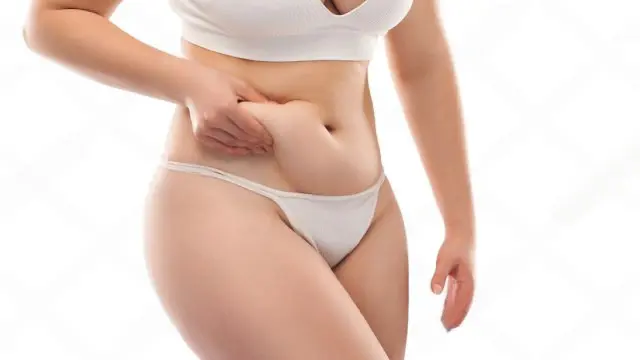
First, fat is harvested from a donor area where you have excess — commonly the abdomen, flanks, or thighs — using liposuction. Second, the harvested fat is processed and purified so that the material to be reinjected is as viable as possible. Third, the prepared fat is injected in small amounts into the breast tissue, layered carefully to build volume and shape rather than concentrated in one place.
Grafted fat survives only if it develops a blood supply in its new location. This single fact drives most of the limitations discussed below. It is why surgeons place fat gradually and conservatively rather than overfilling, and it is why the volume achievable in one session is limited. The "cell-enriched" versions add a step in which the graft is combined with cells derived from processed fat, on the theory that this improves survival — but, as noted, that step is investigational and has not been established as effective or approved.
Honest Limitations You Should Weigh
Fat transfer to the breast has real constraints, and an honest discussion of them is essential.
Modest, limited volume gain per session. Fat transfer is generally suited to a relatively small increase in size, not a dramatic one. Professional guidance describes it as an option for women seeking a modest change and a natural result, not for those wanting a large increase.
Partial resorption. A portion of the transferred fat is reabsorbed by the body over the following weeks and months, because not every fat cell establishes a blood supply. The amount that remains varies between individuals and cannot be promised in advance.
Possible repeat sessions. Because of resorption and the limited volume per session, reaching a desired result may require more than one procedure over time. This should be part of your expectation from the outset.
Imaging considerations. Fat grafting can lead to fat necrosis, oil cysts, or calcifications in the breast where grafted fat does not survive. These are important because they can appear on mammograms and other breast imaging and may need to be distinguished from other findings. Anyone considering this procedure should discuss their mammography and breast-cancer screening plan with a physician, both before and after treatment, so that imaging is interpreted correctly.
Other surgical risks. As with any procedure involving liposuction and injection, there is a risk of infection, bruising, swelling, contour irregularity, asymmetry, and the general risks of surgery and anesthesia.
No specific cup size can be guaranteed, the result is not permanent, and outcomes vary from person to person. Any claim that this procedure is "permanent," delivers a guaranteed size, or is categorically "safer" than implants should be treated with skepticism.
Stem Cell Fat Transfer vs Implants: A Neutral Comparison
Patients often frame this as a contest between "natural" fat transfer and "artificial" implants. It is more useful to see them as different tools with different trade-offs, neither universally better.
Fat transfer uses your own tissue, avoids a synthetic device, and can also slim the donor area. Its trade-offs are the ones above: limited volume per session, partial resorption, possible repeat procedures, and imaging considerations. It tends to suit people who want a modest, natural change and who accept an uncertain final volume.
Breast implants can achieve a larger and more predictable increase in size in a single operation. Their trade-offs are different: implants are medical devices that are not lifetime devices and may need to be replaced or removed over the years, and they carry their own recognized risks, including capsular contracture, rupture, and other device-related complications, as well as the risks of surgery. Implant surgery is a well-established procedure, but "well-established" is not the same as "permanent" or "risk-free."
The honest summary is that fat transfer generally offers a smaller, more natural change with an uncertain volume and possible repeat sessions, while implants offer a larger, more predictable change with a device that is not permanent and has its own risk profile. Which is more appropriate depends entirely on your goals, anatomy, and tolerance for each set of trade-offs — a decision for an in-person consultation, not a slogan.
How Goodline Approaches This
Goodline Plastic Surgery offers fat-transfer-based breast augmentation through its dedicated Stem Cell Center, one of the clinic's specialty centers. In keeping with the honest framing throughout this article, it is worth restating that the cell-enrichment described by "stem cell" terminology is investigational and not FDA-approved, and that the well-established component is the autologous fat grafting itself.
What a responsible approach looks like in practice is a careful consultation in which your goals are matched against what fat transfer can realistically deliver, your donor fat and breast anatomy are assessed, your general health is reviewed, and the limitations — modest volume, resorption, possible repeat sessions, and imaging considerations — are discussed openly rather than glossed over. It also means a candid conversation about whether fat transfer or an implant-based approach better fits your goals, and whether you are a candidate at all. Results vary, and no specific outcome can be promised.
Are You a Candidate?
A suitable candidate for fat transfer to the breast generally wants a modest, natural-looking increase rather than a large one, has enough donor fat to harvest, is in good overall health, does not smoke or is willing to stop around the surgical period, and understands that the result is uncertain in volume and may require more than one session.
People wanting a large increase in a single step, those with insufficient donor fat, and those who are not prepared for the imaging considerations or the possibility of repeat procedures may be better served by a different approach or may not be candidates. This is also a good moment to separate cosmetic augmentation from breast reconstruction after cancer treatment, which is a distinct medical situation handled differently. Candidacy cannot be judged from a photograph; it requires a hands-on examination and a review of your health and screening history.
Planning Your Consultation
Goodline Plastic Surgery is a plastic surgery clinic in the Apgujeong area of Gangnam, Seoul, near Apgujeong Station Exit 4. The clinic was established in 2001 and is a Registered Medical Institution for Attracting Foreign Patients certified by Korea's Ministry of Health and Welfare (MOHW), with dedicated specialty centers including a Stem Cell Center. Reviewing surgeon Dr. Choi Deokho is a board-certified plastic surgeon (성형외과전문의) under the Korean plastic-surgery specialty certification.
For international patients, the clinic provides basic English-language support and online consultation through its contact page, so you can share your history and questions before deciding on anything. If you are considering fat transfer to the breast, the most useful next step is a consultation where your goals, anatomy, health, and screening history can be assessed and the realistic options — including implants or a decision not to proceed — discussed candidly. You can learn more at the Goodline Plastic Surgery website or reach out through the contact page.
Frequently Asked Questions
Is "stem cell breast augmentation" FDA-approved?
The autologous fat grafting at its core is an established clinical technique, but the cell-enrichment implied by "stem cell" terminology is investigational and not FDA-approved. Adipose-derived stem-cell therapy has not been established as safe and effective to regulatory standards for this use. The FDA has warned consumers not to assume a treatment is safe simply because the cells come from their own body.
How is this different from ordinary fat transfer to the breast?
In practice, "stem cell breast augmentation" is fat transfer to the breast, sometimes with an added step that combines the graft with cells processed from fat. The fat-grafting mechanism is the same: harvest fat by liposuction, process it, and inject it into the breast. The added cell-enrichment step is the part that is investigational and unproven, rather than the fat transfer itself.
Will it give me a specific cup size?
No specific cup size can be guaranteed. Fat transfer generally provides a modest, natural-looking increase rather than a large one, and a portion of the transferred fat is resorbed over the following months. Because of this, more than one session is sometimes needed, and the final volume is uncertain and varies between individuals.
Can fat transfer affect my mammograms?
It can. Fat grafting may lead to fat necrosis, oil cysts, or calcifications where grafted fat does not survive, and these can appear on breast imaging. This makes it important to discuss your mammography and breast-cancer screening plan with a physician before and after treatment, so that imaging findings are interpreted correctly. This is a key point to raise at consultation.
Is fat transfer safer than implants?
They are different tools with different trade-offs rather than one being simply safer. Fat transfer avoids a synthetic device but offers limited, uncertain volume and imaging considerations, while implants offer a larger, more predictable change but are not lifetime devices and carry their own risks. Which is more appropriate depends on your goals and anatomy, decided at an examination.
Is this the same as breast reconstruction?
No. This article is about cosmetic augmentation, whereas breast reconstruction after cancer surgery is a separate medical situation with different goals and considerations. Although fat grafting techniques are used in both contexts, they should not be conflated. If your situation involves reconstruction, that is a distinct conversation with an appropriate surgical team.
The Bottom Line
- "Stem cell breast augmentation" is essentially autologous fat transfer to the breast; the cell-enrichment step is investigational and not FDA-approved.
- Autologous fat grafting itself is an established technique, but it offers only a modest, uncertain volume increase, and some transferred fat is resorbed.
- Repeat sessions are sometimes needed, and fat necrosis, oil cysts, or calcifications can affect breast imaging — discuss mammography and screening with a physician.
- No specific cup size, permanence, or "safer than implants" claim is warranted; implants are a different tool with their own risks and are not lifetime devices.
- Candidacy, and the choice between fat transfer and other options, can only be determined by an in-person examination with a qualified surgeon.
This article is for general educational purposes only and is not a substitute for professional medical advice, diagnosis, or treatment. It is not a self-diagnosis tool. Always consult a qualified healthcare provider about your individual situation before making any decision about surgery. Results vary from person to person, and no specific outcome is promised or guaranteed.
References
- Consumer Alert on Regenerative Medicine Products Including Stem Cells and Exosomes (FDA)
- FDA Warns About Stem Cell Therapies (FDA)
- Fat Transfer Breast Augmentation (American Society of Plastic Surgeons)
- Fat Transfer Breast Augmentation Risks and Safety (American Society of Plastic Surgeons)
- Breast Fat Necrosis (StatPearls, NCBI Bookshelf)
More Articles
Continue reading our clinical guides.

Revision Rhinoplasty in Seoul: What US Patients Should Know
Revision rhinoplasty in Seoul for US patients: why secondary nose surgery is harder, what recovery looks like, honest expectations, and Goodline's plan.
Learn More
Rejuran vs RE20 vs Juvelook Volume: Skin Boosters Compared
Three injectables that look alike on a clinic menu and solve three unrelated problems. Hydration, repair and volume differ in timeline and in results.
Learn More

Primary vs Revision Rhinoplasty: The Differences That Matter
A second nose operation is not the first one repeated. Scar tissue, longer operating time and a result that takes a year change what you should expect.
Learn More