Natural-Looking Face & Neck Lift Surgery and Personalized Anti-Aging Care in Apgujeong, Gangnam, Seoul
4.1 ★ Google · Board-Certified Plastic Surgeon
en-US

Medical Guide
Under-Eye Fat Repositioning: A Guide for Tired Eyes
Tired-looking eyes from under-eye bags? Learn how under-eye fat repositioning works at Goodline Plastic Surgery in Seoul, Korea, and who is a candidate.
Schedule a Consultation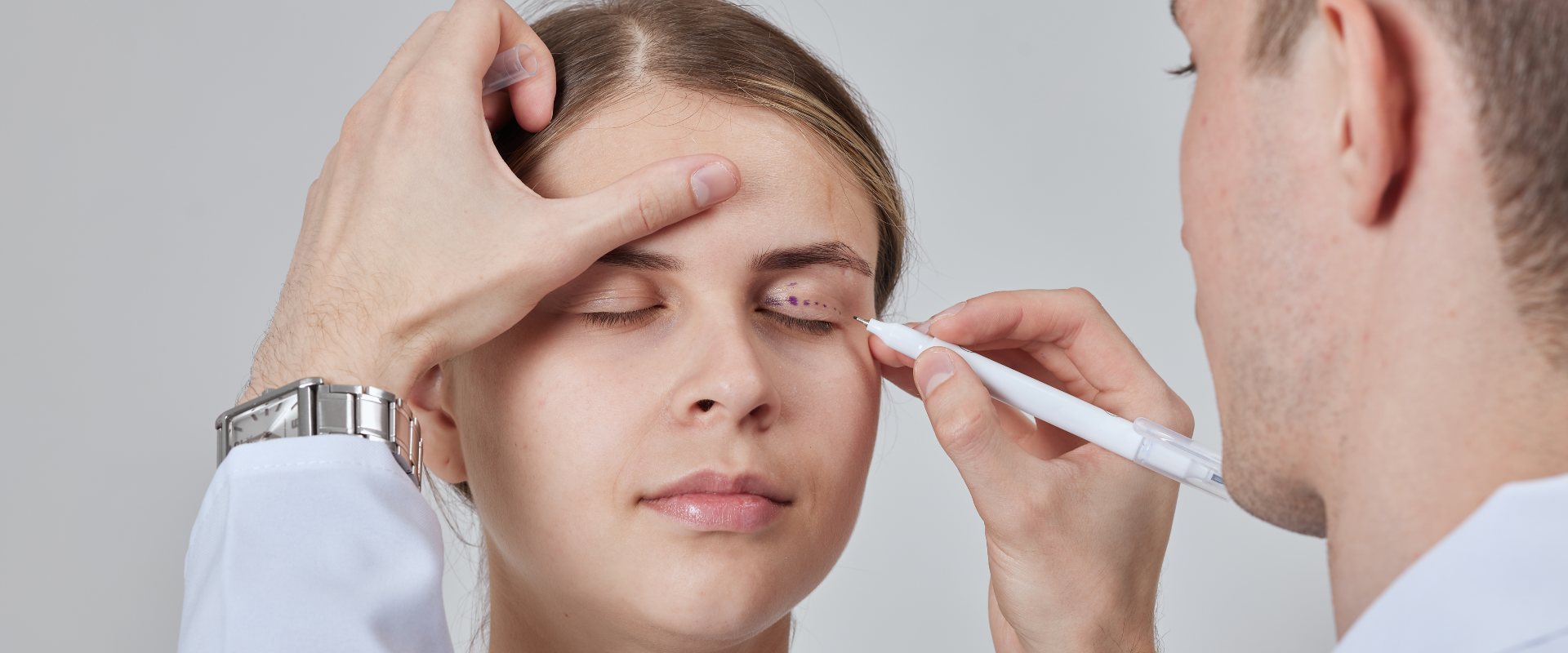
Under-Eye Fat Repositioning: A Guide for Tired-Looking Eyes
Medically reviewed by Dr. Choi Deokho, Board-Certified Plastic Surgeon, Representative Director, Goodline Plastic Surgery
If people keep telling you that you look tired even when you feel fine, the reason often sits just under your eyes. Puffiness, shadows, and a groove where the lower lid meets the cheek can make the whole face read as fatigued. Under-eye fat repositioning is a surgical approach designed to address these changes not just by removing fat, but by moving it to smooth the transition between the lower eyelid and the cheek.
This guide explains what under-eye fat repositioning is, how it differs from simply taking fat out, how the procedure is approached at Goodline Plastic Surgery in Seoul, and who may or may not be a good candidate. We will be honest throughout: this is real surgery with real trade-offs, results vary from person to person, and candidacy can only be confirmed by an examination.
What Causes the "Tired" Under-Eye Look?
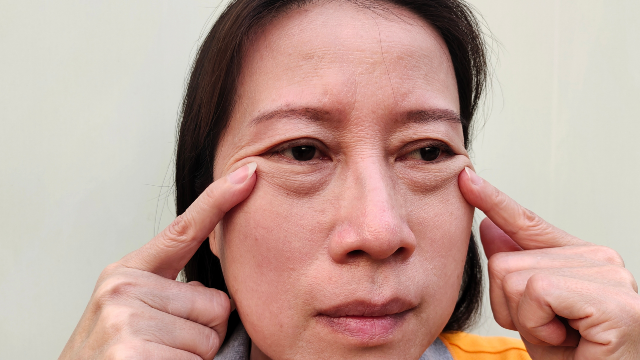
The area beneath the eyes changes with age in a way that has less to do with tiredness and more to do with anatomy. In youth, the lower lid transitions smoothly into the cheek. Over time, several things shift at once.
The small pockets of fat that cushion the eye (the orbital fat) can bulge forward and become more visible, creating what people commonly call "eye bags." At the same time, the ligaments and tissues that hold everything in place loosen, and the underlying facial bone and soft tissue gradually change shape. The result is often a combination of a bulge (the bag) sitting above a groove (the tear-trough hollow), which together cast shadows and create that persistently tired appearance.
This is why simply removing fat is not always the best answer. If the bulge is taken out but the hollow beneath it remains, the under-eye area can end up looking flat, hollow, or even more aged. Understanding whether your concern is mainly puffiness, mainly hollowness, or a mix of both is central to choosing the right approach, and that is something a surgeon assesses in person.
Repositioning Versus Simply Removing Fat
For many years, lower eyelid surgery focused on removing excess fat to flatten the bags. That can work well for some people, but for others it leaves the tear-trough hollow untreated and can accentuate a gaunt look over time.
Fat repositioning takes a different view. Instead of only removing the bulging orbital fat, the surgeon can release and reposition that fat downward and outward, using it to fill the groove below. This addresses the skeletal and orbital aging of the whole under-eye region rather than treating the bag in isolation. The goal is a smoother, more even transition from lid to cheek, so the area looks rested rather than simply deflated.
At Goodline Plastic Surgery, the approach reflects this philosophy. Rather than treating an under-eye bag as excess fat to be discarded, the aim is to work with the orbital fat and reposition it into the lower-eyelid compartments so the contour is smoothed and the underlying aging is addressed. Whether repositioning, conservative removal, or a combination is appropriate depends entirely on your anatomy.
The Transconjunctival Approach: No External Scar
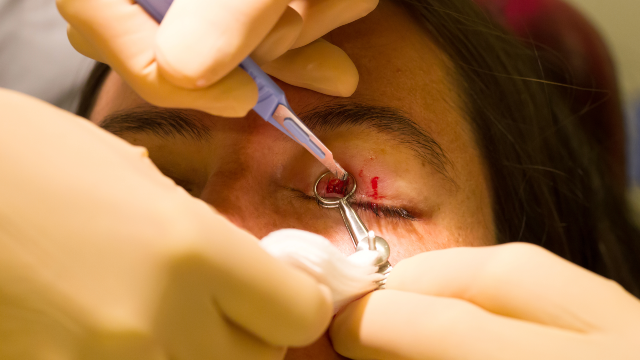
One of the features of this surgery worth understanding is where the incision is made.
In the transconjunctival approach, the surgeon accesses the lower-eyelid fat from inside the eyelid, through the conjunctiva (the pink inner lining of the lid), rather than through the skin on the outside. Because there is no external skin incision, this approach leaves no visible scar on the surface of the lower lid. Medical references on transconjunctival blepharoplasty describe exactly this: the deeper structures, including the orbital fat and the orbital septum, are addressed without a skin incision.
Working through the inside of the lid also tends to disturb the outer lid support less than a skin incision does, which is one reason the transconjunctival route is often favored for people whose main concern is fat rather than large amounts of excess skin. That said, it is not right for everyone; people with significant loose lower-lid skin may need a different or combined approach, which is again a matter for individual assessment.
How the Procedure Works at Goodline
Every plan is individual, but the general framework for under-eye fat repositioning at Goodline tends to follow these steps.
Consultation and examination. Dr. Choi Deokho and the team examine your lower lids and the surrounding area, assess the balance of bulging fat versus hollowing, check the tone and support of the lower lid, and discuss what specifically bothers you. This exam is what determines whether you are a candidate and which technique suits you.
Anesthesia. Under-eye fat repositioning is typically performed under local anesthesia combined with light intravenous ("twilight") sedation for comfort. In some cases general anesthesia may be used. The right choice for you is discussed beforehand.
Access. The surgeon reaches the orbital fat through the transconjunctival route, from inside the lower eyelid, so there is no external scar.
Repositioning. Rather than only removing fat, the surgeon releases the orbital fat and repositions it to smooth the contour, redistributing it across the lower-eyelid compartments to fill the groove and address the transition to the cheek. A technique sometimes described as passive septum banding may be used as part of holding the repositioned tissue in place. Where a small amount of fat does need to be reduced, that is done conservatively, with the aim of a natural contour rather than a hollowed one.
The specific combination of repositioning and conservative removal is tailored to what your lids need, which is why no two procedures are identical.
Recovery and What to Expect
Recovery from any eyelid surgery involves an initial period of swelling and bruising around the eyes, and under-eye fat repositioning is no exception. In the early phase it is common to have puffiness and some discoloration in the treated area, which then eases over time.
We want to be transparent here: the precise day-by-day recovery timeline for this specific procedure is something best discussed with you individually rather than promised as a fixed schedule, because it depends on your anatomy, the extent of the work, and how you heal. What we can say generally is that swelling and bruising are expected early on, that keeping the head elevated and following your surgeon's aftercare instructions supports healing, and that the final contour continues to settle as swelling resolves over the following weeks.
Because everyone heals differently, judging the result too early can be misleading. Follow-up visits are the appropriate place to track your progress and raise any concerns. We deliberately avoid quoting a guaranteed "return to normal" date, because doing so would overstate what can honestly be predicted.
Risks and Realistic Limits
Under-eye fat repositioning is surgery, and like all surgery it carries risks that deserve honest discussion. Possible risks and limitations include:
- Swelling and bruising, which are expected in the early recovery period and vary in duration.
- Asymmetry between the two sides, since faces are naturally asymmetric and perfect matching cannot be guaranteed.
- Under-correction or over-correction, where too little or too much fat is repositioned or removed, sometimes requiring further adjustment.
- Lower-lid changes such as retraction, pulling down, or a rounded lid shape, which are recognized considerations in lower-eyelid surgery.
- Dry eye, irritation, or a gritty sensation, particularly in the early healing phase.
- Persistent hollowing or contour irregularity, since results depend on individual anatomy and healing.
- Infection or delayed healing, as with any surgical procedure.
Results vary from person to person, and no specific outcome can be promised. There are also limits to what surgery can do: fat repositioning addresses contour and volume in the lower lid, but it does not stop the natural aging process, and concerns such as fine wrinkles or skin quality may need separate discussion. A realistic conversation about what this procedure can and cannot achieve is part of good planning.
Are You a Candidate?
The best candidates for under-eye fat repositioning are generally people whose main concern is puffiness or bags combined with a tear-trough hollow, who have reasonable lower-lid tone, and who understand the realistic limits of surgery. People with a large excess of loose lower-lid skin, significant lid laxity, or certain eye or medical conditions may need a different approach, a combined procedure, or may not be suitable candidates at all.
There is no way to determine this from a photograph alone. Candidacy depends on a hands-on examination of the lower lids and surrounding tissues. If you are considering treatment, the most useful step is a consultation where the area can be assessed directly and the options explained for your specific situation.
About Goodline Plastic Surgery
Goodline Plastic Surgery is a plastic surgery clinic in the Apgujeong area of Gangnam, Seoul, near Apgujeong Station Exit 4. The clinic was established in 2001 and is a Registered Medical Institution for Attracting Foreign Patients, certified by Korea's Ministry of Health and Welfare.
Eye surgery is among the areas Dr. Choi Deokho works in. For international patients, the clinic provides basic English-language support along with online consultation through its contact page, and translated documents are available. You can learn more at the Goodline Plastic Surgery website, or use the contact page to ask about arranging a consultation.
Frequently Asked Questions
Is under-eye fat repositioning different from removing eye bags?
Yes. Traditional eye-bag surgery focuses on removing bulging fat, while repositioning moves that fat to fill the hollow beneath and smooth the transition to the cheek. Repositioning aims to address the aging of the whole under-eye region rather than only flattening the bag, which can help avoid a hollowed appearance. Which approach suits you depends on your anatomy.
Will there be a visible scar?
With the transconjunctival approach, the fat is reached from inside the lower eyelid, so there is no external skin incision and no visible surface scar. This is one reason the technique is often chosen when the main concern is fat rather than large amounts of loose skin. If you have significant excess skin, a different or combined approach may be discussed.
What kind of anesthesia is used?
The procedure is typically performed under local anesthesia with light intravenous "twilight" sedation for comfort, and in some cases general anesthesia may be used. The most appropriate option for your case is decided with you before surgery. Your health and the extent of the procedure both factor into this choice.
How long is the recovery?
Swelling and bruising are expected in the early period and then ease over the following weeks as the contour settles. The precise timeline varies with your anatomy, the extent of the work, and how you heal, so we prefer to discuss it individually rather than promise a fixed schedule. Follow-up visits are used to track your progress.
Can this fix dark circles under my eyes?
It depends on the cause. When dark circles are largely due to shadows cast by a bulge-and-hollow contour, improving that contour can help the area look brighter and less tired. When they are caused by pigmentation or thin skin, surgery may do little for them, and those concerns need separate discussion. An examination clarifies which factors are at play for you.
Who is not a good candidate?
People with a large excess of loose lower-lid skin, significant lid laxity, or certain eye or general medical conditions may not be suitable for this specific approach, or may need a combined or alternative procedure. Candidacy is individual and cannot be judged from a photo. A hands-on examination is the only reliable way to know.
Does fat repositioning last forever?
No procedure stops the natural aging process. Repositioning addresses the current contour of the lower lid, but the tissues continue to age over time, and results vary between individuals. A realistic expectation is meaningful improvement in the tired-looking appearance, not a permanent freeze of the under-eye area.
The Bottom Line
- Under-eye fat repositioning treats the tired look by moving orbital fat to smooth the bulge-and-hollow contour, rather than only removing fat.
- The transconjunctival approach reaches the fat from inside the lower eyelid, leaving no external scar.
- It is typically done under local anesthesia with light "twilight" sedation, and sometimes general anesthesia.
- Swelling and bruising are expected early on; the exact recovery timeline is individual and best discussed at consultation, and results vary between people.
- Candidacy depends on your anatomy and can only be confirmed by an in-person examination with a qualified surgeon.
This article is for general educational purposes only and is not a substitute for professional medical advice, diagnosis, or treatment. It is not a self-diagnosis tool. Always consult a qualified healthcare provider about your individual situation before making any decision about surgery. Results vary from person to person, and no specific outcome is promised or guaranteed.
References
- Transconjunctival Blepharoplasty (StatPearls, NCBI Bookshelf)
- Lower Eyelid Blepharoplasty (StatPearls, NCBI Bookshelf)
- Lower Eyelid Laxity Examination (StatPearls, NCBI Bookshelf)
- Eyelid Surgery (American Society of Plastic Surgeons)
More Articles
Continue reading our clinical guides.
Revision Rhinoplasty in Seoul: What US Patients Should Know
Revision rhinoplasty in Seoul for US patients: why secondary nose surgery is harder, what recovery looks like, honest expectations, and Goodline's plan.
Learn More
Rejuran vs RE20 vs Juvelook Volume: Skin Boosters Compared
Three injectables that look alike on a clinic menu and solve three unrelated problems. Hydration, repair and volume differ in timeline and in results.
Learn More

Primary vs Revision Rhinoplasty: The Differences That Matter
A second nose operation is not the first one repeated. Scar tissue, longer operating time and a result that takes a year change what you should expect.
Learn More