Natural-Looking Face & Neck Lift Surgery and Personalized Anti-Aging Care in Apgujeong, Gangnam, Seoul
4.1 ★ Google · Board-Certified Plastic Surgeon
en-US

Medical Guide
Under-Eye Micro Fat Grafting: A Gentler Alternative
Considering under-eye micro fat grafting in Seoul, Korea? Learn how tear-trough fat transfer works at Goodline Plastic Surgery, its risks, and candidacy.
Schedule a Consultation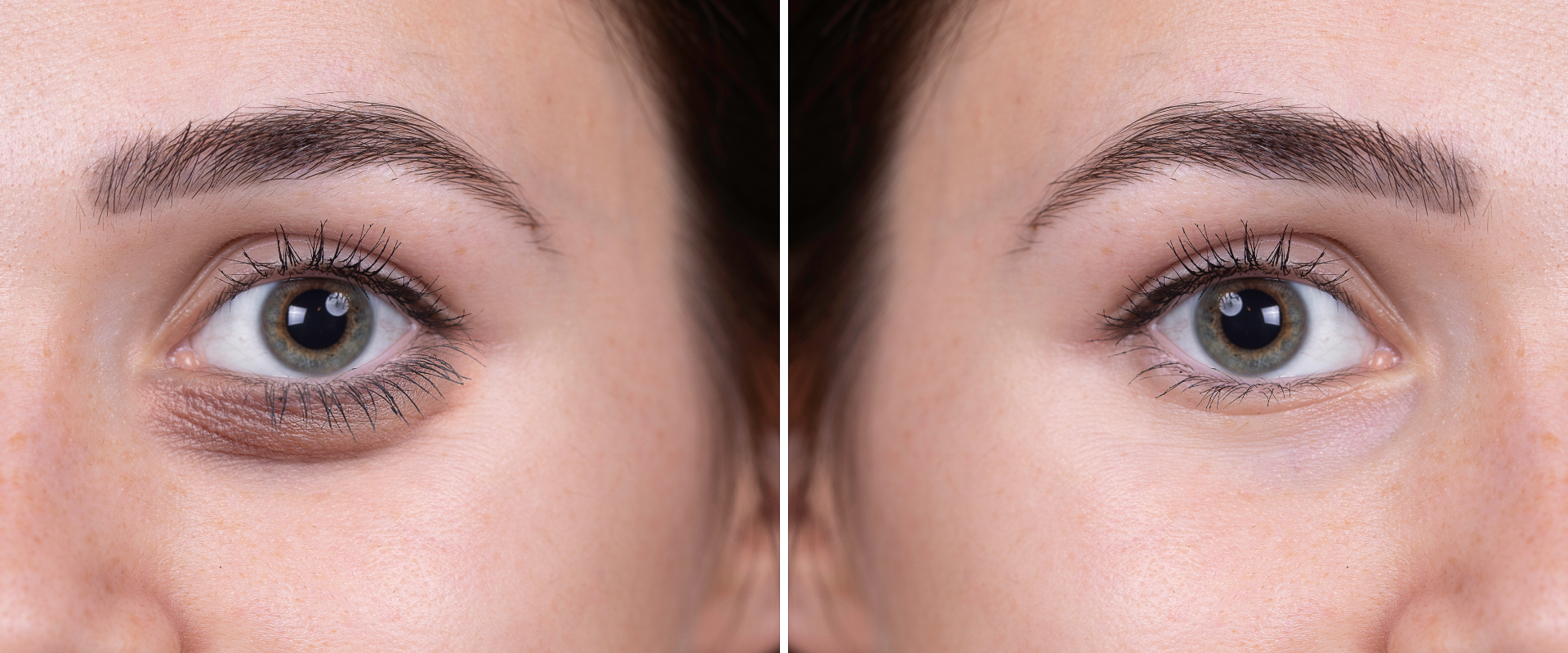
Under-Eye Micro Fat Grafting: A Gentler Alternative
Medically reviewed by Dr. Choi Deokho, Board-Certified Plastic Surgeon, Representative Director, Goodline Plastic Surgery
The area beneath the eyes is one of the first places the face shows change. A groove where the lower lid meets the cheek, a faint shadow, or a sense of hollowness can make you look tired no matter how well you slept. For some people, the natural instinct is to think about lower-lid surgery. But not everyone wants or needs an operation, and for a subset of people the concern is less about a bulging bag and more about lost volume. In those cases, adding a small amount of your own fat can be a gentler way to soften the hollow.
This guide explains what under-eye micro fat grafting is, how it differs from lower-lid surgery, and how it compares with dermal fillers. It also sets out the risks honestly, because injecting fat into the delicate under-eye region is not a casual procedure and it is not right for everyone. Throughout, one theme repeats: results vary from person to person, and the only way to know whether this suits you is an in-person examination.
Understanding the Under-Eye Area and Why It Changes
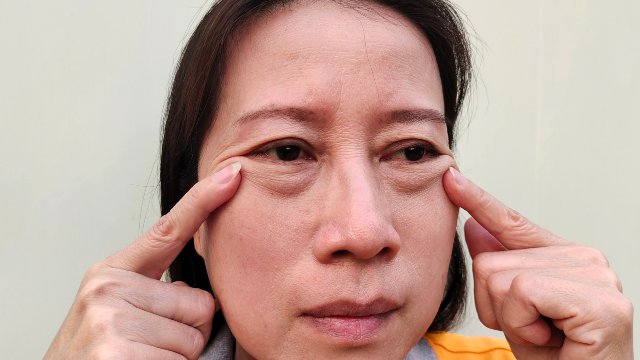
The transition from the lower eyelid to the cheek is anatomically complex. In youth, that transition is smooth and full. With age, several things happen at once. The soft tissue that once cushioned the region thins and descends, the ligaments that anchor the skin become more defined, and the underlying bone of the eye socket and midface subtly changes shape. Together these create the depression commonly called the tear trough.
Medical literature describes the tear trough as a depression running along the lower inner eyelid, bounded below by the bony orbital rim. It often looks deeper in people with a naturally flatter midface or a forward-projecting cheekbone, and it tends to become more pronounced with age. Because the skin here is among the thinnest on the body, even a small change in the volume or contour beneath it shows up clearly on the surface as a shadow or a groove.
Understanding what is actually driving your under-eye appearance matters, because the right treatment depends on the cause. If the main issue is a bulging fat pocket, that is a different problem from a hollow that has lost volume. Many people have a mixture of both. Fat grafting is aimed primarily at the loss-of-volume component, which is why a careful assessment comes first.
What Is Micro Fat Grafting?
Fat grafting, sometimes called fat transfer, is a technique in which fat is harvested from one part of your body, processed, and then reinjected into another area to restore volume. Because the fat is your own tissue (autologous), it is biocompatible and, when it survives, tends to feel soft and natural. It is a well-established technique in plastic surgery used across many areas of the face and body.
"Micro" and "nano" fat grafting refer to versions of this technique in which the harvested fat is processed into very small particles before injection. The smaller particle size allows the fat to be placed through fine cannulas in thin, delicate zones like the under-eye area, where a coarse graft would risk visible lumps. This refinement is one reason the technique is discussed as an option for the tear trough specifically, rather than only for larger facial areas.
It is important to be clear about what "gentler" means here. Compared with a formal lower-lid operation, injecting a small amount of processed fat can be a less invasive way to address a volume-loss hollow in suitable candidates. It is not, however, a trivial or risk-free procedure, and it does not remove skin or reposition a bulging fat pocket. It adds volume. That distinction is central to deciding whether it is the right tool for your particular concern.
Micro Fat Grafting Versus Lower-Lid Surgery
Lower-lid surgery (lower blepharoplasty) is designed to address bulging orbital fat, excess skin, or both, often by removing or repositioning tissue through an incision. It is the appropriate choice when the dominant problem is a prominent fat bag or loose lower-lid skin. It is real surgery with its own recovery and risk profile, and for the right person it can produce a meaningful change that injections cannot match.
Micro fat grafting sits at a different point on the spectrum. It does not cut away skin or remove a fat pocket; it fills a hollow. For someone whose under-eye concern is primarily a volume-deficient tear trough, without a significant bulge or excess skin, adding a modest amount of fat may smooth the contour with less disruption than an operation. Some techniques described in the medical literature actually combine the two, using a conservative lower-lid procedure to address a bag while grafting fat to fill the adjacent trough, so the choice is not always either-or.
The honest takeaway is that neither approach is universally "better." They solve different problems. A bulge is not fixed by adding fat, and a pure hollow is not always best served by surgery. The reason candidacy must be assessed in person is that most under-eye complaints are a blend, and the balance of bulge versus hollow in your specific anatomy determines which approach, or combination, makes sense.
Under-Eye Filler Versus Fat: A Neutral Comparison
The most common non-surgical alternative for a hollow tear trough is a hyaluronic acid (HA) dermal filler. Both fillers and fat aim to restore volume, but they differ in meaningful ways, and neither is simply superior.
Hyaluronic acid fillers are temporary. They are placed through a needle or cannula in a clinic setting, produce a result that is visible quickly, and gradually break down over months. A practical advantage is reversibility: if the placement is not ideal, an enzyme (hyaluronidase) can dissolve HA filler. The under-eye region is technically demanding for filler, and complications such as puffiness, a bluish tint from light scattering (the Tyndall effect), or lumpiness are recognized in the literature when product is placed too superficially or in excess. Because the effect fades, maintenance treatments are needed to sustain it.
Autologous fat is your own tissue rather than a manufactured product, and the intent is a longer-lasting result. The trade-offs are different, though. Fat grafting requires harvesting fat from elsewhere, the amount of fat that survives is variable and partly unpredictable, and a portion of what is injected is reabsorbed by the body in the weeks after the procedure. This partial resorption means the final volume is often less than what was placed, and a touch-up may be considered. Fat is also not straightforward to reverse if over-correction occurs. Which option fits you depends on your anatomy, your goals, and how you weigh these trade-offs, and that discussion is part of a proper consultation.
How the Procedure Is Approached at Goodline
Every plan is individual, but the general framework for under-eye micro fat grafting tends to follow a recognizable sequence.
Consultation and examination. Dr. Choi Deokho and the team examine the lower lids and midface, assess how much of your concern is volume loss versus a bulging pocket or loose skin, check the tone and support of the lower lid, and discuss what specifically bothers you. This assessment is what determines whether fat grafting, surgery, filler, or a combination is appropriate, and whether you are a candidate at all.
Harvest. A small amount of fat is collected from a donor site such as the abdomen or thigh using gentle liposuction. Because only a modest quantity is needed for the under-eye area, the donor harvest is limited.
Processing. The harvested fat is processed and refined into small particles suitable for a thin, delicate area. Careful handling of the fat is important for how it behaves after placement.
Placement. Using fine cannulas, the surgeon deposits tiny amounts of fat in measured passes to fill the hollow and smooth the transition to the cheek. Placing small aliquots in different layers, rather than a single bolus, is the approach described in the literature for reducing the risk of lumps and giving the graft a better chance of taking.
The specific technique is tailored to your anatomy, and we deliberately avoid quoting fixed injection volumes, because the appropriate amount is an individual clinical judgment rather than a standard figure.
Recovery and What to Expect
Recovery after under-eye micro fat grafting involves both the treated area and the small donor site. Around the eyes, swelling and bruising are expected early on, and because the under-eye skin is thin, this puffiness can be noticeable in the first days before it eases. The donor site may feel tender or bruised for a short period as well.
We want to be transparent rather than promise a fixed schedule: the precise day-by-day timeline varies with the extent of the work, your anatomy, and how you heal. What we can say generally is that early swelling and bruising are normal, that the contour continues to settle over the following weeks, and that following your aftercare instructions supports healing. Because a portion of the grafted fat is reabsorbed during this settling period, the appearance in the first weeks does not represent the final result.
Judging the outcome too early can be misleading for exactly this reason. Follow-up visits are the appropriate place to track how the graft has taken and to discuss whether any adjustment is worth considering. We avoid quoting a guaranteed "back to normal" date, because doing so would overstate what can honestly be predicted for an individual.
Risks and Realistic Limits
Injecting fat into the delicate under-eye region carries real risks that deserve honest discussion. Possible risks and limitations include:
- Swelling and bruising, expected early and variable in duration, sometimes more noticeable here because of the thin skin.
- Lumps or nodules, which are a recognized concern when fat is placed in this thin area and can occasionally be palpable or visible.
- Contour irregularity or uneven correction, since the amount of fat that survives is variable and healing differs between people.
- Persistent puffiness or over-correction, where too much volume is present, which is not simple to reverse with fat.
- Partial resorption and under-correction, requiring a possible touch-up because not all grafted fat survives.
- Infection, bleeding, or delayed healing, as with any injection or minor surgical procedure.
- Rare but serious vascular events. As with any injection near the eye, injury to a blood vessel is a recognized, if uncommon, risk, which is why technique and anatomical knowledge matter.
Results vary from person to person, and no specific outcome can be promised. There are also limits to what fat grafting can achieve: it addresses volume and contour, but it does not remove excess skin, it does not reposition a true fat bag, and it does not stop the natural aging process. A realistic conversation about what this procedure can and cannot do is part of responsible planning.
Can It Help Dark Circles?
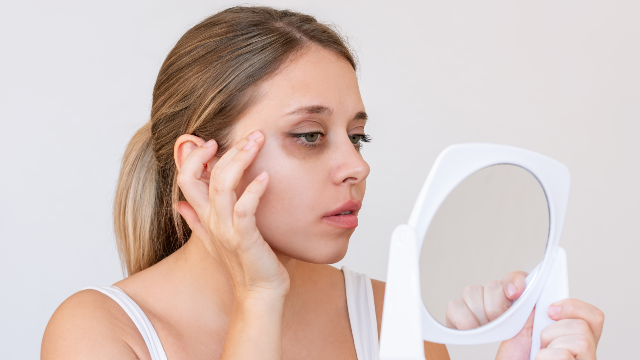
Whether adding fat improves "dark circles" depends entirely on what is causing them. When the darkness is really a shadow cast by a hollow tear trough, filling that hollow can make the area look brighter and less tired simply by softening the shadow. In that scenario, addressing the contour addresses the appearance.
When dark circles are caused by pigmentation in the skin, by naturally thin skin that reveals underlying vessels, or by other factors unrelated to contour, fat grafting may do little for them, and those concerns need separate discussion. In some people, placing fat too superficially could even make a bluish or uneven look worse. This is why an examination that identifies the actual cause of your under-eye darkness comes before any decision about treatment.
Are You a Candidate?
The people most likely to benefit from under-eye micro fat grafting are generally those whose main concern is a volume-deficient tear-trough hollow, without a large bulging fat pocket or a significant excess of loose lower-lid skin, and who understand the realistic and variable nature of fat-grafting results. People whose dominant problem is a prominent bag or loose skin are often better served by a surgical approach, and some people are best suited by a combination.
There is no reliable way to determine any of this from a photograph. Candidacy depends on a hands-on examination of the lower lids, the midface, and the skin, along with an honest discussion of your goals. If you are weighing your under-eye rejuvenation options, the most useful step is a consultation where the area can be assessed directly and the alternatives, including filler and surgery, explained for your specific situation.
About Goodline Plastic Surgery
Goodline Plastic Surgery is a plastic surgery clinic in the Apgujeong area of Gangnam, Seoul, near Apgujeong Station Exit 4. The clinic was established in 2001 and is a Registered Medical Institution for Attracting Foreign Patients, certified by Korea's Ministry of Health and Welfare.
Facial volume and fat grafting are among the areas the clinic works in. For international patients, Goodline provides basic English-language support along with online consultation through its contact page. You can learn more at the Goodline Plastic Surgery website, or use the contact page to ask about arranging a consultation.
Frequently Asked Questions
Is under-eye micro fat grafting surgery?
It is a minor procedure that involves harvesting a small amount of your own fat and injecting it into the under-eye area, so it is less invasive than a formal lower-lid operation for suitable candidates. That said, it is not risk-free and it is not trivial, because the under-eye skin is thin and the region is delicate. Whether it is appropriate for you depends on an in-person examination.
How is fat grafting different from under-eye filler?
Both add volume to a hollow, but fat is your own tissue harvested from elsewhere and intended to last longer, while hyaluronic acid filler is a temporary manufactured product that gradually breaks down. Filler can usually be dissolved if placement is not ideal, whereas fat is harder to reverse and partly resorbs after placement. Neither is simply better; the right choice depends on your anatomy and goals.
Will the results last?
Fat grafting aims for a longer-lasting result than temporary filler, but not all of the injected fat survives, and a portion is reabsorbed in the weeks after the procedure. This means the final volume is often less than what was placed, and a touch-up may be considered. No procedure stops natural aging, and results vary from person to person.
What does recovery involve?
Swelling and bruising around the eyes are expected early on and can be noticeable because the skin is thin, and the small donor site may feel tender for a short time. The contour continues to settle over the following weeks as some grafted fat resorbs. The exact timeline is individual, so we prefer to discuss it at consultation rather than promise a fixed schedule.
Can it fix my dark circles?
Only if the darkness is caused by a shadow from a hollow contour, in which case filling the hollow can make the area look brighter. If the darkness comes from pigmentation or thin skin revealing underlying vessels, fat grafting may not help, and those issues need separate discussion. An examination identifies the true cause first.
Who is not a good candidate?
People whose main problem is a prominent bulging fat bag or a significant excess of loose lower-lid skin are often better suited to a surgical approach rather than fat grafting alone. Certain eye or general medical conditions may also make the procedure unsuitable. Candidacy cannot be judged from a photo and requires a hands-on examination.
Are there serious risks?
Most risks are limited to swelling, bruising, lumps, or an uneven result, but as with any injection near the eye there is a rare risk of vascular injury, which is why technique and anatomical knowledge matter. Infection, over-correction, and the need for a touch-up are also possible. A thorough consultation covers these risks in the context of your individual case.
The Bottom Line
- Under-eye micro fat grafting adds a small amount of your own processed fat to fill a volume-deficient tear-trough hollow, and can be a gentler option than surgery for suitable candidates.
- It is aimed at hollowness, not at removing a bulging fat bag or excess skin, which are usually addressed surgically.
- Compared with temporary hyaluronic acid filler, fat is your own tissue and intended to last longer, but it partly resorbs, is harder to reverse, and its survival varies.
- Honest risks include swelling, lumps, contour irregularity, puffiness, partial resorption, and, rarely, vascular injury; results vary between people.
- Candidacy depends on the balance of hollow versus bulge in your anatomy and can only be confirmed by an in-person examination.
This article is for general educational purposes only and is not a substitute for professional medical advice, diagnosis, or treatment. It is not a self-diagnosis tool. Always consult a qualified healthcare provider about your individual situation before making any decision about a cosmetic procedure. Results vary from person to person, and no specific outcome is promised or guaranteed.
References
- Autologous Fat Grafting for Facial Rejuvenation (StatPearls, NCBI Bookshelf)
- Lower Eyelid Blepharoplasty (StatPearls, NCBI Bookshelf)
- Transconjunctival Lower Blepharoplasty and Percutaneous Nanofat Grafting for Eyelid Bags and Tear Trough (PMC)
- Dermal Fillers for the Treatment of Tear Trough Deformity: A Review (PMC)
- Fat Transfer / Fat Grafting (American Society of Plastic Surgeons)
More Articles
Continue reading our clinical guides.

Revision Rhinoplasty in Seoul: What US Patients Should Know
Revision rhinoplasty in Seoul for US patients: why secondary nose surgery is harder, what recovery looks like, honest expectations, and Goodline's plan.
Learn More
Rejuran vs RE20 vs Juvelook Volume: Skin Boosters Compared
Three injectables that look alike on a clinic menu and solve three unrelated problems. Hydration, repair and volume differ in timeline and in results.
Learn More

Primary vs Revision Rhinoplasty: The Differences That Matter
A second nose operation is not the first one repeated. Scar tissue, longer operating time and a result that takes a year change what you should expect.
Learn More