Natural-Looking Face & Neck Lift Surgery and Personalized Anti-Aging Care in Apgujeong, Gangnam, Seoul
4.1 ★ Google · Board-Certified Plastic Surgeon
en-US

Medical Guide
Upper Blepharoplasty vs Ptosis Correction: Which Do You Need?
One removes skin that is in the way. The other changes where the eyelid sits. The risk lists differ in a way that tells you which question is being asked.
Schedule a Consultation
Upper Blepharoplasty vs Ptosis Correction: Which Do You Need?
Medically reviewed by Dr. Choi Deokho, Representative Director, Goodline Plastic Surgery
Both are operations on the upper eyelid. Both take about one to two hours. Both are usually done under local anesthesia, sometimes with sedation. Both ask an international patient for roughly seven to ten days in Korea. On paper the two procedures are nearly indistinguishable.
The difference shows up in two places that are easy to check and are rarely compared side by side: who each one is described for, and what can go wrong afterwards. The second of those is more revealing than the first.
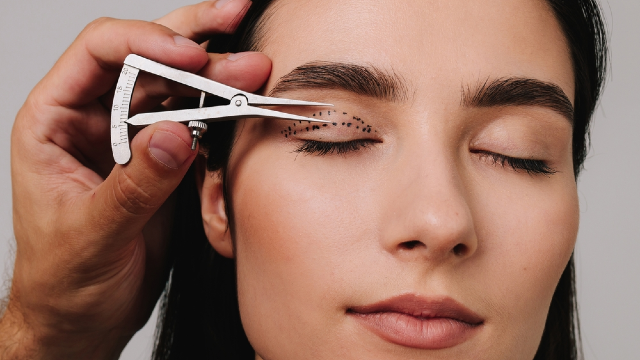
Start with the risk lists
This is an unusual way into a comparison, and it works better than the usual one.
Goodline Plastic Surgery's risk list for upper blepharoplasty names bleeding, infection, asymmetry, scarring, dry eyes, difficulty closing the eyes, changes in eyelid position, persistent swelling and, rarely, serious vision-related complications.
Its risk list for ptosis correction names infection, bleeding, scarring, asymmetry, under- or over-correction, persistent dry eye, difficulty closing the eyes, eyelid position changes, recurrence of ptosis, and the possible need for revision surgery.
Three items appear on the second list and not the first: under- or over-correction, recurrence, and the possible need for revision. Those three are not a coincidence and they are not a statement about which operation is riskier. They are what you get when an operation sets a position.
Skin that has been removed does not grow back and cannot be removed by the wrong amount in the sense that matters here — the eyelid still opens exactly as far as it did. An eyelid whose opening has been adjusted can be adjusted too little, too much, or can drift back toward where it started. That is the entire difference between the two operations, read backwards from their complications.
Now the candidate descriptions
The clinic describes candidates for upper blepharoplasty as adults with excess upper-eyelid skin, eyelid fullness or age-related upper-eyelid changes who are healthy enough for surgery and have realistic expectations.
It describes candidates for ptosis correction as people with drooping upper eyelids that may interfere with the visual field or make the eyes appear tired.
Everything in the first description is about tissue — how much there is and where it sits. One phrase in the second is about function: interfere with the visual field. That phrase is the discriminator, and it is the thing you can partly check yourself, because it describes an experience rather than an appearance.
Someone whose upper lid skin has become heavy will tell you it rests on the lashes, that eye makeup rubs off, that the fold has disappeared under an overhang. Someone whose eyelid is not opening fully will tell you something different: that reading tires them by the afternoon, that they notice it more when they are tired, that they look half asleep in photographs taken in the evening and not in the morning.
Neither account is conclusive. Both are more useful to the surgeon than naming a procedure.
Where the preparation differs
The postponement lists diverge in a way that points at the same distinction.
For upper blepharoplasty the clinic lists uncontrolled medical conditions, active eye or eyelid infection, significant untreated eye problems, pregnancy, and unrealistic expectations.
For ptosis correction it lists uncontrolled medical conditions, active eye infections, significant dry-eye problems, and other conditions that could increase surgical risk — and it adds an instruction: patients should disclose their medications, medical history, and previous eye surgeries during consultation.
Dry eye is named specifically on the ptosis side. That follows from the mechanism. An eyelid that opens further exposes more of the eye surface, and an eye that was already struggling to stay comfortable has been given more surface to keep wet. Persistent dry eye appears on the ptosis risk list for the same reason. The National Eye Institute's overview of dry eye is a reasonable place to understand what the symptom actually is before deciding whether you have it.
Previous eye surgery is also named specifically. If you have had eyelid surgery before, anywhere, that fact changes the assessment.
Recovery: the parts that are the same
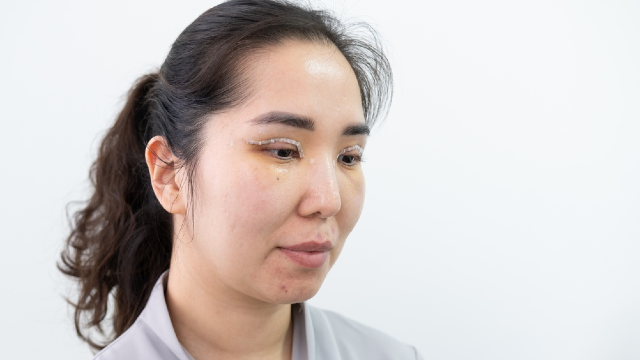
Worth stating so that the differences stand out against them.
For upper blepharoplasty the clinic describes bruising and swelling most noticeable in the first several days, improving over the following one to two weeks, with residual swelling and scar maturation continuing for several weeks or longer. Initial improvement is visible once swelling begins to decrease, usually within the first couple of weeks, and the final result is generally assessed after the tissues have fully settled, often around several months.
For ptosis correction it describes swelling and bruising most noticeable in the first several days, improving over the following one to two weeks, with most routine activities resumable within approximately one to two weeks and complete tissue healing taking longer. Improvement in eyelid position may be noticeable soon after surgery, but swelling can temporarily affect the appearance; the final result is usually assessed after tissues have settled and swelling has largely resolved, which may take several months.
Those are the same recovery. Where the stories diverge is what you are watching for. After skin removal you are watching a shape settle. After position adjustment you are watching a measurement settle — and the clinic's note that swelling can temporarily affect the appearance matters more here, because a swollen lid sits lower and an eyelid sitting lower is exactly the thing you are anxious about.
Flying home
The clinic gives approximately seven to ten days in Korea for both.
For upper blepharoplasty it says patients should generally wait until the surgeon confirms travel is appropriate, and that for uncomplicated eyelid surgery flying is often considered after the early postoperative period, commonly around seven days, depending on healing and the surgeon's clearance. It also notes that a stay of about seven to ten days allows the initial postoperative assessment and, where applicable, suture removal.
For ptosis correction it says many patients can travel once their surgeon confirms early healing is progressing normally, often after about seven to ten days, and adds that patients should receive individual clearance before flying, particularly after eyelid surgery.
The difference is a few days and one word: individual. For a position-setting operation the early assessment is also the first chance to see whether the position is right.
The combined case, and the honest limit of an article
Both of these can be present at once. Heavy skin and an eyelid that does not open fully are not mutually exclusive, and the first can partly hide the second — skin resting low makes an eye look less open whether or not the opening has changed.
That is why the clinic's descriptions are written as candidate profiles rather than decision rules, and why the final answer comes from examination. What you can bring to that examination is a clear account of whether your complaint is about weight and overhang or about effort and tiredness, whether it is worse at the end of the day, whether your field of view is affected, and whether you have had any previous eyelid surgery.
There is one more thing worth saying about the order in which these two are considered, because it affects what a disappointed patient does next.
If skin is removed from an eyelid that was not opening fully, the eyelid still does not open fully. The overhang is gone, the fold is visible again, and the complaint that brought the person in — eyes that look tired, a field of view that feels narrowed late in the day — is where it was. Nothing has gone wrong surgically. The operation did what it does.
The reverse error is less common and less costly. An eyelid whose position is corrected while heavy skin remains looks better than it did, because the lid margin has moved; the skin is still there and still visible, and addressing it afterwards is a smaller undertaking than the one already completed.
That asymmetry is an argument for taking the functional question seriously first, even when the appearance complaint is what prompted the appointment. It is a short question to ask and it costs nothing to ask it: is the lid heavy, or is the eye not opening, or both.
What the clinic treats across its departments is described under about the clinic; consultations are arranged through contact.
Frequently Asked Questions
Can one operation do both?
Whether both findings are present, and whether they are addressed together, is an assessment question. The clinic's descriptions note that either procedure's duration depends in part on whether other eyelid procedures are performed at the same time, which implies combination is possible where it is indicated.
Why is dry eye mentioned more with ptosis correction?
Because it appears on both the postponement list and the risk list for that procedure specifically. An eyelid that opens further leaves more of the eye surface exposed, and an eye already prone to dryness has more to contend with afterwards.
What does "under- or over-correction" mean?
That the eyelid has been set lower or higher than intended. It appears on the ptosis risk list and not the upper blepharoplasty list, because only one of the two operations sets a position that can be set wrong.
Can ptosis come back after surgery?
Recurrence of ptosis is named on the clinic's risk list for that procedure, along with the possible need for revision surgery. It is listed as a potential risk rather than an expectation.
Is the anesthesia different between them?
Not materially. The clinic describes local anesthesia, sometimes with sedation, for both, with the exact method depending on the surgical plan and the patient.
How long before I look normal in photographs?
For both, bruising and swelling are described as most noticeable during the first several days and improving over the following one to two weeks. Residual swelling continues longer, and the final assessment is several months out in each case.
What should I tell the surgeon that I might not think to mention?
Previous eye or eyelid surgery of any kind, existing dry eye or contact lens intolerance, and medications and supplements. The clinic names previous eye surgeries explicitly in its ptosis consultation guidance.
Does difficulty closing the eyes happen with both?
It appears on both risk lists, and on the ptosis side it also appears among common temporary effects during early healing. It is described as something that usually improves as recovery progresses.
The Bottom Line
- The two operations look nearly identical on paper — one to two hours, local anesthesia with possible sedation, roughly seven to ten days in Korea — and differ in what they are asked to do.
- Upper blepharoplasty is described for excess upper-eyelid skin, fullness or age-related change; ptosis correction is described for drooping that may interfere with the visual field or make the eyes appear tired.
- The risk lists give the distinction away: under- or over-correction, recurrence, and possible revision appear only on the ptosis side, because only that operation sets a position.
- Dry eye and previous eye surgery are named specifically in the ptosis guidance, on both the postponement list and the risk list.
- Both may be present at once, which is why the useful thing to bring to a consultation is a description of your experience rather than a chosen procedure.
This article is for general informational purposes and does not constitute individualized medical advice. It is not a self-diagnosis tool. Nothing here can establish whether your eyelid problem is excess skin, a position problem, or both. Only a qualified plastic surgeon or eye specialist who has examined and measured your eyelids can determine that, and sudden vision change, severe pain or bleeding after eyelid surgery should be assessed urgently where you are.
References
- MedlinePlus — Eyelid Disorders
- MedlinePlus — Eye Care
- National Eye Institute — Dry Eye
- MedlinePlus — Tears
- MedlinePlus — Plastic and Cosmetic Surgery
- MedlinePlus — Surgery
- MedlinePlus — After Surgery
- MedlinePlus — Anesthesia
- American Academy of Dermatology — Questions to Ask
More Articles
Continue reading our clinical guides.

Revision Rhinoplasty in Seoul: What US Patients Should Know
Revision rhinoplasty in Seoul for US patients: why secondary nose surgery is harder, what recovery looks like, honest expectations, and Goodline's plan.
Learn More
Rejuran vs RE20 vs Juvelook Volume: Skin Boosters Compared
Three injectables that look alike on a clinic menu and solve three unrelated problems. Hydration, repair and volume differ in timeline and in results.
Learn More

Primary vs Revision Rhinoplasty: The Differences That Matter
A second nose operation is not the first one repeated. Scar tissue, longer operating time and a result that takes a year change what you should expect.
Learn More