Natural-Looking Face & Neck Lift Surgery and Personalized Anti-Aging Care in Apgujeong, Gangnam, Seoul
4.1 ★ Google · Board-Certified Plastic Surgeon
en-US

Medical Guide
Upper vs Lower Blepharoplasty in Korea: Which Do You Need?
Upper blepharoplasty lifts heavy hooded lids; lower blepharoplasty targets under-eye bags. Compare candidacy, risks, and recovery with Goodline in Seoul.
Schedule a Consultation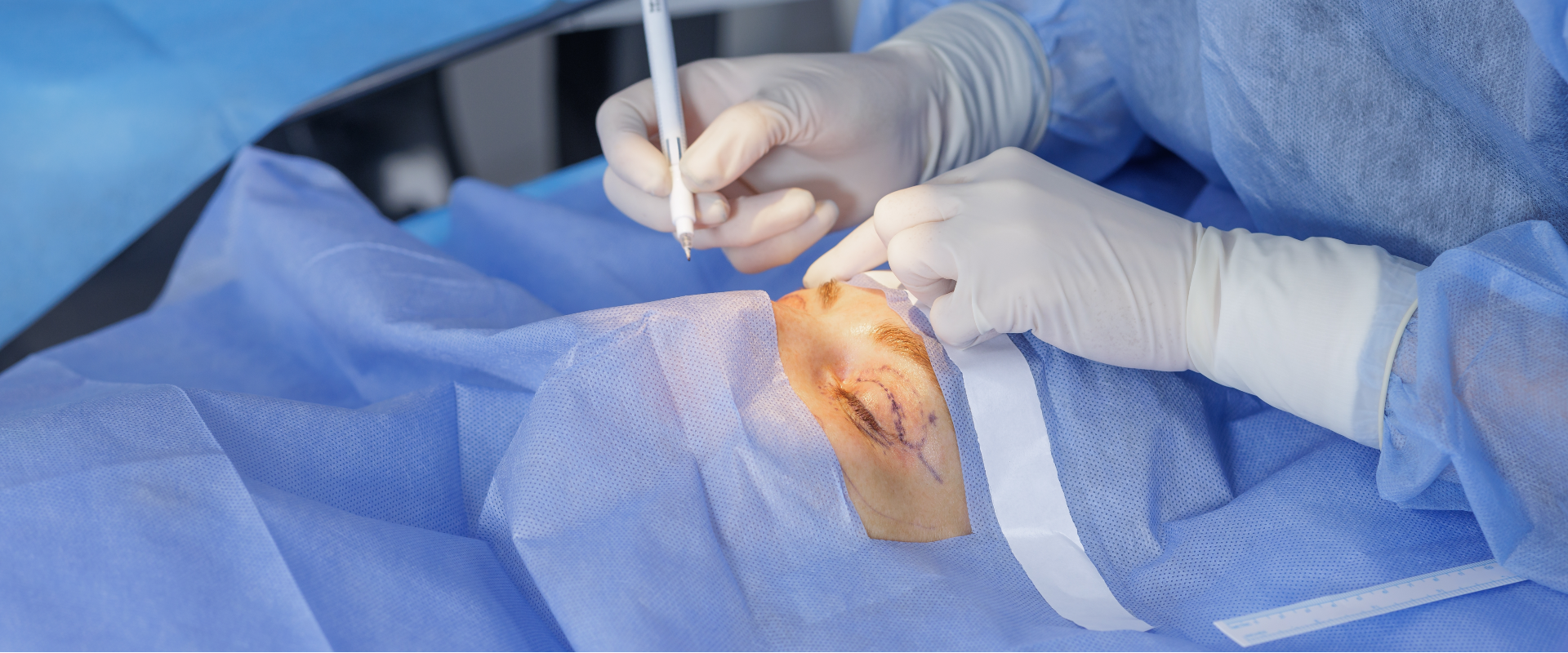
Upper vs Lower Blepharoplasty: Which One Do You Need?
Medically reviewed by Dr. Choi Deokho, Board-Certified Plastic Surgeon, Representative Director, Goodline Plastic Surgery
"Eyelid surgery" sounds like a single operation, but it is really a family of procedures. The two most common are upper blepharoplasty and lower blepharoplasty, and they address different problems in different parts of the eye area. Choosing between them — or deciding whether you need both — is one of the most frequent questions people bring to a consultation. This guide explains what each procedure does, who tends to be a candidate for which, the honest risks involved, and what recovery generally looks like. The short version: the right answer comes from an in-person examination, not from a photograph or a self-assessment in the bathroom mirror.
Upper and Lower Eyelids Age Differently
Understanding the difference between the two operations starts with understanding how the upper and lower eyelids change over time. They are anatomically distinct, and they show aging in distinct ways.
The upper eyelid tends to develop excess or lax skin. As skin loses elasticity, it can fold over the natural crease and, in more advanced cases, hang toward the lash line. People often describe this as "hooded" or "heavy" lids. Some notice that eye makeup smudges or disappears into the fold, or that the upper field of vision feels narrowed when the extra skin rests low. In some people the brow position and forehead also contribute, which is why an examination looks at the whole upper third of the face, not just the lid alone.
The lower eyelid ages in a different pattern. The most common complaint is "bags" — puffiness below the eye caused by orbital fat that has become more prominent as the supporting tissue and the septum weaken with age. Some people also develop a hollow or a groove between the lower lid and the cheek, along with fine crepey skin. Lower-lid aging is less about excess skin and more about the position and volume of fat and the tone of the surrounding tissues.
Because the two regions change for different reasons, they generally call for different surgical approaches. It is common for someone to need work on one region and not the other, and equally common for both to be discussed at the same visit.
What Upper Blepharoplasty Involves
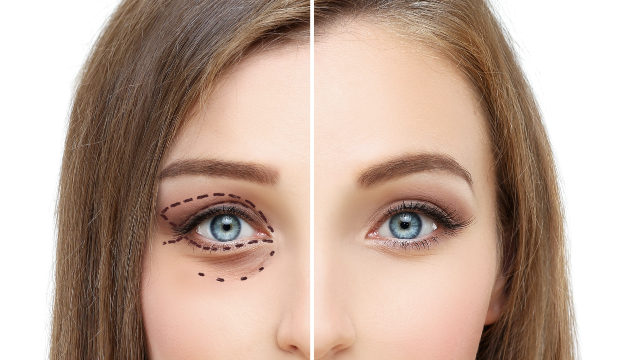
Upper blepharoplasty is designed to address excess skin and, where appropriate, a small amount of fat or muscle along the upper lid. At Goodline Plastic Surgery, the standard approach places the incision within the natural eyelid crease, so that the resulting scar is positioned in the fold where it is least conspicuous once healed. Working through this incision, the surgeon can remove a measured strip of redundant skin and refine the underlying tissue so that the lid sits more openly.
Upper blepharoplasty is frequently performed under local anesthesia, sometimes with mild sedation, depending on the individual and the extent of the plan. Because upper eyelid surgery is one of the most commonly performed facial operations worldwide, the technique is well established — but "common" does not mean "trivial." Precise judgment about how much skin to remove is important: taking too much can affect eye closure, while taking too little may leave the original heaviness largely unchanged.
It is worth separating cosmetic upper blepharoplasty from two related procedures that are sometimes confused with it. Ptosis correction addresses a drooping lid margin caused by a weak or stretched levator muscle and is a different operation. Double-eyelid surgery creates or defines a crease and is primarily about eyelid shape rather than removing aging skin. Some patients need a combination, and part of the value of an examination is sorting out which problem is actually driving the appearance you want to change.
What Lower Blepharoplasty Involves
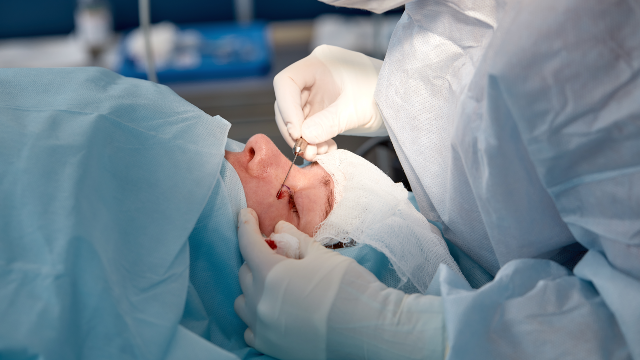
Lower blepharoplasty focuses on the puffiness, fat, and skin changes of the lower lid. There are two broad ways to reach the fat compartments, and the choice depends on your anatomy and goals.
The first is an external (transcutaneous) incision, typically placed just below the lash line, which allows the surgeon to address both excess skin and fat. The second is a transconjunctival approach, where the incision is made on the inside of the lower lid so there is no external skin scar; this route is often chosen when the main issue is fat rather than loose skin. Through either approach, the surgeon can remove or reposition excess orbital fat — repositioning is often preferred when a hollow or groove exists, because moving fat to smooth the lid-cheek junction can look more natural than simply removing it and risking a hollowed appearance.
Lower blepharoplasty is commonly performed under local anesthesia with sedation. It is generally regarded as more technically demanding than upper blepharoplasty, because the lower lid is delicate and its position and support are easy to disturb. Over-resection of skin or fat, or failure to respect lid support, can pull the lid downward or outward — problems that are much easier to prevent than to correct. This is one reason candidacy and surgical planning matter so much for the lower lid.
Candidacy: Which Procedure Fits Which Concern
Candidacy is decided by examination, but the general patterns are straightforward.
Upper blepharoplasty tends to suit people whose main concern is heavy, hooded, or redundant upper-lid skin — skin that folds over the crease, feels weighty, or narrows the upper field of vision. Good candidates are typically in reasonable general health, are non-smokers or willing to stop around the surgical period, and hold realistic expectations. The examination also checks brow position, because a low brow can mimic or worsen upper-lid heaviness; in some cases a brow-related plan is more appropriate than lid-skin removal alone.
Lower blepharoplasty tends to suit people whose main concern is under-eye bags or fat prominence, sometimes with a groove at the lid-cheek junction. A careful assessment of lower-lid tone and support is essential here, because patients with pre-existing lid laxity may need additional support built into the plan to reduce the risk of the lid being pulled down after surgery.
Some people are candidates for both procedures at once. When both upper heaviness and lower bags are present, combining them in a single session can be reasonable and may consolidate recovery into one window rather than two. This is a genuine example of blepharoplasty combination surgery, and it is decided case by case. Eyelid work is also sometimes discussed alongside brow or mid-face procedures. None of this should be assumed in advance — the point of the consultation is to match the procedure or combination to your actual anatomy and priorities.
Certain factors make surgery less advisable or call for extra caution, including uncontrolled dry eye, thyroid eye disease, significant lid laxity, bleeding disorders, and unrealistic expectations. Honest disclosure of your eye history and general health helps your surgeon plan safely.
Honest Risks of Eyelid Surgery
All surgery carries risk, and eyelid surgery is no exception. Being informed is part of giving genuine consent. General surgical risks include bleeding and hematoma, infection, poor or visible scarring, and asymmetry between the two sides — perfectly matched, symmetrical results cannot be guaranteed, because the two sides of any face differ to begin with and heal on their own timelines.
Eyelid-specific risks deserve particular attention. Dry eye and irritation can occur or worsen after surgery, sometimes temporarily. Lagophthalmos — difficulty closing the eyes completely — can follow if too much upper-lid skin is removed, and it may require lubrication or, rarely, further treatment. For the lower lid, the most discussed complications are ectropion or lid retraction (the lid pulling away from or below the eye), which relate to over-resection or unaddressed laxity. Prolonged swelling, changes in sensation, and the possibility of a revision procedure are also part of an honest picture. Serious vision-threatening complications are rare but are not zero, which is why eyelid surgery is a medical procedure that belongs in qualified hands.
Individual outcomes vary, and no ethical surgeon promises a specific or permanent result. Aging continues after surgery, so eyelid rejuvenation improves a starting point rather than freezing time.
Recovery: A General Eyelid Lift Recovery Timeline
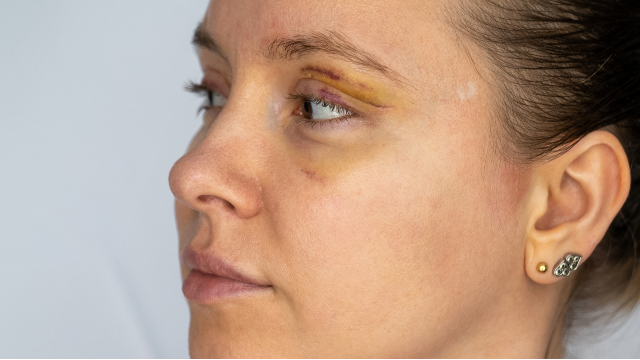
Recovery varies from person to person and between the upper and lower lids, so treat the following as a general eyelid lift recovery timeline rather than a fixed schedule.
In the first few days, expect swelling and bruising around the eyes, which are usually most noticeable early and then begin to ease. Cold compresses, keeping the head elevated, and following aftercare instructions help. Any external sutures are typically removed within about a week, in line with your surgeon's guidance.
Over the first one to two weeks, bruising fades and swelling continues to settle, though some residual puffiness is normal and can linger longer for the lower lid than the upper. Many people feel presentable enough for low-key activities within roughly one to two weeks, while more visible swelling resolves gradually.
Fine scars along the crease or lash line generally continue to mature and soften over weeks to months. Sun protection and gentle skin care support scar healing. Strenuous exercise, eye rubbing, and contact-lens wear are usually restricted for a period defined by your surgeon.
For international patients, plan realistically. A short stay is often built around the procedure plus at least one follow-up so that sutures and early healing can be checked before you travel home. Because Goodline's specific recovery and travel windows for eyelid surgery are set individually, confirm your own timeline at consultation rather than relying on generic figures.
Why an Examination Decides It
The recurring theme is that the decision belongs to an examination. Photographs flatten the eyelid area and hide the very things that determine the plan: skin quality and quantity, fat position, brow height, lid tone and support, and your eye-surface health. Two people who describe the same complaint — "my eyes look tired" — may need opposite procedures, or one may need a brow-related approach rather than lid surgery at all.
Goodline Plastic Surgery is located in the Apgujeong area of Gangnam, Seoul, near Apgujeong Station Exit 4, and has operated since 2001. The clinic is a Registered Medical Institution for Attracting Foreign Patients certified by the Korean Ministry of Health and Welfare (MOHW) and offers basic English-language support along with online consultation through its contact page. Reviewing surgeon Dr. Choi Deokho is a board-certified plastic surgeon (성형외과전문의) under the Korean plastic-surgery specialty certification. If you are weighing upper versus lower eyelid surgery, you can start with an online consultation and share your concerns and history before deciding on any plan. Learn more at the Goodline Plastic Surgery website or reach the team through the contact page.
Frequently Asked Questions
Can I have upper and lower blepharoplasty at the same time?
Often, yes, if both areas warrant treatment and your surgeon judges it appropriate at examination. Combining them can consolidate your recovery into a single window rather than two separate periods. Whether it is suitable depends on your anatomy, health, and goals, so it is confirmed at consultation rather than assumed.
Will eyelid surgery get rid of dark circles?
Not necessarily. Dark circles have several causes, including pigmentation, thin skin, and hollowing, and not all of them are surgical. Lower blepharoplasty can help when the shadow comes from fat bulging and a lid-cheek groove, but a careful assessment is needed to identify the real cause and set realistic expectations.
Where are the scars, and will they be visible?
For upper blepharoplasty, the incision is placed in the natural eyelid crease so it sits within the fold once healed. For lower blepharoplasty, the incision may be just below the lash line or inside the lid (transconjunctival), the latter leaving no external skin scar. Scars generally mature and soften over months, though healing varies between individuals.
Is lower blepharoplasty riskier than upper?
Lower blepharoplasty is generally considered more technically demanding because the lower lid is delicate and its position and support are easy to disturb. Specific risks include lid retraction or ectropion if too much tissue is removed or laxity is not addressed. Careful planning and an honest assessment of lid tone help reduce these risks.
How long until I look presentable after eyelid surgery?
Swelling and bruising are usually most noticeable in the first few days, then ease over the following one to two weeks. Many people feel ready for low-key activities within roughly one to two weeks, while some residual puffiness can linger longer, especially for the lower lid. Timelines vary by person and by which procedure was done.
Are the results permanent?
No surgery stops aging. Eyelid surgery improves your starting point, but the skin and tissues continue to change over the years that follow. Results vary between individuals, and no ethical surgeon promises a permanent or guaranteed outcome.
Do I need general anesthesia?
Upper blepharoplasty is frequently performed under local anesthesia, sometimes with mild sedation, and lower blepharoplasty is commonly performed under local anesthesia with sedation. The right choice depends on the extent of your plan and your individual circumstances, and it is decided with your surgeon before surgery.
The Bottom Line
- Upper and lower blepharoplasty solve different problems: upper addresses heavy, hooded lid skin, while lower targets under-eye bags and fat position.
- Upper surgery uses an incision in the natural crease; lower surgery uses an external or transconjunctival approach to remove or reposition fat.
- Some people are candidates for both at once, but combination surgery is decided case by case at examination.
- Honest risks include asymmetry, dry eye, poor scarring, and — for the lower lid — retraction or ectropion; results vary and are not permanent.
- Only an in-person examination can determine which procedure, or combination, fits your anatomy and goals.
This article is for general education and is not a self-diagnosis tool. It does not replace a personal consultation with a qualified plastic surgeon, and it does not establish a doctor-patient relationship. Decisions about eyelid surgery, candidacy, and technique should be made with a licensed surgeon after an in-person examination. Individual results vary.
References
- Upper Eyelid Blepharoplasty — StatPearls, NCBI Bookshelf
- Lower Eyelid Blepharoplasty — StatPearls, NCBI Bookshelf
- Transconjunctival Blepharoplasty — StatPearls, NCBI Bookshelf
- Eyelid Surgery (Blepharoplasty) — American Society of Plastic Surgeons
More Articles
Continue reading our clinical guides.

Revision Rhinoplasty in Seoul: What US Patients Should Know
Revision rhinoplasty in Seoul for US patients: why secondary nose surgery is harder, what recovery looks like, honest expectations, and Goodline's plan.
Learn More
Rejuran vs RE20 vs Juvelook Volume: Skin Boosters Compared
Three injectables that look alike on a clinic menu and solve three unrelated problems. Hydration, repair and volume differ in timeline and in results.
Learn More

Primary vs Revision Rhinoplasty: The Differences That Matter
A second nose operation is not the first one repeated. Scar tissue, longer operating time and a result that takes a year change what you should expect.
Learn More